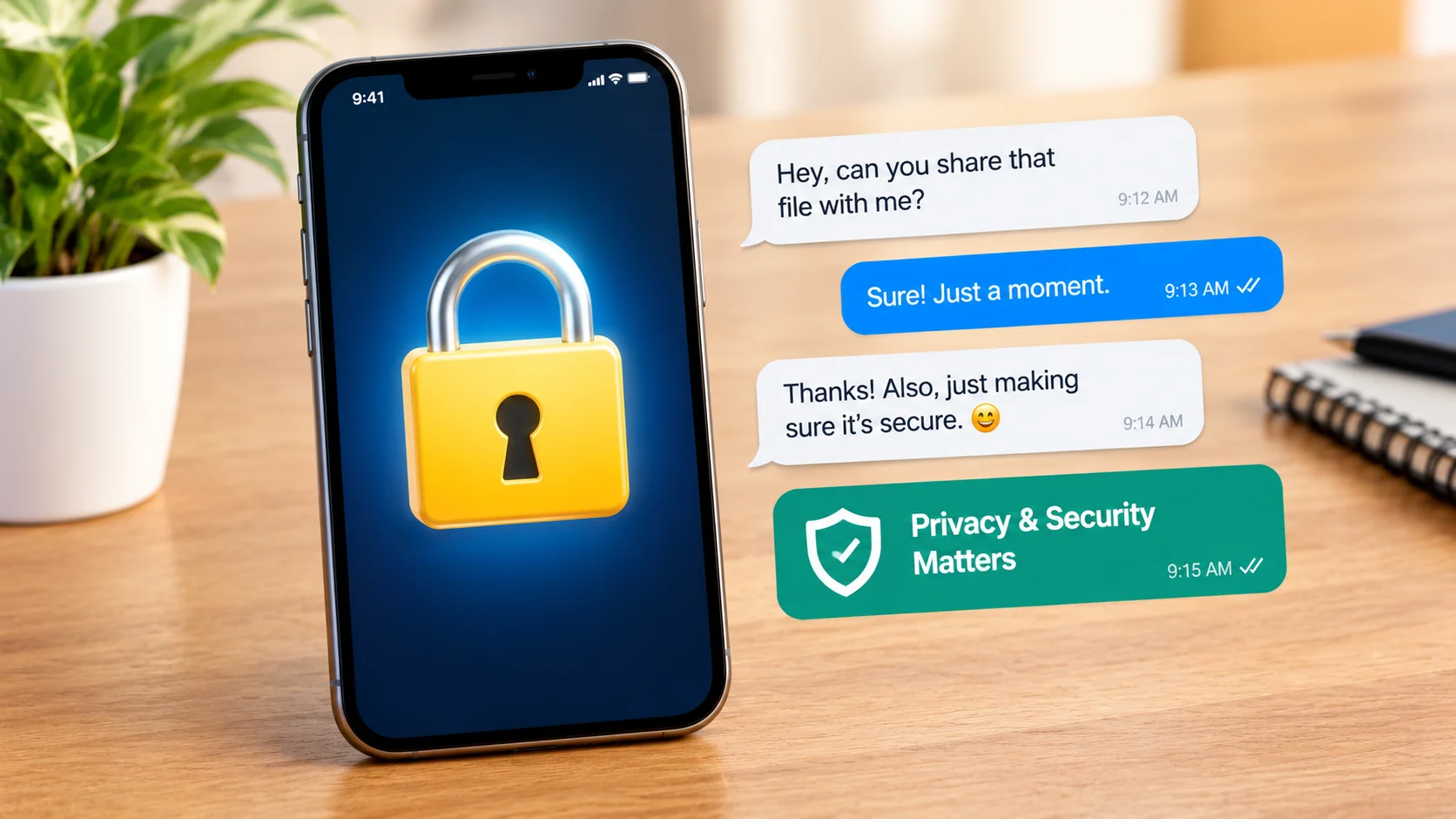
🔒 Lock emoji meaning: privacy, security, protection, something being closed, or something that is not available to others. In casual messages, 🔒 can also suggest commitment or being “locked in” to a plan, goal, or decision. It does not automatically mean romance, secrecy, or flirting.
The lock emoji 🔒 usually represents security, privacy, protection, or something being closed and unavailable. In texts, it can mean that something is private, secure, off-limits, or firmly decided.
It can also have a more casual meaning, such as being “locked in” and fully focused on a goal. The exact meaning depends on the words around it and the relationship between the people messaging.
What Does the Lock Emoji 🔒 Mean?
The 🔒 emoji shows a closed padlock. Its official Unicode name is LOCK, while its current CLDR short name is “locked.” Unicode identifies it with the code point U+1F512. It was approved in Unicode 6.0 in 2010 and added to Emoji 1.0 in 2015.
Its most direct meaning comes from the object itself: a lock keeps something secure, closed, or protected.
Depending on the conversation, 🔒 may communicate:
- Privacy or confidentiality
- Online or physical security
- Protection from unwanted access
- A private account, file, or conversation
- Something that is closed or unavailable
- A firm commitment or decision
- Being highly focused or “locked in”
- A playful way of saying something is reserved or off-limits
The emoji does not have one universal emotional meaning. A message such as “My account is 🔒” is very different from “We’re locked in 🔒.”
🔒 Lock Emoji Meaning in Text
In texting, the lock emoji often emphasizes the idea of keeping something protected or private.
For example:
“Keep this between us 🔒”
Here, 🔒 reinforces the idea of confidentiality.
It can also refer to digital security:
“I finally changed my password 🔒”
In this context, the emoji points to account or information security.
Another common casual use is:
“Saturday plans are locked 🔒”
This suggests the plans are confirmed or settled.
The surrounding words usually provide the strongest clue. The same emoji can communicate privacy in one message and commitment in another.
The “Locked In” Meaning
One of the more modern casual uses of 🔒 is connected to the phrase “locked in.”
When someone says:
“Time to study. I’m locked in 🔒”
the emoji can reinforce the idea of intense focus, determination, or commitment.
Similarly:
“We’re locked in for Friday 🔒”
usually means the plan is confirmed.
This use is different from the literal security meaning. Nothing necessarily needs to be secret or protected. Instead, the lock represents something that feels fixed, settled, or firmly committed. Emojipedia also notes this use of 🔒 for the slang phrase “locked in,” including focus and commitment.
Is 🔒 a Romantic or Flirty Emoji?
The lock emoji can appear in romantic conversations, but it does not automatically signal flirting or romantic interest.
For example:
“You’re my favorite person 🔒”
In a romantic relationship, the lock could suggest commitment or exclusivity.
But:
“That restaurant is our spot 🔒”
could simply mean the person considers it their regular favorite place.
Likewise:
“I’m locked in with this project 🔒”
has nothing to do with romance.
If someone sends 🔒 in a personal conversation, look at the surrounding message and the established relationship instead of assuming that the emoji itself proves attraction or commitment.
What Does 🔒 Mean From Someone?
When someone sends you 🔒 by itself, several interpretations are possible.
They might mean:
- “This is private.”
- “Keep this secret.”
- “This is secure.”
- “It’s confirmed.”
- “I’m committed.”
- “I’m focused.”
- “This is off-limits.”
For example, if you say, “Should we keep this between us?” and they respond with “🔒,” privacy is probably the intended idea.
If you say, “Are we still meeting Saturday?” and they reply “🔒,” they may be using it to mean the plan is confirmed.
Because the emoji can carry several meanings, the conversation itself matters more than the symbol alone.
Positive, Neutral, and Serious Uses
The tone of 🔒 can change depending on the situation.
Positive:
It can represent commitment, protection, trust, or confidence.
“We’ve got this 🔒”
Neutral:
It can simply describe something that is closed or secure.
“The door is 🔒.”
Serious:
It may emphasize privacy or restricted access.
“Private information 🔒”
Playful:
It can make a casual statement sound more dramatic.
“Last slice is mine 🔒”
That last example does not necessarily mean anything is literally locked. The emoji adds a playful sense of “claimed” or “off-limits.”
Literal vs. Figurative Uses
The 🔒 emoji works both literally and figuratively.
Literal use
It can represent an actual lock, security system, secured account, or protected information.
“Make sure the door is locked 🔒”
Figurative use
It can represent something being settled, protected, claimed, or firmly decided.
“That spot is ours 🔒”
Focus or commitment
It can also reinforce “locked in” language.
“No distractions today. I’m locked in 🔒”
The figurative meaning is especially dependent on the wording around the emoji.
Emojis Related to the Lock Emoji 🔒
| Emoji | Official Name | Common Meaning | Tone | Where or When It Is Used |
|---|---|---|---|---|
| 🔒 | Locked | Security, privacy, protection, commitment | Secure, serious, playful | Privacy, security, confirmed plans, “locked in” |
| 🔓 | Unlocked | Open access, freedom, something released | Open, positive, neutral | Unlocking, access, freedom, “achievement unlocked” |
| 🔐 | Locked with Key | Security, access, protection, commitment | Secure, deliberate | Privacy, digital security, access, commitment |
| 🔏 | Locked with Pen | Protected or private information | Private, formal | Confidential information or protected content |
| 🔑 | Key | Access, solution, importance | Practical, positive | Passwords, access, solutions, “key” ideas |
| 🗝️ | Old Key | A key, access, mystery, something from the past | Vintage, mysterious | Stories, history, symbolic access |
| 🔓 | Unlocked | Openness or removal of a restriction | Free, open | When something is no longer locked or restricted |
Unicode lists 🔒, 🔓, 🔏, 🔐, 🔑, and 🗝️ within the lock-related emoji group.
The most important differences
The closest comparison is 🔒 vs. 🔓. They represent opposite states: 🔒 is closed or secured, while 🔓 represents something open or unlocked. Emojipedia describes 🔓 as an unlocked padlock that can also represent open access or a lack of security.
🔐 Locked with Key is also easy to confuse with 🔒. Both can communicate privacy and security, but 🔐 visually adds a key and can put more emphasis on access or the means of unlocking something. It can also have symbolic uses involving commitment.
🔑 Key focuses on access or the thing that allows something to be opened, while 🔒 focuses on the secured or closed state.
Lock Emoji Examples in Text Messages
Here are a few hypothetical examples showing how context changes the meaning.
Privacy
“Don’t share that screenshot 🔒”
Likely meaning: Keep the information private.
Confirmed plans
“Dinner at 7? 🔒”
Likely meaning: The plan is set or confirmed.
Focus
“Final exam tomorrow. I’m locked in 🔒”
Likely meaning: The person is focused and determined.
Playful ownership
“I called the window seat 🔒”
Likely meaning: The person is jokingly claiming the seat.
Relationship context
“Us forever 🔒”
Likely meaning: In a romantic conversation, it may express commitment or closeness. The relationship context is what gives the emoji that meaning; 🔒 alone does not guarantee a romantic message.
Can the Lock Emoji Be Sarcastic?
Yes. Like many object emojis, 🔒 can be used humorously or sarcastically.
For example:
“My weekend plans are very exciting: homework 🔒”
The lock may simply exaggerate the idea that the plan is fixed.
Another example:
“The last cookie is protected 🔒”
Here, the emoji adds playful drama rather than literal security.
The message is sarcastic depends on the surrounding wording and the sender’s usual style.
Common Misunderstandings About 🔒
One common mistake is assuming that 🔒 always means “secret.” Privacy is one important use, but the emoji can also refer to security, confirmation, focus, or commitment.
Another mistake is assuming it always means romantic exclusivity. A lock can symbolize commitment in some relationships, but it can just as easily mean that a plan is fixed or that something is protected.
It is also possible to read too much into a single emoji. If someone sends only “🔒,” there may not be enough information to know exactly what they mean.
How to Respond to 🔒
Your response should match the context.
If they are talking about privacy:
“Got it. I’ll keep it private.”
If they are confirming plans:
“Sounds good. It’s locked in.”
And if they are joking:
“😂 Deal.”
A short clarification is often better than guessing, especially when the conversation could be interpreted in more than one way.
Copy and Paste the Lock Emoji
🔒
You can copy the lock emoji and use it in messages, captions, notes, or posts when you want to suggest security, privacy, protection, commitment, or something being firmly set.
Official Lock Emoji Details
- Emoji: 🔒
- Official Unicode name: LOCK
- Unicode code point: U+1F512
- CLDR short name: locked
- Unicode version: 6.0
- Emoji version: 1.0
Unicode’s current emoji charts list 🔒 as locked with keywords including “closed,” “lock,” “locked,” and “private.”
The visual design can vary between platforms. For example, different vendors may use different colors or shapes for the padlock. The core concept remains a closed lock.
FAQs
What does 🔒 mean in a text?
🔒 commonly means secure, private, protected, closed, or confirmed. In casual texting, it can also mean being “locked in,” or fully committed to something.
Does 🔒 mean private?
Often, yes. It can represent privacy, confidential information, a private account, or something that should not be shared. But context can give it other meanings.
Does 🔒 mean “locked in”?
It can. In casual messages, 🔒 is sometimes used with “locked in” to express focus, commitment, or that a plan is firmly set.
Does 🔒 mean love?
Not by itself. In a romantic conversation, it may symbolize commitment or closeness, but the emoji alone does not prove that someone is expressing love.
What is the difference between 🔒 and 🔐?
Both can represent security and privacy. 🔒 is a simple closed lock, while 🔐 is a Locked with Key emoji that adds a key and can place more emphasis on access or unlocking.
What is the difference between 🔒 and 🔓?
🔒 represents a closed or secured state. 🔓 represents an open or unlocked state and can also suggest access or freedom.
Conclusion
The lock emoji 🔒 is mainly about security, privacy, protection, and something being closed or firmly set. In everyday texting, it can also express commitment or the idea of being “locked in.” Its meaning becomes clearer when you consider the words around it, the situation, and the relationship between the people communicating.
See Also More:
- Please Emoji Meaning | What Does the Folded Hands Emoji Mean In 2026
- Nod Emoji Meaning | What Does It Mean in Text In 2026
- Leaf Emoji Meaning | What This Breezy Green Symbol Really Says In 2026




2 thoughts on “Lock Emoji 🔒 Meaning | What It Means in Text & Messages in 2026”