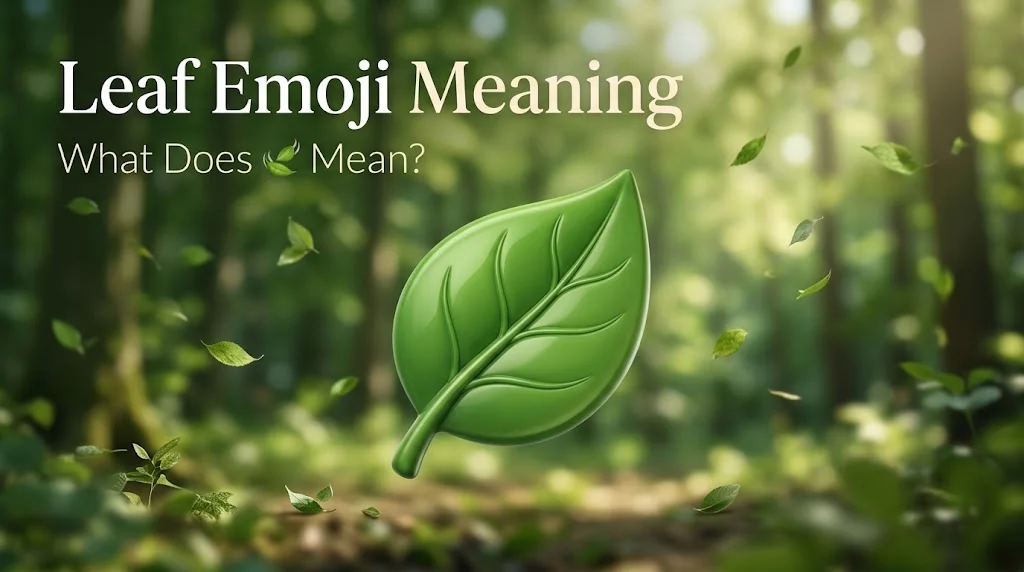
🍃 usually means nature, leaves, fresh air, wind, or a peaceful outdoor mood. Its tone is generally light and positive. In a message, it can make a statement feel more relaxed, fresh, gentle, or connected to nature.
The 🍃 leaf emoji usually represents leaves moving in the wind, nature, freshness, or a calm outdoor feeling. In texts and social media, people may use it to add a natural, peaceful, fresh, or lighthearted tone. It can also suggest spring, greenery, changing seasons, or simply being outdoors. The exact meaning depends on the words around it and why the sender chose it.
For example:
“Such a beautiful day outside 🍃”
Here, the emoji reinforces the feeling of fresh air and nature.
What Does the 🍃 Leaf Emoji Mean?
The official name of 🍃 is Leaf Fluttering in Wind. Unicode identifies it as U+1F343, and the emoji was approved in Unicode 6.0 and added to Emoji 1.0. Its design shows one or two green leaves with motion lines, giving the impression that they are moving through the air.
Because of that visual, 🍃 often carries ideas such as:
- Nature and greenery
- Fresh air
- Wind or a breeze
- Spring or warm-weather scenery
- Trees and plants
- A peaceful outdoor atmosphere
- A fresh or relaxed mood
- Seasonal change
Unlike a facial emoji, 🍃 does not directly express an emotion. Instead, it can set the mood of a message.
For example, “I needed some fresh air today 🍃” uses the emoji to reinforce the outdoor and refreshing feeling.
🍃 Meaning in Text Messages
In texting, the leaf emoji can have several closely related meanings.
Nature and Outdoors
This is one of its clearest uses. Someone may add 🍃 when talking about hiking, parks, trees, gardens, camping, or enjoying the outdoors.
Example:
“Spent the afternoon walking through the woods 🍃”
The emoji makes the nature-related context more noticeable.
Freshness and Calm
🍃 can also create a soft, refreshing feeling without literally referring to leaves.
Example:
“Finally getting a quiet morning to myself 🍃”
Here, the leaf works more like a mood setter. It can make the message feel peaceful and relaxed.
Spring, Greenery, or Changing Seasons
Because leaves are associated with plants and seasonal changes, 🍃 can appear in posts or messages about spring, gardens, new greenery, or outdoor scenery.
Example:
“Everything is turning green again 🍃”
The emoji supports the idea of fresh growth and greenery.
A Light, Aesthetic Touch
Sometimes the sender simply likes the visual style of the emoji. 🍃 can make a caption or message look softer and more natural without adding a specific hidden meaning.
That is why it is usually better not to overinterpret a single 🍃.
Is 🍃 a Positive Emoji?
Usually, yes. 🍃 tends to have a neutral-to-positive and peaceful tone.
It can suggest:
- Freshness
- Relaxation
- Natural beauty
- Simplicity
- Calm
- A pleasant outdoor setting
However, the surrounding message matters. For example, “I just want to disappear for a while 🍃” has a different emotional context from “Beautiful weather today 🍃.”
The emoji itself does not automatically turn a serious message into a positive one.
What Does 🍃 Mean From Someone?
If someone sends you 🍃 by itself, there is no single guaranteed interpretation.
It could mean:
- They are thinking about nature.
- They are sharing a peaceful or fresh mood.
- They are reacting to an outdoor topic.
- They simply like the emoji.
- They want to make their message look calm or aesthetic.
The best clue is the conversation around it.
For example:
“Let’s go for a walk later 🍃”
Likely meaning: A relaxed outdoor mood.
“This place is so peaceful 🍃”
Likely meaning: The sender is emphasizing calmness and nature.
“Good morning 🍃”
Likely meaning: A soft, pleasant, or aesthetic greeting rather than a specific coded message.
Is 🍃 Flirty or Romantic?
🍃 is not inherently a flirting or romantic emoji.
Someone could use it in a romantic message, but the emoji itself does not prove romantic interest. The surrounding words, relationship, and communication style matter much more.
For example:
“Wish you were here with me 🍃”
The message could feel affectionate depending on the relationship, but the romantic feeling comes mainly from the words not from 🍃 alone.
If someone simply sends:
“🍃”
there is not enough information to conclude that they are flirting.
Can 🍃 Be Used as a Joke?
Yes. Like many emojis, 🍃 can be used playfully when the visual fits the situation.
For example:
“Me pretending everything is peaceful after finishing my homework 🍃”
The contrast between the words and the calm-looking leaf creates the joke.
The emoji can also soften an otherwise ordinary statement:
“I have absolutely no idea what I’m doing 🍃”
In that case, 🍃 may give the sentence a deliberately relaxed or silly tone.
🍃 vs. Other Leaf and Plant Emojis
Several nature emojis look similar but communicate different visual ideas. Unicode lists 🍁 as Maple Leaf, 🍂 as Fallen Leaf, 🍃 as Leaf Fluttering in Wind, and 🌿 as Herb.
| Emoji | Official Name | Common Meaning | Tone | Where or When It Is Used |
|---|---|---|---|---|
| 🍃 | Leaf Fluttering in Wind | Leaves, breeze, nature, freshness | Calm, fresh, light | Nature captions, outdoor messages, peaceful moods |
| 🍂 | Fallen Leaf | Autumn, falling leaves, seasonal change | Nostalgic, seasonal | Fall posts, autumn scenery, changing seasons |
| 🍁 | Maple Leaf | Maple leaves, fall, Canada-related imagery | Seasonal, natural | Autumn posts, maple imagery, Canadian themes |
| 🌿 | Herb | Herbs, greenery, plants | Natural, fresh | Gardening, cooking, plant-related messages |
| 🌱 | Seedling | New growth, planting, beginnings | Hopeful, positive | Gardening, growth, new beginnings |
| 🌳 | Deciduous Tree | Trees, forests, greenery | Natural, grounded | Parks, forests, environmental topics |
| 🌲 | Evergreen Tree | Pine or evergreen trees, forests | Outdoorsy, seasonal | Forests, winter scenery, Christmas contexts |
| ☘️ | Shamrock | Shamrock, Irish themes, luck | Cheerful, festive | Irish culture, celebrations, good-luck messages |
The biggest difference is movement and mood. 🍃 specifically shows leaves fluttering in the wind, while 🍂 and 🍁 focus more strongly on individual leaves and seasonal imagery. 🌿 represents leafy greenery or herbs, while 🌱 emphasizes young growth.
If you mean a gentle breeze or fresh natural feeling, 🍃 is usually a better choice. If you mean autumn leaves, 🍂 or 🍁 is more specific.
🍃 Message Examples and What They Can Mean
“The weather is perfect today 🍃”
Likely meaning: The sender is emphasizing the pleasant, fresh outdoor atmosphere.
“I love quiet places like this 🍃”
Likely meaning: The emoji adds a calm, peaceful nature-related mood.
“Going on a little hike this weekend 🍃”
Likely meaning: The emoji reinforces the outdoor setting.
“New season, new energy 🍃”
Likely meaning: Here, 🍃 can suggest freshness, change, or a renewed mood rather than literally referring to a leaf.
“Okay, I’m going to relax now 🍃”
Likely meaning: The emoji gives the message a softer, calmer feeling.
These are illustrative examples. The same emoji can feel different when the surrounding words or relationship changes.
Common Misunderstandings About 🍃
One common mistake is assuming that every leaf emoji has the same meaning.
For example, 🍃 and 🍂 are both connected with leaves, but their visual messages differ. 🍃 shows leaves moving in the wind, while 🍂 represents fallen leaves.
Another mistake is assuming that 🍃 always carries a hidden emotional message. Sometimes it is simply decorative.
If someone sends:
“Beautiful garden 🍃”
the straightforward explanation is probably the right one: they are talking about the garden and adding a nature-themed emoji.
How to Respond to 🍃
Your response should match the conversation rather than treating 🍃 as a secret code.
If the conversation is about nature:
“Yeah, it looks so peaceful 🍃”
If someone shares a relaxing moment:
“That sounds really nice.”
If they send it casually:
You can simply continue the conversation normally.
If you’re unsure what they mean:
“What does the leaf mean? 😄”
There is no need to assume romance, sarcasm, or a hidden message from 🍃 alone.
When Should You Use 🍃?
🍃 works well when you want to add a natural or refreshing feeling to:
- Outdoor photos
- Nature captions
- Hiking or walking updates
- Garden-related posts
- Spring and greenery references
- Calm or peaceful messages
- Fresh-air comments
- Light, aesthetic captions
It is especially useful when you want a green, breezy, natural mood without using a more specific plant or season emoji.
Copy and Paste the 🍃 Leaf Emoji
🍃
You can copy and paste the leaf emoji wherever you want, including texts, captions, comments, and notes.
FAQs
What is the official name of 🍃?
The official Unicode name is Leaf Fluttering in Wind. Its code point is U+1F343. Unicode lists it among nature and plant-related emoji characters.
What does 🍃 mean in texting?
In texting, 🍃 commonly represents leaves, wind, nature, freshness, greenery, or a calm outdoor mood. Its exact meaning depends on the surrounding message.
Is 🍃 a nature emoji?
Yes. Its visual design directly represents leaves moving in the wind, so it is commonly used for nature, plants, outdoor settings, and fresh-air themes.
What is the difference between 🍃 and 🍂?
🍃 is Leaf Fluttering in Wind and emphasizes green leaves moving through the air. 🍂 is Fallen Leaf and is more closely associated with fallen leaves and autumn.
Does 🍃 mean spring?
It can be used to suggest spring or fresh greenery, but spring is not its only meaning. The emoji officially depicts leaves fluttering in wind, so the surrounding context determines a seasonal meaning is intended.
Is 🍃 a romantic emoji?
Not by itself. It can appear in an affectionate or romantic message, but 🍃 does not automatically indicate attraction or romantic interest.
Conclusion
The 🍃 leaf emoji is a simple way to express nature, greenery, fresh air, wind, calmness, or a light outdoor mood. Its official name, Leaf Fluttering in Wind, reflects its visual design.
The most useful distinction is between 🍃 and other leaf-related emojis. 🍃 feels breezy and fresh, 🍂 leans toward fallen leaves and autumn, while 🍁 points more specifically to the maple leaf. When interpreting 🍃 in a message, focus on the surrounding words and conversation instead of assuming a hidden meaning.
See Also More:
- Bird Emoji Meaning | From Simple Bird to Playful Texting Symbol In 2026
- Santa Emoji Meaning | Christmas Cheer, Gifts & Holiday Spirit In 2026
- Clapping Emoji Meaning | Applause, Praise & More In 2026











8 thoughts on “🍃 Leaf Emoji Meaning | What This Breezy Green Symbol Really Says In 2026”