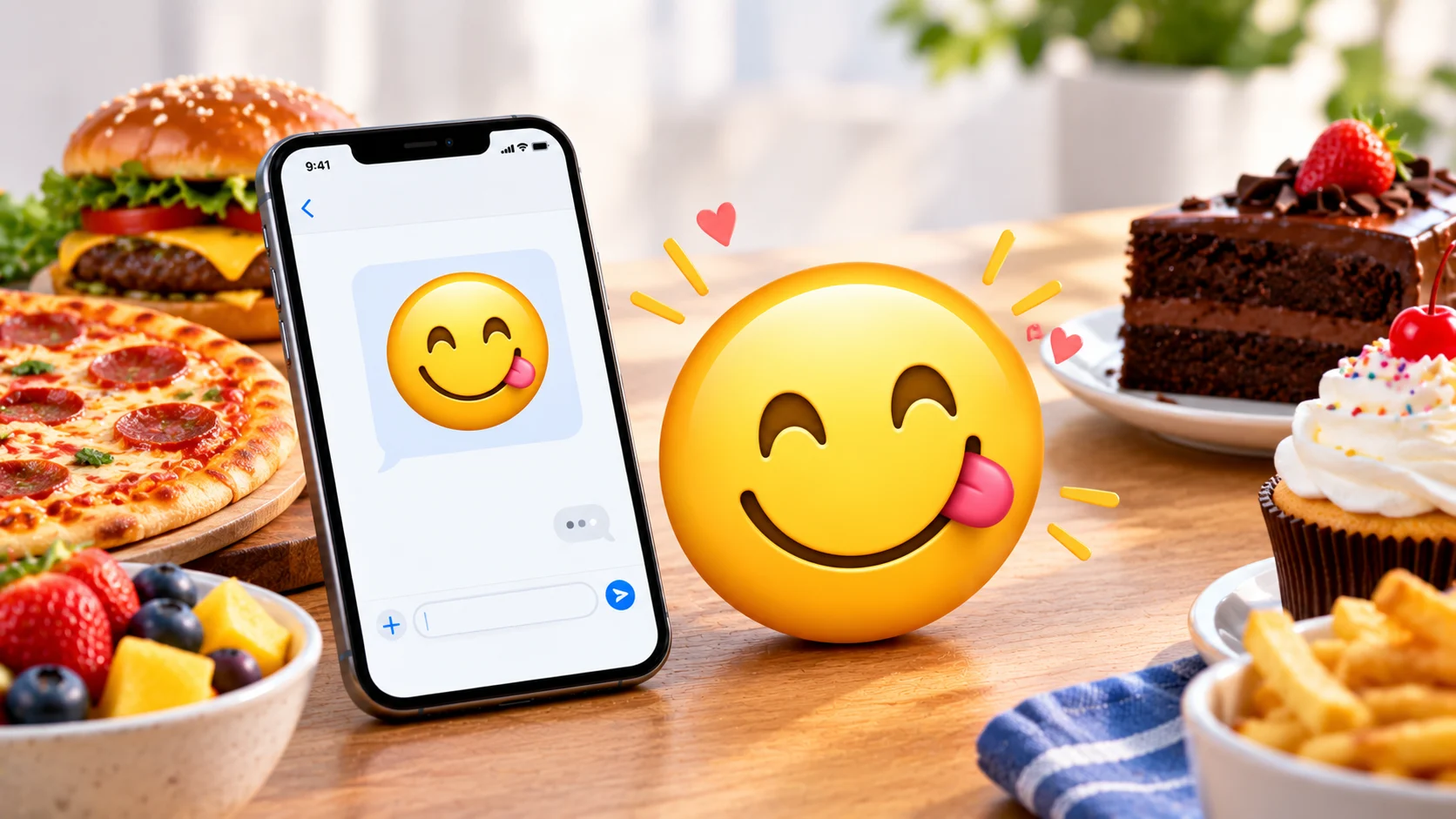
😋 usually means “yum,” “that looks delicious,” or “this tastes great.” It has a happy, playful, satisfied tone and is most often connected with food. In some conversations, 😋 can suggest craving, anticipation, or playful attraction. The surrounding words and whether the emoji refers to food or a person matter more than the emoji by itself.
The yum emoji 😋 usually means that something looks or tastes delicious. Its official Unicode name is Face Savoring Food, and its keywords include “delicious,” “tasty,” “yum,” “yummy,” “eat,” and “savor.”
People commonly use 😋 when reacting to food, talking about something they want to eat, or showing satisfaction after a tasty meal. Depending on the message, it can also express playful enjoyment or, when directed at a person, a cheeky compliment. Context is what separates a simple “that looks delicious” from a more suggestive interpretation.
Yum Emoji Copy and Paste
😋
You can copy and paste the yum emoji directly:
😋 Yum
Its Unicode code point is U+1F60B, and Unicode lists “yum” and “yummy” among its keywords.
What Does the Yum Emoji 😋 Mean?
The 😋 emoji shows a smiling face with its tongue sticking out from one side of its mouth. The expression is designed to suggest savoring delicious food or enjoying a tasty experience.
Its official Unicode name is Face Savoring Food. Unicode’s current emoji data associates it with ideas such as delicious, eat, hungry, savor, tasty, yum, and yummy.
In everyday texting, 😋 can replace phrases such as:
- “Yum!”
- “That looks delicious.”
- “That tastes so good.”
- “I want some.”
- “I can’t wait to eat that.”
- “That was really tasty.”
The exact wording depends on the situation.
😋 Meaning in Text
When someone sends 😋 in a text, they are usually expressing enjoyment of food or anticipation of something tasty.
For example:
“We’re having tacos tonight 😋”
This likely means the person is excited about the food.
But:
“That cake looks amazing 😋”
is more directly a reaction to something that looks delicious.
The emoji can also appear after someone has already eaten:
“That was the best burger 😋”
Here, the expression is about satisfaction rather than hunger.
When Someone Sends 😋 Without Mentioning Food
Sometimes 😋 appears when there is no food in the message. In that case, don’t automatically assume that it means “delicious.”
For example:
“I finally got tickets to the concert 😋”
Here, 😋 can add a playful sense of satisfaction or excitement.
Similarly:
“Friday night is going to be fun 😋”
The emoji may suggest anticipation or cheeky enjoyment rather than food.
The words around the emoji are what make the intended meaning clearer.
Is the Yum Emoji Flirty?
😋 can be flirty in some contexts, but it is not inherently a flirting emoji.
If someone sends:
“That pizza looks incredible 😋”
the meaning is clearly about food.
But if someone sends:
“You look good today 😋”
the emoji can give the compliment a more playful or suggestive tone.
This does not prove romantic interest. The relationship between the people, the wording, and the broader conversation matter more than 😋 alone.
What Does 😋 Mean From Someone?
If someone sends you 😋, look at what they are reacting to.
After a food photo:
They probably mean “That looks delicious.”
After an invitation to dinner:
It may show excitement or anticipation.
After a compliment:
It can make the message feel playful or cheeky.
After a photo of a person:
It may be a playful attraction signal, depending on the conversation.
After a joke or good news:
It can simply express satisfaction or enjoyment.
There is no single interpretation that applies to every message.
Yum Emoji Examples
“Homemade pizza tonight 😋”
The emoji shows excitement about eating the pizza.
“This dessert is so good 😋”
It expresses satisfaction with the taste.
“You saved me some? 😋”
It can show eagerness or playful anticipation.
“That outfit looks amazing 😋”
Because the emoji is directed at a person rather than food, it may add a cheeky or flirtatious tone.
“Finally finished my work 😋”
Here, it can express satisfaction even though there is no food involved.
Yum Emoji vs. Similar Emojis
| Emoji | Official Name | Common Meaning | Tone | Where or When It Is Used |
|---|---|---|---|---|
| 😋 | Face Savoring Food | Delicious, yummy, savoring | Happy, playful | Food reactions, cravings, enjoyment |
| 🤤 | Drooling Face | Strong craving or desire | Eager, exaggerated | Food, intense cravings, playful reactions |
| 😛 | Face with Tongue | Playfulness, teasing | Silly, playful | Jokes, teasing, casual messages |
| 😜 | Winking Face with Tongue | Mischief, joking, teasing | Playful, cheeky | Jokes, teasing, playful comments |
| 😝 | Squinting Face with Tongue | Exaggerated silliness | Goofy, energetic | Jokes, playful reactions |
| 😍 | Smiling Face with Heart-Eyes | Strong admiration or love | Affectionate, excited | Food, people, places, things you adore |
| 🥰 | Smiling Face with Hearts | Warm affection and fondness | Sweet, affectionate | Loved ones, appreciation, romantic contexts |
The most common confusion is between 😋 and 🤤. Both can relate to food, but 😋 generally expresses savoring or enjoying something delicious, while 🤤 more strongly suggests drooling, craving, or wanting something badly.
😛, 😜, and 😝 are more focused on playful tongue-out expressions and teasing. They don’t specifically mean that something tastes good.
😍 and 🥰 can be used for food too, but they usually communicate admiration or affection rather than the specific “yum” reaction.
😋 vs. 🤤: What’s the Difference?
These two are especially easy to confuse.
😋 Face Savoring Food = “Yum, this is delicious.”
🤤 Drooling Face = “I really want this” or “This is making me drool.”
Compare:
“This chocolate cake is amazing 😋”
This sounds like enjoyment of the cake.
“I need that chocolate cake right now 🤤”
This puts more emphasis on craving or desire.
Neither interpretation is guaranteed in every conversation, but the emotional difference is useful when choosing between them.
😋 vs. 😛: What’s the Difference?
😋 is strongly associated with food and savoring.
😛 Face with Tongue is more about sticking out the tongue in a playful or teasing way.
For example:
“That pasta was incredible 😋”
works naturally for a food reaction.
But:
“I was right 😛”
uses the tongue-out expression as playful teasing rather than a food reaction.
Can 😋 Be Used for Things Other Than Food?
Yes. Although food is its clearest use, 😋 can express satisfaction, anticipation, or playful enjoyment in other situations.
For example:
“Three-day weekend starts tomorrow 😋”
The person is not eating anything. The emoji adds a feeling of happy anticipation.
Still, food remains the most direct interpretation because the emoji’s official name and Unicode keywords are specifically tied to savoring food.
Is 😋 a Good Emoji for a Food Post?
Yes. 😋 works naturally when you want to show that food looks tasty or that you enjoyed eating it.
Examples include:
“Freshly baked cookies 😋”
“Dinner was incredible 😋”
“Trying this recipe tonight 😋”
It can also work as a short comment on a food photo when you want to communicate “That looks delicious.”
How to Respond to 😋
Your response can match what the person is reacting to.
If they reacted to your food:
“You have to try it! 😋”
If they are excited about dinner:
“I can’t wait either!”
If they’re being playful:
“Someone’s hungry 😂”
If you’re unsure what they mean:
“Haha, are you hungry? 😋”
A simple response is usually better than trying to assign a hidden meaning to the emoji.
Yum Emoji and Food Combinations
😋 can be paired with food emojis to make the meaning more specific:
😋🍕 — delicious pizza
😋🍔 — tasty burger
😋🍰 — delicious cake or dessert
😋🍩 — craving a donut
😋🍓 — enjoying strawberries
😋🍜 — tasty noodles
😋☕ — enjoying a good coffee
These combinations are especially useful when you want the food itself to be immediately clear.
Official Name and Technical Details
Emoji: 😋
Official Unicode name: Face Savoring Food
Code point: U+1F60B
Unicode version: Unicode 6.0
Emoji version: Emoji 1.0
Common keywords: delicious, eat, food, hungry, savor, tasty, yum, yummy
Unicode’s current Emoji 18.0 data lists 😋 as “face savoring food” and includes “yum” and “yummy” among its associated keywords.
Emojipedia notes that the emoji was approved as part of Unicode 6.0 in 2010 and added to Emoji 1.0 in 2015.
FAQs
What does the yum emoji 😋 mean?
😋 usually means “yum,” “delicious,” or “that looks tasty.” It can also show hunger, anticipation, or satisfaction depending on the message.
What is the official name of 😋?
The official Unicode name is Face Savoring Food. Unicode also lists “yum” and “yummy” among its keywords.
Is 😋 a flirty emoji?
Sometimes 😋 can sound playful or flirty when it is directed at a person, but it is most commonly associated with enjoying or craving food. Context determines the tone.
What is the difference between 😋 and 🤤?
😋 usually suggests savoring or enjoying something delicious, while 🤤 more strongly conveys drooling, craving, or intense desire for something.
Can 😋 mean “I want you”?
In some contexts, a person may use 😋 suggestively toward another person, but the emoji does not have a fixed meaning of sexual or romantic interest. The surrounding message matters.
What does 😋 mean from a girl or guy?
The emoji does not have a different standard meaning based on gender. Whether it means “yum,” excitement, teasing, or something flirtier depends on the conversation and context.
Conclusion
The yum emoji 😋 is officially called Face Savoring Food and most commonly expresses that something is delicious, tasty, or satisfying. Unicode’s current keywords include “yum” and “yummy,” which closely match how people use it in everyday messages.
When food is involved, 😋 is usually straightforward. When it appears in a message about a person, a plan, or another non-food subject, the tone can become more playful or suggestive so the surrounding conversation matters.
See Also More:
- Announcement Emoji Meaning | What Does It Mean In 2026
- Lock Emoji Meaning | What It Means in Text & Messages in 2026
- Bowing Emoji Meaning | What It Means in Text & How to Use It In 2026