Quick Answer
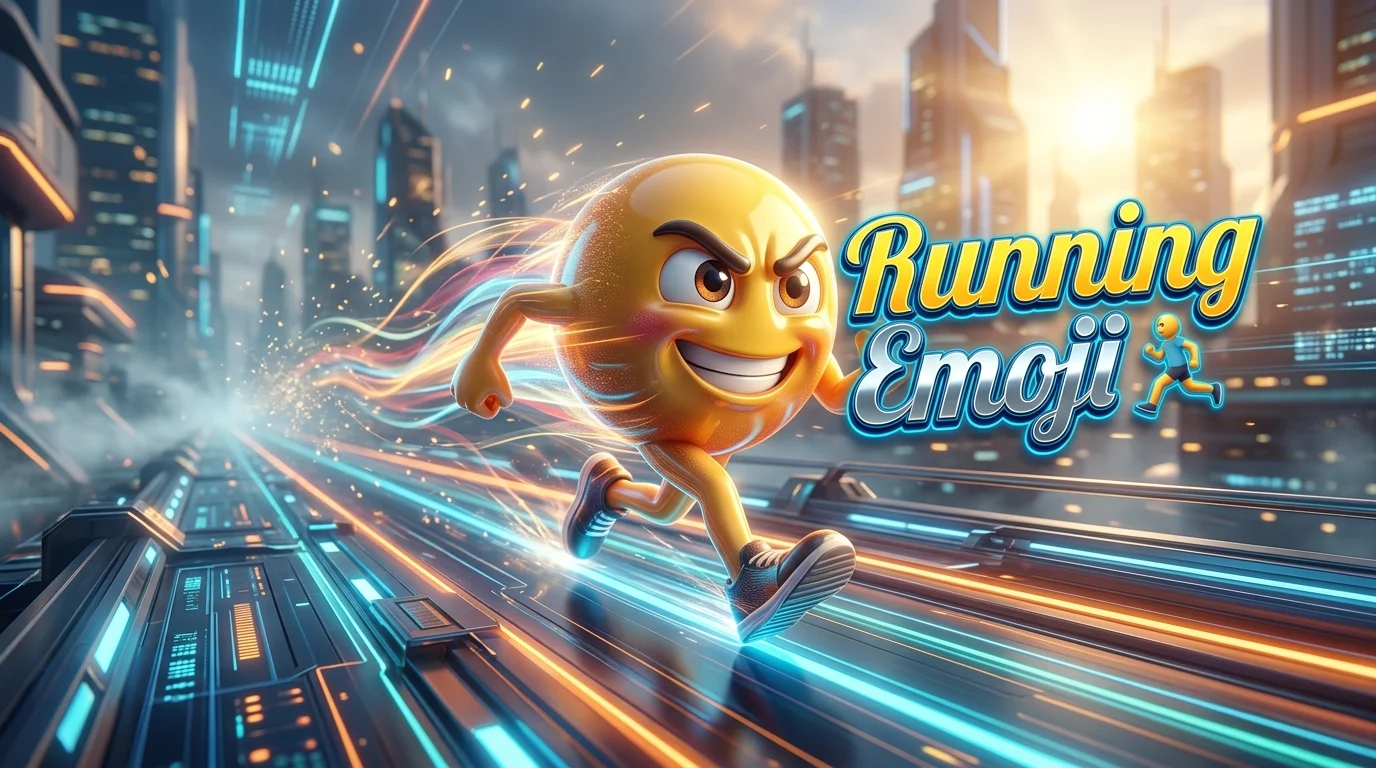
🏃 means running, speed, movement, or rushing. It can describe actual exercise or a race, but in casual messages it may also add a humorous sense of urgency.
The running emoji 🏃 usually represents a person running, moving quickly, rushing somewhere, exercising, or taking part in a race. In texting, it can also be used playfully to mean “I’m leaving,” “I’m in a hurry,” or “I need to get out of here.” The exact meaning depends on the words around it and the situation.
Its official Unicode name is Person Running. Unicode lists 🏃 as U+1F3C3 and associates it with ideas such as fast, hurry, marathon, move, quick, race, run, rush, and speed.
For example:
“I’m late for class 🏃”
Here, 🏃 emphasizes rushing rather than literally saying the person is running.
What Does the Running Emoji 🏃 Mean?
The most direct meaning of 🏃 is a person running. It can be used when someone is talking about exercise, sports, a race, going somewhere quickly, or simply being in motion.
Common uses include:
- Running or jogging
- Training for a race
- Being in a hurry
- Rushing somewhere
- Leaving quickly
- Showing excitement or energy
- Playfully exaggerating how fast something is happening
The emoji is fairly neutral on its own. The surrounding message usually tells you the mood is serious, energetic, funny, or dramatic.
🏃 Can Mean “I’m Rushing”
One of the most common casual uses is to show that someone is moving quickly.
“The movie starts in five minutes 🏃”
The emoji adds a visual feeling of hurry up!
It can also turn an ordinary sentence into something more playful:
“Me trying to finish my homework before dinner 🏃”
Here, the emoji creates a humorous image of someone rushing to get the task done.
🏃 Can Mean “I’m Leaving”
In jokes and casual conversations, 🏃 can represent someone running away or quickly leaving a situation.
“They said there would be a surprise test 🏃”
The intended meaning is not necessarily literal running. It is a playful way of saying, “I’m getting out of here.”
This interpretation becomes especially clear when 🏃 is paired with phrases such as “I’m out,” “gotta go,” or “bye.”
🏃 Can Show Energy or Motivation
The running emoji can also suggest action and momentum.
“Back to training tomorrow 🏃”
In this context, it can represent exercise, fitness, or an active routine.
Because Unicode’s keywords include “marathon,” “race,” “run,” and “speed,” the emoji works naturally in conversations about running and athletic activity.
What Does 🏃 Mean in Texting?
In texting, 🏃 often adds a sense of movement or urgency to a message.
Its meaning can change depending on what comes before it:
| Message | Likely meaning |
|---|---|
| “Heading to the gym 🏃” | Going to exercise |
| “I’m late 🏃” | Rushing |
| “Dinner is ready 🏃” | Moving quickly toward something |
| “They said free food 🏃” | Playfully rushing toward it |
| “Okay, I’m leaving 🏃” | Leaving or jokingly running away |
The emoji does not automatically mean the sender is literally running. In casual texting, it can function as a visual reaction that makes the message feel more energetic.
Is 🏃 Flirty?
Not by itself. The running emoji is not an inherently romantic or flirty emoji.
If someone sends 🏃 in a friendly conversation, it may simply mean they are rushing, leaving, exercising, or joking around. In a playful conversation, it can add humor or exaggeration.
For example:
“You better save me some pizza 🏃”
That is more likely to communicate playful excitement than romantic interest.
As with most emojis, the surrounding conversation and the relationship between the people involved matter more than the emoji alone.
Can 🏃 Be Sarcastic or Funny?
Yes. The running emoji can be used humorously, especially when the message describes something someone supposedly wants to escape from.
“Another group project? 🏃”
The emoji creates a joking “I need to escape” reaction.
It can also exaggerate excitement:
“They just announced free dessert 🏃”
The sender is not necessarily literally running. The emoji makes the reaction more dramatic and playful.
🏃 vs. Similar Running and Movement Emojis
Several emojis can look or feel similar to 🏃, but they communicate different ideas.
| Emoji | Official Name | Common Meaning | Tone | Where or When It Is Used |
|---|---|---|---|---|
| 🏃 | Person Running | Running, rushing, moving fast | Energetic, urgent, playful | Exercise, races, rushing, jokes |
| 🏃♀️ | Woman Running | Woman running or moving quickly | Active, energetic | Running, sports, movement |
| 🏃♂️ | Man Running | Man running or moving quickly | Active, energetic | Running, sports, movement |
| 🚶 | Person Walking | Walking or moving at a normal pace | Calm, neutral | Walking, going somewhere |
| 🚶♀️ | Woman Walking | Woman walking | Calm, casual | Walking or everyday movement |
| 🚶♂️ | Man Walking | Man walking | Calm, casual | Walking or everyday movement |
| 🏎️ | Racing Car | Fast driving or racing | Excited, high-speed | Cars, racing, speed |
| 💨 | Dashing Away | Speed, movement, or something rushing away | Playful, dramatic | Jokes, quick movement, reactions |
The biggest difference is that 🏃 specifically shows a running person, while 🚶 represents walking. The gendered versions, 🏃♀️ and 🏃♂️, are related sequences that specify the person’s gender. Unicode lists all three forms separately.
💨 can sometimes be paired with 🏃 to make the idea of speed more obvious, but 💨 itself represents a different visual concept.
How to Choose the Right Emoji
Use 🏃 when you want the message to feel active, fast, or rushed.
- Actual running: “Morning run done 🏃”
- Rushing: “Give me a minute, I’m coming 🏃”
- Playful escape: “You said chores? 🏃”
- Energetic reaction: “Free snacks? 🏃”
If you simply mean walking, 🚶 is a better choice. If you want to emphasize speed without showing a person, 💨 may fit better.
Running Emoji Examples in Messages
Exercise
“Going for a run before work 🏃”
Here, the emoji has its literal meaning: running or exercise.
Being Late
“I overslept! 🏃”
The emoji adds urgency and makes the message feel more energetic.
Playful Escape
“You want me to present first? 🏃”
This jokingly suggests “I’m getting out of here.”
Excitement
“The doors are open! 🏃”
The emoji emphasizes quickly moving toward something exciting.
Friendly Humor
“You finished all the cookies? 🏃”
Depending on the conversation, this could jokingly suggest “I’m coming after you” or simply add a dramatic reaction. The surrounding words determine the tone.
What Does It Mean When Someone Sends 🏃?
When someone sends only 🏃, there is not one guaranteed interpretation.
It could mean:
- “I’m running.”
- “I’m on my way.”
- “I’m rushing.”
- “I have to go.”
- “I’m getting out of here.”
- “That sounds exciting I’m coming!”
- “This is funny; I’m pretending to run away.”
Look at what was said immediately before it. A message about exercise points toward literal running, while a joke about an awkward situation may suggest a playful escape.
Common Misunderstandings About 🏃
The running emoji is easy to overinterpret when it appears without words.
It does not automatically mean someone is angry. Running away can be a humorous interpretation, but 🏃 can simply describe movement or exercise.
It does not automatically mean flirting. There is no built-in romantic meaning.
It does not always mean someone is literally running. In casual messages, it is often an exaggerated reaction to hurry, excitement, or wanting to leave.
It does not have a fixed emotional intensity. “Going for a run 🏃” is straightforward, while “Another meeting? 🏃” is clearly more playful.
How to Respond to 🏃
Your response should match the message around the emoji.
If they mean they are rushing, you could reply:
“Haha, take your time!”
If they are joking about leaving, a playful response works:
“Hey, come back! 😂”
If they are talking about running or exercise, a simple response is enough:
“Nice! Hope you have a good run.”
If you are unsure what they mean, asking directly is better than trying to assign a hidden meaning to the emoji.
Copy and Paste the Running Emoji
Here it is:
🏃
You can also use the gender-specific versions:
🏃♀️ 🏃♂️
Unicode also supports skin-tone variations of the person-running emoji.
Official Running Emoji Details
The emoji commonly called the running emoji has the official Unicode/CLDR name Person Running.
- Emoji: 🏃
- Official name: Person Running
- Code point: U+1F3C3
- Unicode approval: Unicode 6.0, 2010
- Emoji version: Emoji 1.0, 2015
Emojipedia notes that the emoji was originally introduced under the name “Runner” and was later presented as gender-neutral on most platforms.
Different platforms can draw the same Unicode emoji with slightly different artwork, but the underlying character remains the same.
FAQs
What does the 🏃 emoji mean?
The 🏃 emoji means a person running. In messages, it can also represent rushing, speed, exercise, going somewhere quickly, or jokingly leaving a situation.
What does 🏃 mean from someone?
It depends on the conversation. They may be saying they are running, rushing, heading somewhere, or playfully pretending to escape.
Does 🏃 mean running away?
It can. In humorous messages, 🏃 is sometimes used to show a playful “I’m out of here” reaction, but that is a contextual use rather than its only meaning.
Is 🏃 a flirty emoji?
Not inherently. It can appear in a playful or flirty conversation, but the emoji alone does not establish romantic interest.
What is the difference between 🏃 and 🚶?
🏃 represents running and faster movement, while 🚶 represents walking at a normal pace.
What is the official name of 🏃?
Unicode’s current emoji list calls it Person Running. Its code point is U+1F3C3.
Conclusion
The 🏃 running emoji is mainly about running, movement, speed, and urgency. In everyday texting, it can also become a playful way to show that someone is rushing, excited, or jokingly trying to escape. The safest way to interpret it is to read it together with the surrounding words rather than treating 🏃 as having one fixed hidden meaning
See Also More:
- Bird Emoji Meaning | From Simple Bird to Playful Texting Symbol In 2026
- Santa Emoji Meaning | Christmas Cheer, Gifts & Holiday Spirit In 2026
- Clapping Emoji Meaning | Applause, Praise & More In 2026








1 thought on “🏃 Running Emoji Meaning | Speed, Movement, and “I’m Outta Here” In 2026”