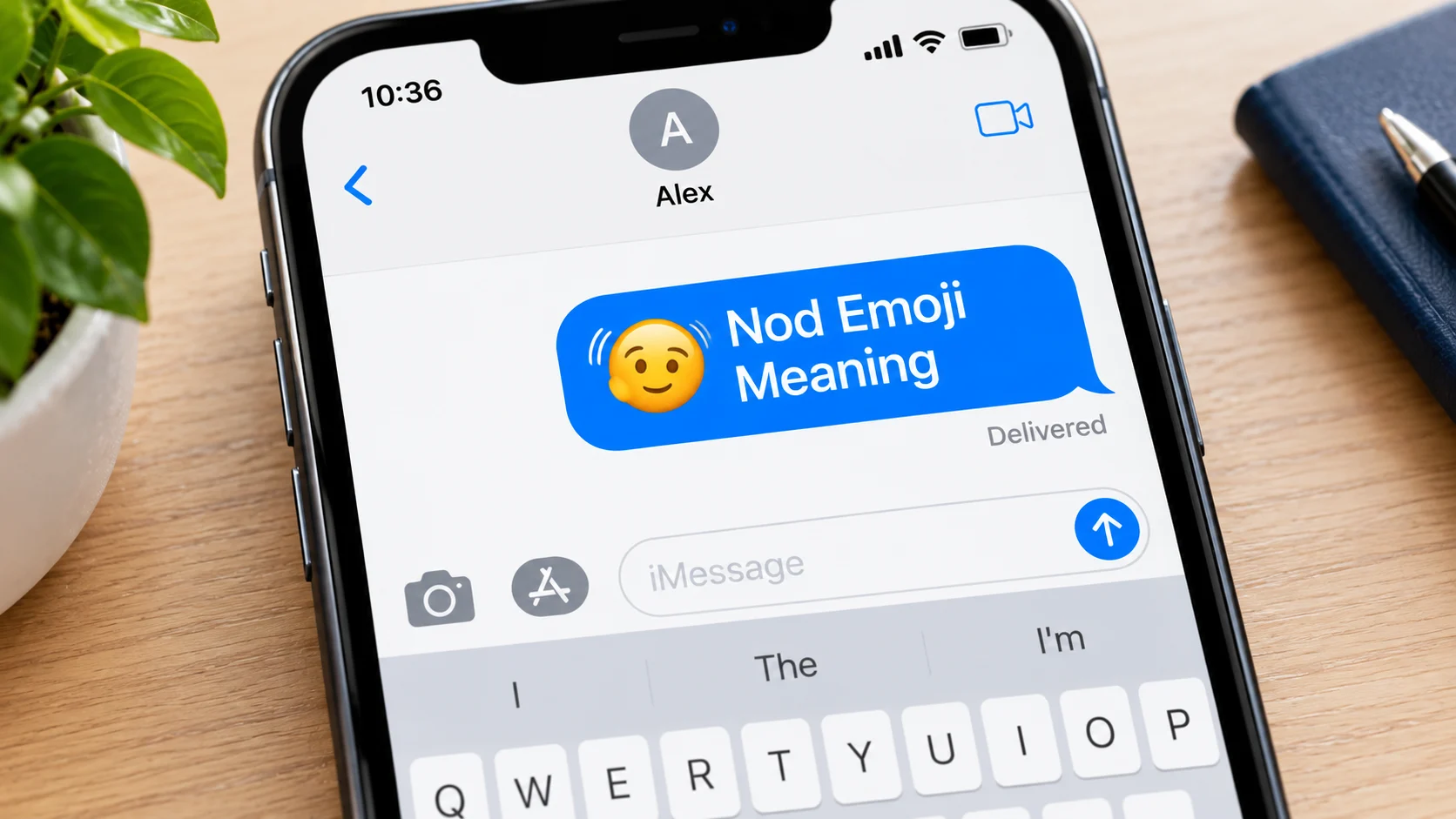
🙂↕️ Nod emoji meaning: agreement, acknowledgment, acceptance, or understanding. It often works like a written “yes,” “okay,” “I get it,” or “right.” Because it represents a nod rather than a strong facial emotion, its tone is usually mild and conversational.
The nod emoji 🙂↕️ usually means “yes,” agreement, acknowledgment, or understanding. It shows a face moving its head vertically, like a person nodding. In a text, someone might use it to say “I agree,” “I understand,” “exactly,” or simply “got it” without writing those words. The exact tone depends on the message around it. It can feel friendly, calm, supportive, or lightly playful rather than strongly emotional.
What Does the Nod Emoji 🙂↕️ Mean?
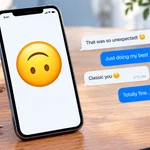
The nod emoji is officially called Head Shaking Vertically. It depicts a face moving its head up and down to represent a nodding gesture. Unicode lists “nod” and “yes” among its keywords.
In everyday texting, 🙂↕️ can communicate:
- Yes
- I agree
- I understand
- That makes sense
- Exactly
- Got it
- I accept
- I’m listening
For example:
“So we’re meeting at 6?”
“🙂↕️”
Here, the emoji most naturally means “Yes” or “That’s right.”
It can also acknowledge something without expressing strong agreement:
“Okay, I understand what you mean 🙂↕️”
In that case, it is closer to “I hear you” or “I understand.”
What Does 🙂↕️ Mean in Text?
In text messages, 🙂↕️ often acts as a nonverbal response. Instead of typing a complete answer, the sender uses the visual idea of nodding.
Its meaning can shift slightly depending on the words around it.
“Yes” or agreement
“You want pizza tonight?”
“🙂↕️”
This is a simple affirmative response.
Understanding
“Just save the file before you close the app.”
“🙂↕️ Got it.”
The emoji supports the idea that the person understands the instruction.
Acknowledgment
“I’ll send it later.”
“🙂↕️”
This may simply mean “Okay” or “Understood.”
Strong agreement
“That ending was amazing.”
“🙂↕️ Exactly.”
Here, the emoji reinforces agreement with the other person’s opinion.
Is the Nod Emoji Positive or Neutral?
Usually, 🙂↕️ has a neutral-to-positive tone.
A nod is commonly associated with agreement and acknowledgment, so the emoji normally does not feel negative. However, it does not automatically express excitement either.
Compare:
- 🙂↕️ — calm agreement or acknowledgment
- 😄 — obvious happiness or enthusiasm
- 🎉 — celebration
- ❤️ — affection or strong positive feeling
The surrounding message matters. A short “🙂↕️” can feel calm and matter-of-fact, while “Yes!! 🙂↕️” can sound much more enthusiastic.
Can 🙂↕️ Be Playful or Sarcastic?
Yes. Like many reaction emojis, 🙂↕️ can be used playfully or sarcastically when the surrounding text suggests that tone.
For example:
“You definitely did not eat the last cookie, right? 🙂↕️”
If the conversation is joking, the nod could deliberately create a funny contrast.
But the emoji itself does not officially mean sarcasm. The sarcastic interpretation comes from the surrounding words and situation.
Does 🙂↕️ Mean “I Agree”?
Often, yes.
The Unicode keywords for Head Shaking Vertically include “yes,” and the gesture is designed to represent nodding.
For example:
“I think we should leave early.”
“🙂↕️”
This can mean “I agree.”
However, a nod can also mean “I understand” or “I acknowledge that” without necessarily showing complete agreement.
That distinction matters:
“I agree.” → You share the opinion.
“I understand.” → You understand what was said.
“Okay.” → You acknowledge it or accept it.
🙂↕️ can fit all three depending on context.
Is the Nod Emoji Flirty?
Not by itself.
🙂↕️ is primarily an agreement or acknowledgment gesture. It does not inherently signal attraction or romantic interest.
If someone sends:
“You’re right 🙂↕️”
there is no clear romantic meaning.
If it appears in a playful conversation with other affectionate or romantic language, the overall conversation could have a different tone. But the nod emoji alone is not enough to establish flirting.
The safest interpretation is usually the straightforward one: agreement, understanding, or acknowledgment.
What Does 🙂↕️ Mean From Someone?
When someone sends 🙂↕️ by itself, consider what happened immediately before it.
| Message | Likely meaning of 🙂↕️ |
|---|---|
| “Are we still meeting at 7?” — “🙂↕️” | Yes |
| “You know what I mean 🙂↕️” | I understand / exactly |
| “Please remember to bring it.” — “🙂↕️” | Got it |
| “That was the best part.” — “🙂↕️” | I agree |
| “Okay, you win 🙂↕️” | Fine / playful acceptance |
The emoji is best read as a reaction to the conversation, not as a standalone statement with one fixed emotional meaning.
Emojis Similar to the Nod Emoji
Here are some of the closest emojis to 🙂↕️ based on agreement, acknowledgment, facial expression, or head movement.
| Emoji | Official Name | Common Meaning | Tone | Where or When It Is Used |
|---|---|---|---|---|
| 🙂↕️ | Head Shaking Vertically | Yes, agreement, acknowledgment | Calm, agreeable | Texts, reactions, confirming plans |
| 🙂↔️ | Head Shaking Horizontally | No, disagreement, rejection | Calm, dismissive | Refusing or disagreeing |
| 👍 | Thumbs Up | Okay, approval, agreement | Casual, positive | Quick replies, confirmations |
| 🙆 | Person Gesturing OK | Okay, acceptance | Positive, reassuring | Agreement or reassurance |
| 😊 | Smiling Face with Smiling Eyes | Happiness, warmth | Friendly, warm | Friendly messages and appreciation |
| 😌 | Relieved Face | Relief, calm, contentment | Peaceful | Reassurance or a sense of relief |
| 😅 | Grinning Face with Sweat | Nervousness, awkwardness, relief | Awkward, light | Uncomfortable or funny situations |
| 🙌 | Raising Hands | Celebration, excitement, praise | Enthusiastic | Good news, achievements, celebration |
The biggest comparison is between 🙂↕️ and 🙂↔️. They are designed as counterparts: vertical head movement represents a nod or “yes,” while horizontal head movement represents “no,” disagreement, or rejection. Unicode lists “yes” with 🙂↕️ and “no” with 🙂↔️.
👍 is another close alternative, but it expresses approval through a hand gesture rather than a nod. 😊 is more clearly about warmth or happiness, while 🙂↕️ is more specifically about acknowledgment or agreement.
🙂↕️ vs. 🙂↔️: What’s the Difference?
These two emojis are easy to confuse because they use the same basic face.
- 🙂↕️ Head Shaking Vertically = nodding, “yes,” agreement
- 🙂↔️ Head Shaking Horizontally = shaking the head, “no,” disagreement
For example:
“Do you want to come with us?”
“🙂↕️” → Yes
“Do you want to come with us?”
“🙂↔️” → No
Unicode describes both as ZWJ sequences built from the slightly smiling face and directional arrows. They were added with Emoji 15.1 in 2023.
A Cultural Note About Nodding
Although a nod commonly communicates agreement in the United States, gestures can have different meanings across cultures. Unicode’s proposal for the emoji specifically notes that head gestures are not interpreted identically everywhere; for example, it points out that nodding can have a different meaning in Bulgaria.
For online conversations, the surrounding words usually provide the clearest clue.
How to Respond to 🙂↕️
Your response depends on what the nod is acknowledging.
If they are agreeing
You can simply continue the conversation:
“Perfect, see you then!”
If they are acknowledging something
A normal follow-up works:
“Thanks!”
If you’re not sure what they mean
Ask directly:
“So, is that a yes?”
If the conversation is playful
You can answer casually:
“Haha, exactly.”
There is no special response required. 🙂↕️ is often just a quick acknowledgment.
Copy and Paste the Nod Emoji
🙂↕️
You can copy it and use it when you want to show yes, agreement, understanding, or acknowledgment.
Official Name and Unicode Details
The official Unicode name is Head Shaking Vertically. Its sequence is:
U+1F642 U+200D U+2195 U+FE0F
It combines 🙂 Slightly Smiling Face, a Zero Width Joiner, and ↕️ Up-Down Arrow to create one emoji sequence on supported systems.
The emoji was introduced with Emoji 15.1 in 2023.
Its appearance can vary between platforms and software versions, even though the intended concept remains the same.
FAQs
What does the nod emoji 🙂↕️ mean?
The nod emoji usually means yes, agreement, acknowledgment, or understanding. It represents a person nodding their head vertically.
What does 🙂↕️ mean from a friend?
From a friend, it usually means “yes,” “I agree,” “I understand,” or “got it.” The exact meaning depends on the message it responds to.
Does 🙂↕️ mean yes?
Usually, yes. Unicode includes “yes” as a keyword for Head Shaking Vertically.
Is 🙂↕️ the same as a thumbs-up?
Not exactly. Both can communicate agreement or approval, but 🙂↕️ represents a nod, while 👍 represents a thumbs-up gesture.
What is the difference between 🙂↕️ and 🙂↔️?
🙂↕️ represents vertical head movement, commonly understood as yes or agreement. 🙂↔️ represents horizontal head movement, commonly understood as no or disagreement.
Can 🙂↕️ be sarcastic?
It can be used sarcastically in the right context, but sarcasm is not its standard meaning. The surrounding message usually creates the sarcastic tone.
Conclusion
The nod emoji 🙂↕️ is mainly a digital version of a head nod. It commonly communicates yes, agreement, understanding, acceptance, or acknowledgment. Its calm expression makes it useful when you want to respond without adding a lot of emotion.
If you’re unsure how to interpret it, focus on the message it responds to rather than assuming it signals a deeper feeling. In most everyday conversations, a simple “yes,” “got it,” or “I agree” is the safest reading.
See Also More:
- 3D Emoji Meme | The Meaning Behind Glossy, Funny & Over-the-Top Emoji Memes In 2026
- Leaf Emoji Meaning | What This Breezy Green Symbol Really Says In 2026
- What Does the Black Heart Emoji Mean | The Real Meaning Behind the Dark Heart In 2026







5 thoughts on “Nod Emoji 🙂↕️ Meaning | What Does It Mean in Text In 2026”