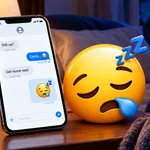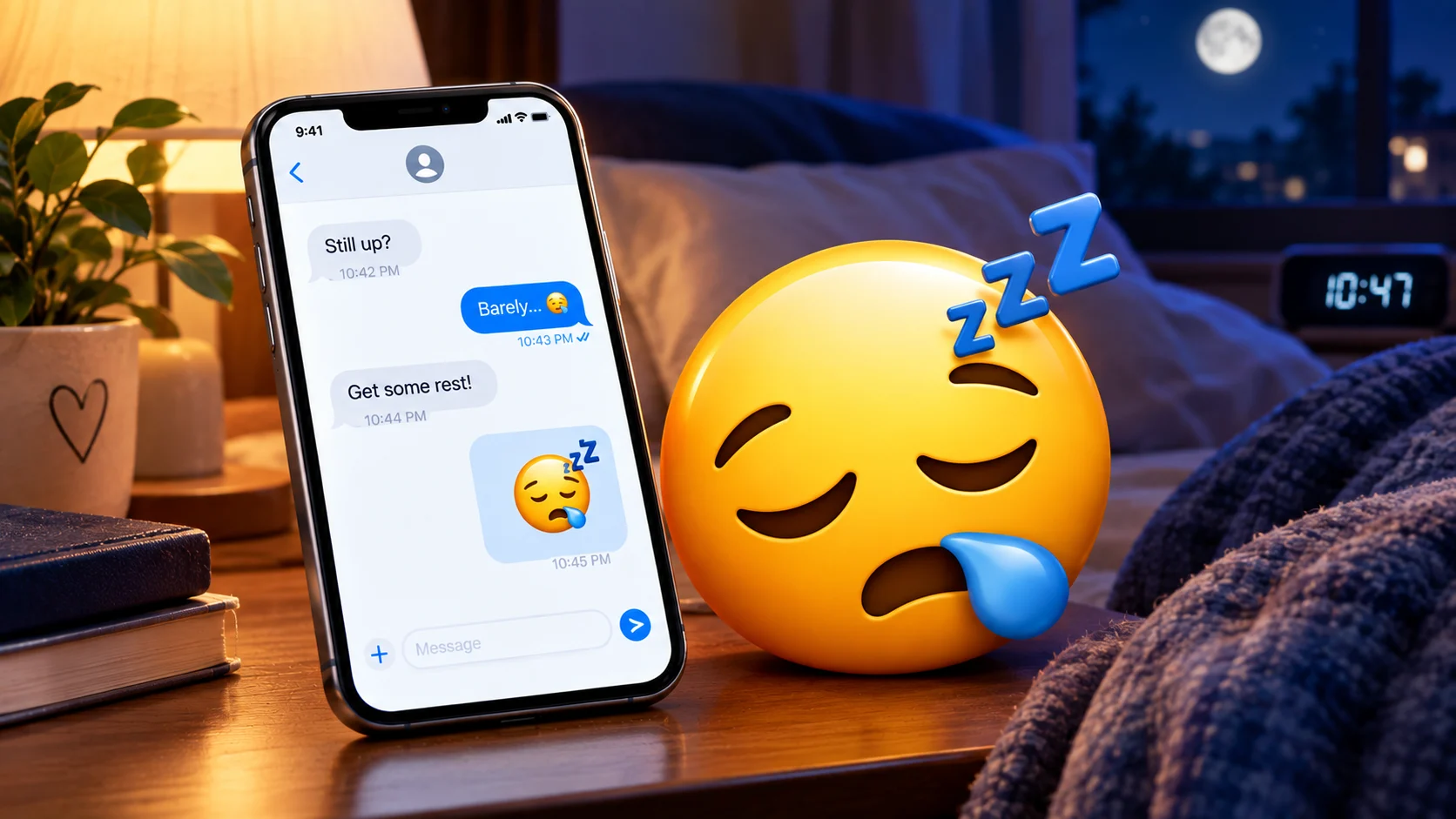
😪 Sleepy Face usually means “I’m tired, sleepy, or completely worn out.” Depending on context, it can also suggest sadness, exhaustion, boredom, or feeling unwell.
The sleepy emoji 😪 usually means tired, sleepy, or ready to rest. Its official Unicode name is Sleepy Face, and the blue bubble coming from its nose is a visual cue associated with sleepiness in Japanese manga and anime.
However, 😪 can mean more than simply “I’m sleepy.” Depending on the message, it may also suggest exhaustion, sadness, feeling unwell, frustration, or boredom. That is why the words around the emoji matter.
😪 Sleepy Face usually means:
- “I’m tired.”
- “I’m sleepy.”
- “I need to sleep.”
- “I’m exhausted.”
- “I’m ready for bed.”
In some contexts, it can also express sadness, illness, dissatisfaction, or boredom. The exact meaning depends on the conversation.
What Does the Sleepy Emoji 😪 Mean?
The most straightforward meaning of 😪 is sleepiness or tiredness.
Someone might send it after a long day, late night, difficult assignment, or exhausting activity:
“I’ve been working since 7 this morning 😪”
Here, 😪 adds a feeling of physical or mental fatigue. The sender is probably saying that they are worn out and need a break.
It can also make a simple statement feel more expressive:
“I’m going to bed 😪”
This usually means the person is genuinely tired and is getting ready to sleep.
The Unicode Consortium lists 😪 as Sleepy Face, while Emojipedia explains that its visual design is based on the cartoon-style “snot bubble” used to represent sleep in manga and anime.
😪 Meaning in Text Messages
In texting, 😪 can communicate several related feelings.
1. “I’m tired”
This is one of the clearest uses.
“That meeting was three hours long 😪”
The emoji emphasizes exhaustion.
2. “I’m sleepy”
“I can barely keep my eyes open 😪”
Here, it has a literal sleep-related meaning.
3. “I’m exhausted”
Sometimes the sender isn’t about to fall asleep. They simply feel drained.
“Finally finished everything for today 😪”
The emoji can make the message sound like a tired sigh.
4. “I’m feeling down”
Because the blue droplet can look like a tear, some people interpret 😪 as sadness. Emojipedia notes that this is a common alternate interpretation.
“I really thought things would work out 😪”
Here, the surrounding words make a sad or disappointed reading more likely than a sleepy one.
5. “I feel sick”
The droplet can also resemble a runny nose, so 😪 may occasionally be used when someone feels unwell.
“I caught a cold and feel awful 😪”
In this situation, the message provides the important clue.
Is 😪 a Sad Emoji?
It can be, but sadness is not its primary official meaning.
😪 is officially Sleepy Face, but its appearance has led people to use it for sadness, frustration, and other negative feelings. Emojipedia specifically notes that the emoji is sometimes used to convey sadness, dissatisfaction, or illness.
Compare:
“I stayed up all night studying 😪”
→ Tired
“I can’t believe that happened 😪”
→ Sad or disappointed
The same emoji can therefore carry different meanings without either interpretation being automatically wrong.
Does 😪 Mean “I Miss You”?
Not by itself.
Someone could use 😪 in a message about missing another person:
“Wish you were here 😪”
In that sentence, the words communicate the feeling of missing someone. The emoji adds a tired, sad, or emotionally heavy tone.
So 😪 should not automatically be read as “I miss you.” Look at the complete message and the conversation before it.
Is 😪 Flirting?
😪 is not inherently a flirting emoji.
It can appear in a playful or affectionate conversation, but the emoji alone does not establish romantic interest.
For example:
“You really stayed up that late just to talk to me? 😪”
The wording could make the exchange feel affectionate or playful. But the emoji itself mainly adds an emotional or tired expression.
If you’re trying to understand someone’s intentions, consider their actual words, the ongoing conversation, and the context rather than treating one emoji as proof of attraction.
Can 😪 Be Used Sarcastically?
Yes, depending on the message.
For example:
“Oh no, another five minutes of homework 😪”
This could be genuine tiredness, but it could also exaggerate a minor complaint for humor.
Another example:
“You got the last slice? 😪”
The sender may be playfully pretending to be devastated.
The surrounding words and the relationship between the people communicating determine the emoji sounds serious or exaggerated.
😪 vs. 😴: What’s the Difference?
This is one of the easiest sleepy-emoji mix-ups.
😪 Sleepy Face usually communicates sleepiness, tiredness, or fatigue, while 😴 Sleeping Face more directly represents sleeping, snoring, dreaming, or a sleep-related state.
Think of it this way:
- 😪 = “I’m sleepy/tired.”
- 😴 = “I’m sleeping” or “I’m about to sleep.”
For example:
“I need to go to bed 😪”
→ Feeling sleepy
“Good night, I’m asleep 😴”
→ Sleeping
The distinction is not absolute, but 😴 is usually the more direct choice when you mean actual sleep.
Related Emojis to 😪
| Emoji | Official Name | Common Meaning | Tone | Where or When It Is Used |
|---|---|---|---|---|
| 😪 | Sleepy Face | Sleepy, tired, exhausted | Tired, sometimes sad | Texts about fatigue, bedtime, or feeling drained |
| 😴 | Sleeping Face | Sleeping, snoring, bedtime | Sleepy, peaceful | Goodnight messages, naps, sleep-related posts |
| 🥱 | Yawning Face | Tired, sleepy, bored | Casual, tired | Late nights, boring situations, or lack of sleep |
| 😫 | Tired Face | Exhaustion, frustration | Dramatic, distressed | Complaints, difficult tasks, overwhelming situations |
| 😩 | Weary Face | Weary, frustrated, overwhelmed | Dramatic, emotional | Stressful situations or exaggerated complaints |
| 🥹 | Face Holding Back Tears | Strong emotion, trying not to cry | Tender, emotional | Gratitude, touching moments, emotional reactions |
| 😢 | Crying Face | Sadness, crying | Sad, vulnerable | Disappointment, grief, or emotional messages |
| 😥 | Sad but Relieved Face | Sadness mixed with relief | Worried, relieved | Difficult situations that ended acceptably |
| | Face with Bags Under Eyes | Fatigue, exhaustion, lack of sleep | Exhausted, worn out | Talking about looking or feeling very tired |
The most important distinction is between 😪, 😴, and 🥱. 😪 can show tiredness with an emotional or slightly droopy feeling; 😴 is more directly about being asleep; and 🥱 represents the act or feeling of yawning. Unicode’s current emoji list also places these characters together among sleepy-related faces.
😫 and 😩 are different because they can communicate much stronger frustration, distress, or emotional exhaustion, rather than simple sleepiness.
Sleepy Emoji 😪 Text Examples
Here are a few realistic examples showing how context changes the meaning.
Example 1: Simple tiredness
“I have to wake up at 5 tomorrow 😪”
Likely meaning: The sender is tired already or dreading an early morning.
Example 2: Exhaustion
“I finally finished that project 😪”
Likely meaning: Relief mixed with exhaustion.
Example 3: Sadness
“I really wanted to go with you 😪”
Likely meaning: Disappointment or sadness.
Example 4: Playful exaggeration
“You ate the last cookie without me 😪”
Likely meaning: Pretending to be dramatically upset.
Example 5: Feeling unwell
“I’m staying home today. Not feeling great 😪”
Likely meaning: The sender may be sick or generally feeling unwell.
These examples are illustrations, not fixed definitions. A different conversation could change the interpretation.
How to Respond to 😪
Your response should match what the sender appears to mean.
If they sound tired:
“You should get some rest!”
If they sound exhausted:
“Sounds like you had a long day.”
If they seem sad:
“Aw, I hope things get better.”
If they are clearly joking:
“Haha, dramatic 😂”
If you cannot tell what they mean, a simple response such as “You okay?” can clarify the situation without assuming anything.
Common Misunderstandings About 😪
The blue drop does not automatically mean a tear
The distinctive blue bubble is part of the emoji’s sleep-related visual concept. It comes from a cartoon convention associated with sleepiness in Japanese manga and anime.
Because it can look like a tear or a runny nose, people may interpret 😪 as sadness or sickness instead.
😪 does not always mean “I’m going to sleep”
Someone can use it to express mental exhaustion without actually being ready for bed.
“This week has been exhausting 😪”
The person may simply feel drained.
😪 does not prove romantic feelings
If someone sends 😪 during a personal conversation, don’t automatically interpret it as flirting or affection. The surrounding message provides much stronger evidence of what they mean.
Official Name and Unicode Details
The official Unicode name for 😪 is Sleepy Face.
- Emoji: 😪
- Unicode code point: U+1F62A
- Unicode version: 6.0
- Emoji version: 1.0
- Official name: Sleepy Face
Unicode lists 😪 under the face-sleepy group. Its current keyword set includes terms such as crying, good, night, sad, sleep, sleeping, sleepy, and tired, which reflects some of the different ways the emoji can be understood in actual communication.
Emoji designs can also vary between platforms. The basic expression remains recognizable, but details such as the shape and placement of the blue bubble may differ.
FAQs
What does 😪 mean from someone?
Most often, it means the person is sleepy, tired, or exhausted. If the surrounding message is emotional, it can instead suggest sadness, disappointment, or frustration.
Is 😪 the same as 😴?
No. 😪 is Sleepy Face, while 😴 is Sleeping Face. 😪 often suggests feeling tired or sleepy; 😴 more directly represents being asleep or sleeping.
Does 😪 mean sad?
It can. The emoji is sometimes interpreted as sadness because its blue droplet can resemble a tear, but its official name and primary concept are connected to sleepiness.
Does 😪 mean tired?
Yes. Tiredness and sleepiness are among its clearest uses. It can also communicate emotional or mental exhaustion.
What is the difference between 😪 and 🥱?
😪 usually conveys a sleepy or tired state, while 🥱 specifically represents yawning and can also suggest boredom.
Can 😪 mean sick?
Sometimes. Because the blue bubble can resemble a runny nose, some people use 😪 when they feel ill. Context is needed to distinguish this from ordinary tiredness.
Copy and Paste
😪
You can copy the sleepy emoji here and use it in a text, caption, comment, or message.
Conclusion
The sleepy emoji 😪 most commonly expresses sleepiness, tiredness, or exhaustion. It can also take on meanings such as sadness, disappointment, boredom, or feeling unwell when the surrounding conversation points in that direction.
If you’re unsure what someone meant by 😪, read the entire message before interpreting it. The emoji adds emotional tone, but the words and context usually provide the clearest answer.
See Also More:
- Bird Emoji Meaning | From Simple Bird to Playful Texting Symbol In 2026
- Santa Emoji Meaning | Christmas Cheer, Gifts & Holiday Spirit In 2026
- Clapping Emoji Meaning | Applause, Praise & More In 2026