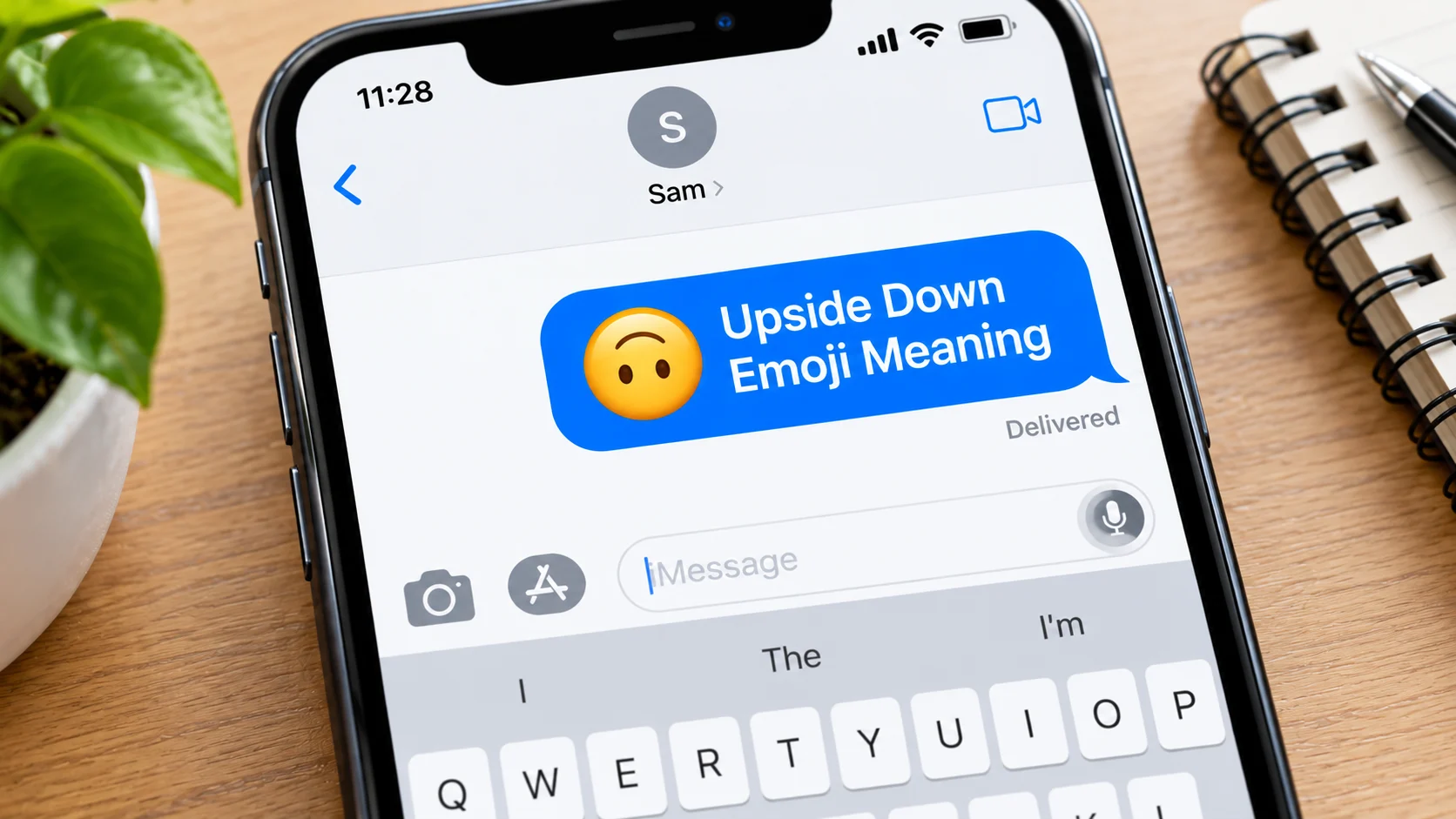
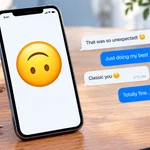
The upside down emoji 🙃, officially called Upside-Down Face, usually adds a sense of irony, sarcasm, silliness, or awkward humor to a message. It can also express mild frustration or a resigned “well, this is happening” feeling.
The exact meaning depends heavily on the words around it and the relationship between the people chatting. Unlike a normal smiling face, 🙃 often suggests that the situation is not quite as cheerful as the smile makes it look.
What Does 🙃 Mean?
🙃 Upside-Down Face usually means:
- “I’m joking, but there’s some truth behind it.”
- Sarcasm or irony
- Awkward or silly humor
- Mild frustration
- Resignation or “oh well”
- A strange or absurd situation
- A playful way to soften a negative comment
It does not have one fixed emotional meaning. Sometimes it is genuinely playful, while other times it hints that the sender is annoyed, uncomfortable, or pretending to be fine.
What Does the Upside Down Emoji Mean?
The 🙃 emoji is a familiar smiling face turned upside down. Its official Unicode name is Upside-Down Face, and its code point is U+1F643. Unicode lists it among the smiling face emojis.
In everyday texting, the unusual orientation changes the feeling of an ordinary smile. Instead of simply saying “I’m happy,” 🙃 can make a message feel intentionally offbeat.
For example:
“I have three assignments due tomorrow 🙃”
This probably does not mean the person is excited about three assignments. The emoji adds a humorous, slightly frustrated tone.
A useful way to think about 🙃 is:
“I’m smiling, but this situation is not exactly normal.”
That can cover anything from harmless silliness to genuine annoyance.
🙃 Meaning in Texting
In texts, 🙃 often works as a tone marker. Because written messages do not show facial expressions or voice tone, the emoji can signal that the sentence should not be taken completely literally.
1. Sarcasm
🙃 can make an obviously sarcastic statement sound playful.
“Love when my Wi-Fi stops working during a meeting 🙃”
The sender probably does not love the situation. The emoji highlights the sarcasm.
2. Awkward humor
It can also accompany an uncomfortable or embarrassing moment.
“I called my teacher ‘Mom’ by accident 🙃”
Here, the emoji makes the embarrassment feel lighter and more humorous.
3. Mild frustration
Sometimes 🙃 expresses annoyance without sounding extremely angry.
“They changed the schedule again 🙃”
The sender may be frustrated but is presenting the complaint in a casual way.
4. Resignation
The emoji can communicate an “oh well” attitude.
“Guess I’ll start the project at midnight 🙃”
The person may know the situation is not ideal but has accepted it.
5. Playful absurdity
🙃 can simply show that something is weird or ridiculous.
“My cat has decided the keyboard is her new bed 🙃”
There may be no real frustration at all. The emoji simply adds a playful sense of absurdity.
Is 🙃 a Happy Emoji?
Not usually in the straightforward sense.
The face itself is smiling, but the upside-down position changes its tone. Emojipedia describes 🙃 as commonly associated with irony, sarcasm, joking, goofiness, and silliness. It can also communicate awkwardness or frustration.
So compare:
“That was so much fun 🙂”
Usually sounds sincerely positive.
“That was so much fun 🙃”
Could sound sarcastic, especially if the surrounding conversation describes something difficult or unpleasant.
Context matters more than the smile alone.
Can 🙃 Be Sarcastic?
Yes. Sarcasm is one of the most common ways people interpret 🙃.
The emoji can signal that the literal words should be read differently from their surface meaning.
For example:
“Fantastic. Another two-hour delay 🙃”
The word “Fantastic” sounds positive, but the situation suggests the opposite. 🙃 reinforces that contrast.
Still, the emoji does not automatically make every message sarcastic. If someone writes:
“You always make me laugh 🙃”
the meaning could be playful or teasing rather than genuinely negative.
Look at the entire conversation rather than treating the emoji as a secret code.
Can 🙃 Mean “I’m Fine”?
Sometimes.
A person may use 🙃 after describing something stressful or inconvenient to suggest that they are trying to stay casual about it.
“Everything went wrong today 🙃”
This can carry a feeling like:
“I’m dealing with it, but today has been a mess.”
That does not necessarily mean the person is seriously upset. It may simply be a humorous way of acknowledging an unpleasant situation.
Is 🙃 Flirty?
It can appear in playful or flirty conversations, but 🙃 is not inherently a flirting emoji.
For example:
“You really think you can beat me at this? 🙃”
Depending on the conversation, this could be playful teasing between friends or have a more flirtatious tone.
The emoji alone cannot establish romantic interest. The surrounding words, previous conversation, and the sender’s usual communication style matter much more.
If someone sends 🙃 after a compliment or teasing message, it may simply make the message feel playful.
What Does 🙃 Mean From Someone?
When someone sends 🙃 directly to you, consider what they wrote with it.
If they are joking
It may mean:
“I’m being silly.”
If they are complaining
It may mean:
“This is frustrating, but I’m trying to laugh about it.”
If they are teasing you
It may mean:
“I’m messing with you.”
If something awkward happened
It may mean:
“That was embarrassing or weird.”
If the situation went badly
It may communicate:
“Well, that happened. What can you do?”
There is no universal translation. The same 🙃 can feel completely different in two conversations.
Related Emojis and Their Meanings
Here are some emojis that can overlap with 🙃 but create different tones:
| Emoji | Official Name | Common Meaning | Tone | Where or When It Is Used |
|---|---|---|---|---|
| 🙃 | Upside-Down Face | Irony, sarcasm, silliness, awkwardness | Playful, ironic, mildly frustrated | Jokes, awkward moments, complaints, reactions |
| 🙂 | Slightly Smiling Face | A small or polite smile | Calm, friendly, sometimes reserved | Friendly replies, simple positive reactions |
| 😉 | Winking Face | A wink, teasing, or playful suggestion | Playful, teasing | Jokes, teasing, light flirting |
| 😅 | Grinning Face with Sweat | Relief, nervous humor, awkwardness | Nervous, relieved, playful | Close calls, mistakes, uncomfortable moments |
| 😬 | Grimacing Face | Tension, discomfort, awkwardness | Uneasy, nervous | Awkward situations, mistakes, difficult reactions |
| 🙄 | Face with Rolling Eyes | Annoyance, disbelief, exasperation | Irritated, dismissive | Frustrating statements or obvious situations |
| 🫠 | Melting Face | Overwhelm, embarrassment, exhaustion, or figurative melting | Overwhelmed, humorous | Stressful, embarrassing, or emotionally intense moments |
| 🤣 | Rolling on the Floor Laughing | Strong amusement | Very humorous | Something genuinely very funny |
| 😂 | Face with Tears of Joy | Strong laughter or amusement | Happy, humorous | Funny messages, jokes, amusing situations |
The most important distinction is between 🙃 and 🙂. 🙂 is a straightforward slight smile, while 🙃 often adds irony or an unusual twist.
🙃 vs. 😉: A wink usually signals teasing or playful intent more directly. 🙃 is broader and can suggest irony, awkwardness, or frustration.
🙃 vs. 😅: 😅 often communicates nervousness or relief after something uncomfortable. 🙃 is more likely to make the situation feel ironic or absurd.
🙃 vs. 🙄: 🙄 is usually more openly annoyed or dismissive. 🙃 can express frustration while keeping the message lighter.
🙃 vs. 🫠: 🫠 can suggest feeling overwhelmed or embarrassed, while 🙃 often frames an awkward situation through irony or humor.
🙃 Example Messages and What They Could Mean
“I forgot my umbrella again 🙃”
Likely meaning: Mild frustration with oneself.
The emoji makes the mistake sound humorous rather than dramatic.
“Sure, because that plan worked so well last time 🙃”
Likely meaning: Sarcasm.
The sender is probably questioning the plan rather than sincerely praising it.
“I just waved back at someone who wasn’t waving at me 🙃”
Likely meaning: Embarrassment and awkward humor.
The emoji helps turn an embarrassing moment into a joke.
“We have another meeting tomorrow 🙃”
Likely meaning: Mild annoyance or resignation.
The sender may not be angry; they may simply find the situation tiring or inconvenient.
“You actually remembered my favorite snack 🙃”
Likely meaning: Playful surprise.
In a positive conversation, 🙃 does not have to be negative. It can add a quirky or teasing tone.
When 🙃 Can Be Misunderstood
🙃 is one of those emojis where the emotional tone can be difficult to read without context.
A message such as:
“Okay 🙃”
could mean:
- “Okay, haha.”
- “Okay, I guess.”
- “Fine, whatever.”
- “That is awkward.”
- “I’m joking.”
- “I’m slightly annoyed.”
The words are too short to establish the meaning by themselves.
This is why it is risky to assume that 🙃 proves someone is angry, flirting, upset, or being passive-aggressive. Their previous messages and normal communication style provide much more information.
How to Respond to 🙃
Your best response depends on the conversation.
If they are joking
You can joke back:
“😂 Fair enough.”
If they seem frustrated
A supportive response works better:
“That sounds frustrating. Hope it gets easier.”
If you are unsure
You can clarify naturally:
“Wait, are you joking or actually annoyed? 😅”
If they are teasing you
A playful answer may fit:
“Okay, okay, I get the hint 😂”
You do not need to assign a deeper meaning to the emoji unless the surrounding conversation gives you a reason to.
How to Use 🙃 Yourself
Use 🙃 when you want to communicate a smile with an unusual, ironic, awkward, or playful edge.
It works especially well when:
- Something is mildly frustrating.
- You are making an obvious joke.
- A situation is awkward.
- Something feels absurd.
- You are teasing someone.
- You want to soften a sarcastic comment.
- You are accepting an inconvenient situation with humor.
If you simply want to show genuine happiness, a straightforward smiling emoji such as 🙂 or 😊 may communicate that more clearly.
If you want to show strong laughter, 😂 or 🤣 is usually a better choice.
Official Name and Unicode Details
The official Unicode name of 🙃 is Upside-Down Face.
- Emoji: 🙃
- Unicode code point: U+1F643
- Unicode name: UPSIDE-DOWN FACE
- Unicode approval: Unicode 8.0
- Emoji release: Emoji 1.0
- Category: Smileys & Emotion
- Group: Face-Smiling
Emojipedia notes that the emoji was approved in Unicode 8.0 in 2015 and added to Emoji 1.0 in the same year.
Its appearance can vary somewhat between platforms. The basic concept remains a smiling face rotated upside down, but details such as the eyes, mouth, and overall design can differ. Unicode identifies the character consistently even when its visual design changes across platforms.
FAQs
What is the most common upside down emoji meaning?
The most common interpretations of 🙃 are irony, sarcasm, playful humor, silliness, awkwardness, and mild frustration. The exact meaning depends on context.
Does 🙃 mean sarcasm?
It can. 🙃 is frequently used to signal sarcasm or irony, especially when the literal words sound more positive than the situation actually is.
Does 🙃 mean “oh well”?
It can. When something has gone wrong but the sender is accepting it with humor, 🙃 can have an “oh well” or resigned feeling.
Is 🙃 a negative emoji?
Not necessarily. It can express mild frustration or annoyance, but it is also commonly playful, silly, humorous, or ironic.
Is 🙃 a flirting emoji?
Not by itself. Someone can use 🙃 in a playful or flirty conversation, but the emoji alone does not prove romantic interest.
What is the difference between 🙃 and 🙂?
🙂 is Slightly Smiling Face and generally gives a straightforward smile. 🙃 is Upside-Down Face and often adds irony, awkward humor, sarcasm, or an unusual tone.
What is the difference between 🙃 and 🙄?
🙄 Face with Rolling Eyes usually communicates stronger annoyance, disbelief, or exasperation. 🙃 is often softer and more playful, even when it expresses frustration.
What does 🙃 mean after “okay”?
“Okay 🙃” can have several meanings, including playful acceptance, awkwardness, mild annoyance, sarcasm, or resignation. The surrounding conversation is necessary to tell which one is most likely.
Conclusion
The upside down emoji 🙃 is less about simply being happy and more about changing the tone of a message. It can make a statement sarcastic, silly, awkward, resigned, or mildly frustrated.
When you see 🙃, look at the words around it before deciding what the sender means. A message about an embarrassing mistake may use it for humor, while a complaint may use it to soften frustration. In a playful conversation, it may simply add a quirky twist.
In short, 🙃 often says, “I’m smiling, but this situation is a little weird.
See Also More:
- Please Emoji Meaning | What Does the Folded Hands Emoji Mean In 2026
- Nod Emoji Meaning | What Does It Mean in Text In 2026
- Leaf Emoji Meaning | What This Breezy Green Symbol Really Says In 2026



2 thoughts on “Upside Down Emoji Meaning 🙃 | What Does It Mean in Text In 2026”