Quick Answer
🐔 usually means:
- A literal chicken or hen
- Chicken as food or poultry
- Farming, eggs, or farm life
- Playful teasing based on calling someone a “chicken,” meaning cowardly or scared
- A humorous or silly reaction involving chickens
Its tone can range from literal and neutral to playful or teasing, depending on the words around it.
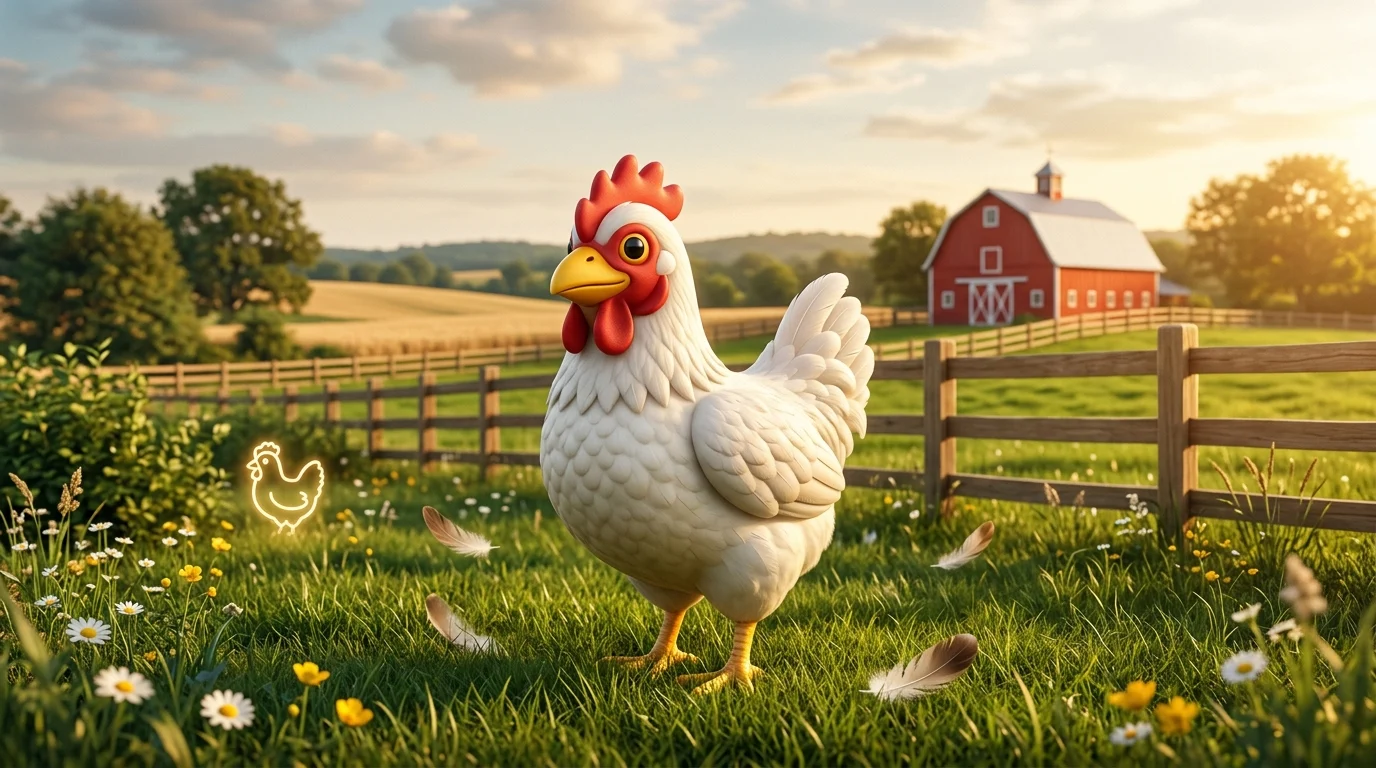
The 🐔 chicken emoji usually represents a chicken, hen, poultry, or something related to eggs, farming, or food. In casual texting, it can also play on the word “chicken” to suggest that someone is scared or unwilling to do something. The surrounding message makes a big difference. For example, 🐔🍗 may refer to chicken food, while “You’re chicken 🐔” is more likely playful teasing about being afraid. Unicode identifies 🐔 as Chicken, with the code point U+1F414.
What Does the Chicken Emoji 🐔 Mean?
The most direct meaning of 🐔 is simply chicken. It can represent the animal itself, poultry, or a general chicken-related topic.
For example:
“We saw chickens at the farm today 🐔”
Here, there is no hidden meaning. The emoji reinforces the literal subject.
It can also appear in conversations about food:
“I’m ordering chicken tonight 🐔🍗”
In this context, the emoji points toward a meal rather than the animal.
Unicode lists 🐔 under animals and birds, with the official short name chicken and code point U+1F414.
🐔 Meaning in Texting
In texting, the chicken emoji has several possible readings.
1. Literal chicken
Someone may use it when talking about chickens, hens, poultry, eggs, farms, or animals.
Example:
“My grandparents have chickens 🐔”
Likely meaning: They are talking about actual chickens.
2. Chicken as food
The emoji can also accompany a conversation about chicken dishes or meals.
Example:
“Chicken sandwiches for dinner 🐔”
Likely meaning: The message is about food.
For a more specific food reference, 🍗 Poultry Leg may be clearer.
3. “You’re chicken”
The word chicken can also mean someone who is afraid to do something. Because of that, 🐔 can be used as a playful visual joke.
Example:
“You said you’d do it. Chicken? 🐔”
Likely meaning: The sender is teasing the other person for backing out or being scared.
This interpretation depends heavily on the wording. The emoji itself does not officially mean “coward.”
4. Humor or silliness
Sometimes the emoji is simply there to make a message more amusing.
Example:
“Why did the chicken cross the road? 🐔”
Here, it connects to the familiar chicken joke rather than expressing an emotion.
Is 🐔 a Positive, Negative, or Neutral Emoji?
It can be any of the three, depending on context.
| Context | Likely tone |
|---|---|
| Talking about a farm | Neutral |
| Discussing dinner | Neutral |
| Sharing a chicken joke | Playful |
| Teasing someone for backing out | Teasing |
| Calling someone “chicken” during an argument | Potentially insulting |
| Talking about animals | Friendly or neutral |
A key point is that the same emoji can feel harmless in one conversation and slightly rude in another.
For example, “Look at these cute chickens 🐔” is friendly. But “You won’t do it because you’re a chicken 🐔” can sound like a challenge or insult.
What Does 🐔 Mean When Someone Sends It to You?
Look at the message before deciding what the emoji means.
If someone sends:
“What should we get for dinner? 🐔”
They may simply be suggesting chicken.
If they send:
“You really backed out? 🐔”
They are probably using the word chicken as teasing.
If they send only:
“🐔”
there is not enough context to know their exact intention. It could be a literal reference to the animal, a joke, a food reference, or simply a random playful emoji.
The safest approach is to interpret it alongside the conversation rather than assigning a hidden meaning to the emoji.
Is the Chicken Emoji Flirty?
🐔 is not inherently a flirty emoji.
It normally relates to chickens, poultry, food, farming, humor, or the figurative idea of being scared.
If someone uses 🐔 in a personal conversation, the surrounding words matter more than the emoji itself. An emoji alone is not reliable proof of romantic interest.
For example:
“You won’t ask them out? 🐔”
This is more naturally understood as teasing someone for being nervous or hesitant.
Can 🐔 Be Sarcastic or Rude?
Yes, it can be used sarcastically or teasingly, but that is a contextual use rather than its official definition.
Compare:
“Aww, look at the chickens 🐔”
with:
“You’re too scared to do it 🐔”
The first is neutral and literal. The second uses chicken as a nickname for someone who is supposedly afraid.
If the conversation is already tense, the second use could feel insulting rather than playful.
Literal vs. Figurative Uses of 🐔
One of the most useful ways to understand this emoji is to separate its literal and figurative meanings.
Literal:
🐔 = chicken, hen, poultry, farm animal
Food-related:
🐔 = chicken as a meal or ingredient
Figurative:
🐔 = “chicken” as in someone who is scared
Playful:
🐔 = a joke, silly reaction, or chicken-related reference
The words surrounding the emoji usually tell you which interpretation makes the most sense.
Emojis Similar to 🐔 and How They Differ
| Emoji | Official Name | Common Meaning | Tone | Where or When It Is Used |
|---|---|---|---|---|
| 🐔 | Chicken | Chicken, poultry, farm animal | Neutral or playful | Food, farms, animals, jokes, teasing |
| 🐓 | Rooster | Rooster or male chicken | Neutral, lively | Farm topics, animals, rooster references |
| 🐣 | Hatching Chick | Chick emerging from an egg | Cute, cheerful | Babies, new beginnings, spring, cute reactions |
| 🐤 | Baby Chick | Small yellow chick | Cute, gentle | Cute messages, birds, spring themes |
| 🐥 | Front-Facing Baby Chick | Baby chick facing forward | Cute, cheerful | Cute reactions and animal references |
| 🍗 | Poultry Leg | Cooked chicken or poultry food | Casual, food-focused | Meals, recipes, restaurant or dinner talk |
| 🥚 | Egg | Egg or egg-related topic | Neutral, playful | Breakfast, cooking, Easter, chickens |
| 🐦 | Bird | Bird in general | Neutral | Bird watching, animals, nature |
| 🦃 | Turkey | Turkey or turkey-related topic | Playful or neutral | Thanksgiving, food, birds |
The most important distinction is between 🐔 Chicken and 🐓 Rooster. 🐔 is the general chicken emoji, while 🐓 specifically represents a rooster. The baby-chick emojis are also different: 🐣 shows a chick hatching, while 🐤 and 🐥 represent baby chicks. Unicode lists these as separate emoji characters.
For food, 🍗 is usually more specific than 🐔 because it directly represents a poultry leg. If the goal is to show a cute baby bird, 🐣, 🐤, or 🐥 may communicate the idea more clearly.
Chicken Emoji Examples in Text Messages
Example 1: Farm context
Message:
“We visited a farm today 🐔”
Meaning: The emoji represents an actual chicken or farm animal.
Example 2: Dinner
Message:
“I’m making chicken and rice tonight 🐔”
Meaning: It refers to chicken as food.
Example 3: Playful teasing
Message:
“You won’t go on the roller coaster? 🐔”
Meaning: The sender may be jokingly calling the person scared.
Example 4: Cute animal reference
Message:
“This little chicken is adorable 🐔”
Meaning: A literal chicken with a positive, affectionate tone.
Example 5: Chicken joke
Message:
“Guess who crossed the road first? 🐔”
Meaning: The emoji supports a humorous chicken reference.
These examples are illustrations of possible interpretations, not fixed rules. The same emoji can communicate something different in another conversation.
When Should You Use 🐔?
Use 🐔 when you want to:
- Talk about chickens or hens
- Mention poultry or farm animals
- Add a chicken reference to a food conversation
- Make a chicken-related joke
- Playfully tease someone about being scared
- Add a farm or countryside feel to a message
If you’re talking specifically about cooked chicken, 🍗 may be clearer. If you’re talking about a rooster, 🐓 is the better choice.
How to Respond to 🐔
Your response should match the context.
If it is about food:
“Chicken sounds good!”
If it is about a farm or animal:
“Aww, cute 🐔”
If someone is teasing you:
“Haha, I’m not scared.”
If you’re unsure:
“What does the chicken mean? 😂”
There is no single correct response because the emoji can be literal, playful, or teasing.
Common Misunderstandings About 🐔
It does not always mean “coward”
Although chicken can be used in English to describe someone who is afraid, that is only one possible interpretation.
It does not automatically mean food
A chicken emoji can represent the animal itself, not necessarily a meal.
It is not automatically romantic
There is no standard romantic meaning attached to 🐔. If it appears in a personal conversation, interpret it based on the surrounding message rather than assuming flirting.
🐔 and 🐓 are not identical
Both relate to chickens, but 🐓 specifically represents a rooster. Unicode treats them as separate emoji.
Official Chicken Emoji Details
The official Unicode short name for 🐔 is chicken.
- Emoji: 🐔
- Unicode code point: U+1F414
- Official name/short name: Chicken
- Category: Animals & Nature → Animal-Bird
- Unicode approval: Unicode 6.0
- Emoji version: Emoji 1.0
Unicode’s current emoji charts list 🐔 as U+1F414 chicken, alongside 🐓 rooster and the three chick emojis.
The emoji also predates standardized Unicode emoji. Emojipedia notes that it appeared on early Japanese emoji keyboards in 2000 before being standardized in Unicode 6.0 in 2010 and added to Emoji 1.0 in 2015.
Different platforms may draw the chicken somewhat differently. For example, the angle and details of the bird have varied between platform designs. These visual differences generally do not change its basic meaning.
Frequently Asked Questions
What does the 🐔 emoji mean?
🐔 usually represents a chicken, hen, poultry, or something connected with chickens. It can also be used playfully to suggest that someone is “chicken,” meaning scared or hesitant.
What does 🐔 mean in texting?
In texting, 🐔 may refer to chicken food, an actual chicken, farming, a joke, or playful teasing about someone being afraid. The surrounding words determine the most likely meaning.
Does 🐔 mean coward?
Sometimes. Because “chicken” is also an English word for a cowardly person, the emoji can be used to tease someone who is scared or backing out. That is a figurative use, not the emoji’s official definition.
Is 🐔 a flirty emoji?
Not by itself. 🐔 has no standard flirty meaning. A personal conversation may give it a special meaning, but the context not the emoji alone should guide your interpretation.
What is the difference between 🐔 and 🐓?
🐔 is Chicken, while 🐓 is Rooster. They are separate Unicode emoji and represent different members of the chicken family.
What is the difference between 🐔 and 🍗?
🐔 represents a chicken or poultry animal, while 🍗 represents a cooked poultry leg. Use 🍗 when the message is specifically about eating chicken.
What is the difference between 🐔 and 🐣?
🐔 represents a chicken, while 🐣 is Hatching Chick, showing a chick emerging from an egg. Unicode lists them as separate emoji.
Conclusion
The 🐔 chicken emoji is mainly a straightforward symbol for a chicken, poultry, farm life, or chicken-related food. In casual messages, it can also create a joke around the word “chicken,” especially when someone is being teased for being scared or hesitant. Because these meanings can overlap, the best interpretation comes from the words, situation, and relationship between the people messaging—not from the emoji alone.
See Also More :
- Hmm Emoji Meaning: What Does It Mean in Texting?
- Holding Back Tears Emoji : From Happy Tears to Emotional Moments











7 thoughts on “Chicken Emoji Meaning 🐔: What It Means in Text and Beyond”