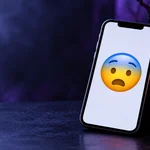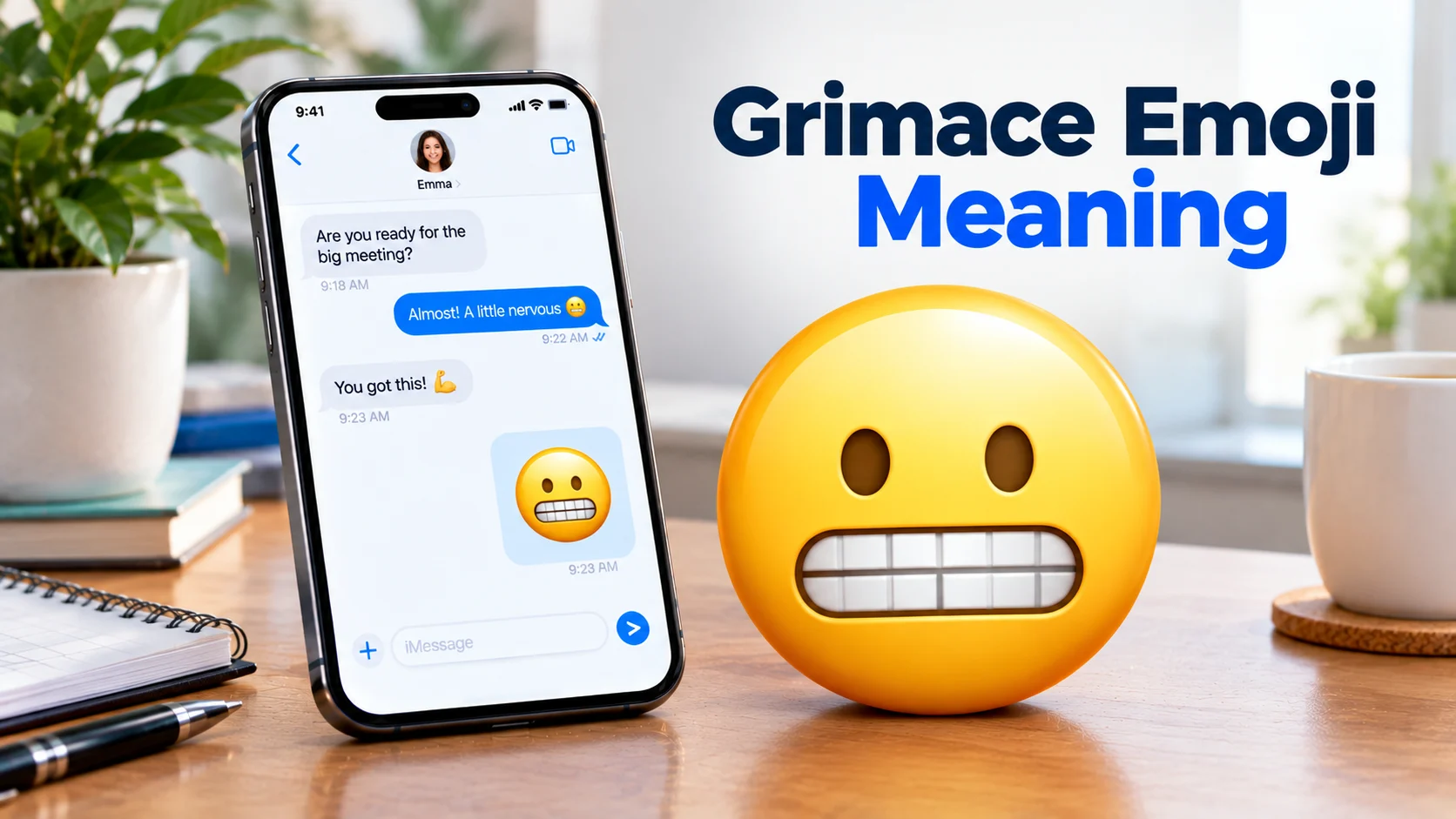
😬 usually means awkward, nervous, embarrassed, uncomfortable, or uneasy. It can also be used playfully when someone is reacting to an embarrassing mistake, bad news, or an uncomfortable situation.
The 😬 Grimacing Face emoji usually expresses awkwardness, nervousness, embarrassment, discomfort, or tension. It can also mean “yikes,” “uh-oh,” or “that was uncomfortable,” depending on the message around it.
The official Unicode name is Grimacing Face, and its clenched-teeth expression is designed to communicate a tense or uneasy reaction.
The exact meaning depends on the surrounding words and the tone of the conversation.
What Does 😬 Mean?
The 😬 emoji is officially called Grimacing Face. It shows a yellow face with open eyes and clenched teeth.
In everyday texting, it often communicates a feeling that is difficult to put into words, such as:
- “That is awkward.”
- “Uh-oh.”
- “Yikes.”
- “I’m nervous.”
- “That was uncomfortable.”
- “I made a mistake.”
- “I don’t know what to say.”
- “This is going badly.”
Unlike a normal smiling emoji, 😬 does not usually communicate simple happiness. The clenched teeth give it a tense quality.
Emojipedia describes the emoji as covering several negative or tense emotions, particularly nervousness, embarrassment, and awkwardness. It can also express discomfort, disgust, disapproval, or mixed feelings.
😬 Meaning in Text Messages
In a text, 😬 often works as a reaction emoji rather than a literal description of an emotion.
For example:
“I accidentally sent the email to the entire department 😬”
Here, 😬 suggests embarrassment and nervousness.
Another example:
“The dentist said I need another appointment 😬”
In this context, it can communicate discomfort or reluctance.
It can also soften a potentially awkward statement:
“I think I might have misunderstood what you meant 😬”
The emoji makes the message feel more self-conscious and less blunt.
The words around 😬 matter
Compare these:
“I have to give a presentation tomorrow 😬”
This sounds nervous or anxious.
“I actually got the job 😬”
Here, the emoji can suggest a mixture of excitement and nervousness.
“He told that joke again 😬”
This may communicate awkwardness or discomfort.
So, 😬 does not have one fixed emotional meaning. The surrounding message helps determine what kind of tension the sender is expressing.
Is 😬 a Negative Emoji?
Usually, 😬 has a somewhat negative or uncomfortable tone, but that does not mean the sender is angry.
It can express mild discomfort rather than strong negativity.
For example:
- Nervous: “First day at my new school tomorrow 😬”
- Embarrassed: “I just realized I replied to the wrong person 😬”
- Awkward: “Well… that conversation got weird 😬”
- Uncomfortable: “That movie scene was hard to watch 😬”
- Playful: “I may have eaten the last cookie 😬”
The same emoji can therefore feel serious, humorous, or self-aware depending on context.
Can 😬 Mean “Yikes” or “Uh-Oh”?
Yes. 😬 can work as a visual version of “yikes,” “oops,” or “uh-oh.”
For example:
“I forgot we had homework due today 😬”
The emoji adds a nervous reaction to the mistake.
Or:
“That repair bill is going to be expensive 😬”
Here it can mean something like “That is not good.”
This use is especially common when the sender wants to acknowledge an uncomfortable situation without making the message sound overly serious.
Does 😬 Mean Nervousness?
Yes. Nervousness is one of the clearest common interpretations of 😬.
It works well when someone is waiting for an outcome, entering an unfamiliar situation, or expecting something uncomfortable.
For example:
“Results come out tomorrow 😬”
The emoji can communicate nervous anticipation.
Another example:
“Wish me luck. I have to speak in front of everyone today 😬”
Here, the clenched teeth reinforce the idea of tension.
Can 😬 Be Used as a Joke?
Yes. 😬 is often used playfully when someone admits a small mistake or uncomfortable action.
For example:
“I may have watched the whole season in one night 😬”
The emoji makes the admission feel humorous and slightly embarrassed.
It can also make a harmless confession sound more self-aware:
“I definitely ate the last slice 😬”
In these cases, the emoji is not necessarily showing real distress. It can simply add a joking “I know I probably shouldn’t have done that” feeling.
Is 😬 Friendly or Flirty?
😬 is not automatically a flirting emoji.
It can appear in a friendly conversation, a casual conversation, or even a romantic conversation, but the emoji itself does not prove romantic interest.
For example:
“I finally worked up the courage to ask them out 😬”
Here, the emoji reflects nervousness about the situation.
But:
“You always make me laugh 😬”
could simply be playful or slightly awkward depending on the rest of the conversation.
If you’re trying to understand what someone means, look at the full message, previous conversation, and their usual communication style instead of treating 😬 as a direct romantic signal.
What Does 😬 Mean From Someone?
When someone sends 😬 by itself, they may be signaling that something feels awkward, uncomfortable, embarrassing, or uncertain.
For example:
“😬”
after you tell them unexpected news could mean “Uh-oh” or “That sounds uncomfortable.”
After someone makes a joke, it might mean:
“😬”
meaning “That was awkward.”
After they admit a mistake, it can mean:
“I messed up a little.”
A single emoji provides less information than a full sentence, so it is easy to overinterpret it. The best clue is usually what was said immediately before it.
Examples of 😬 in Texting
Example 1: Embarrassment
Message:
“I called my teacher ‘Mom’ by accident 😬”
Likely meaning:
The sender feels embarrassed and is laughing at their own mistake.
Example 2: Nervous anticipation
Message:
“Tomorrow is my first day at the new job 😬”
Likely meaning:
The sender is nervous or unsure about what to expect.
Example 3: Awkward situation
Message:
“They started arguing right in front of everyone 😬”
Likely meaning:
The sender felt uncomfortable watching the situation.
Example 4: Playful confession
Message:
“I ate your fries while you were gone 😬”
Likely meaning:
A joking admission with a little pretend guilt.
Example 5: Bad news
Message:
“The repair is going to cost more than we expected 😬”
Likely meaning:
The sender is uncomfortable or worried about the situation.
Emojis Similar to 😬
| Emoji | Official Name | Common Meaning | Tone | Where or When It Is Used |
|---|---|---|---|---|
| 😬 | Grimacing Face | Awkwardness, nervousness, discomfort | Tense, uneasy, sometimes playful | Awkward texts, mistakes, nervous reactions |
| 😅 | Grinning Face with Sweat | Relief, embarrassment, nervous humor | Light, relieved | After mistakes, close calls, awkward jokes |
| 😓 | Downcast Face with Sweat | Stress, worry, difficulty | Worried, strained | Problems, pressure, stressful situations |
| 😟 | Worried Face | Concern, anxiety, unhappiness | Concerned, serious | Bad news, uncertainty, worry |
| 😣 | Persevering Face | Struggling, frustration, determination | Strained, frustrated | Difficult tasks or uncomfortable situations |
| 😖 | Confounded Face | Frustration, confusion, distress | Frustrated, upset | Complicated or aggravating situations |
| 😏 | Smirking Face | Smugness, mischief, suggestiveness | Confident, sly, sometimes flirty | Teasing, jokes, suggestive comments |
| 😞 | Disappointed Face | Sadness, disappointment, discouragement | Downcast, sad | Disappointing news or setbacks |
| 😂 | Face with Tears of Joy | Strong amusement or laughter | Very playful | Funny messages, jokes, amusing reactions |
The closest comparison is often 😬 vs. 😅. Both can appear after an awkward moment or mistake, but 😬 usually emphasizes tension or discomfort, while 😅 more often adds relief or nervous humor.
😬 vs. 😟 is another useful distinction. 😟 has a clearer worried or concerned expression, while 😬 often feels more socially awkward or self-conscious.
😬 vs. 😏 is especially important. 😏 can suggest smugness, mischief, or flirtation, whereas 😬 generally communicates unease rather than confidence.
😬 vs. 😁: Why They Can Be Confused
The clenched teeth can make 😬 look like a smile at first glance.
The difference is the emotional signal:
- 😬 Grimacing Face: tense, awkward, nervous, uncomfortable
- 😁 Beaming Face with Smiling Eyes: happy, cheerful, excited, or pleased
The confusion is understandable because emoji designs have changed over time and can vary between platforms. Emojipedia notes that Apple’s older 😁 design even shared the distinctive clenched-teeth mouth that later became associated with 😬.
If you want to clearly communicate happiness, 😁 is usually a better choice. If you want to show an awkward or tense reaction, 😬 is more suitable.
How to Respond to 😬
Your response should depend on why the person used it.
If they are nervous
You can respond:
“You’ve got this!”
If they made a mistake
Try:
“It happens 😂”
If something awkward happened
You could say:
“Yeah, that was definitely awkward.”
If you are unsure what they mean
A simple:
“What happened? 😅”
can encourage them to explain without assuming their intention.
There is no single correct response to 😬. The conversation around it matters more than the emoji alone.
Common Misunderstandings About 😬
It does not always mean anger
The clenched teeth can look intense, but 😬 is not the same as an angry face. It more often signals tension, discomfort, awkwardness, or nervousness.
It does not always mean something went wrong
Someone can use it for harmless nervous excitement:
“I finally signed up for the class 😬”
That does not necessarily mean they regret it.
It does not automatically mean flirting
Although any emoji can appear in a romantic conversation, 😬 by itself is not proof of attraction or romantic interest.
It does not always mean serious discomfort
Sometimes it is simply a playful way to admit a small mistake.
Official Name and Unicode Details
The official Unicode name for 😬 is Grimacing Face.
Its Unicode code point is U+1F62C. Unicode lists keywords associated with the character that include terms such as “awkward,” “dentist,” “grimace,” and “grinning.”
Grimacing Face was approved in Unicode 6.1 in 2012 and added to Emoji 1.0 in 2015.
Its appearance can differ somewhat between platforms. The basic concept remains a yellow face with open eyes and clenched teeth, but details such as the shape and definition of the teeth may vary.
FAQs
What does the grimace emoji 😬 mean?
😬 usually means awkwardness, nervousness, embarrassment, discomfort, or tension. It can also express “yikes,” “uh-oh,” or playful embarrassment.
Is 😬 a happy emoji?
Not usually. Its clenched-teeth expression generally gives it a tense or uncomfortable tone, although people sometimes use it playfully or to show nervous excitement.
What does 😬 mean in texting?
In texting, 😬 commonly adds a feeling of awkwardness, nervousness, embarrassment, or discomfort to the message. Its exact meaning depends on the surrounding words.
Is 😬 a bad emoji?
Not necessarily. It often communicates an uncomfortable feeling, but it can be used humorously for small mistakes or awkward situations.
Does 😬 mean nervous?
It can. Nervousness is one of the common meanings of Grimacing Face, especially when someone is waiting for an outcome or facing an uncomfortable situation.
Is 😬 a flirting emoji?
Not by itself. 😬 is generally associated with awkwardness or nervousness rather than clear flirtation. The rest of the conversation is much more useful for judging romantic intent.
What is the difference between 😬 and 😅?
😬 usually emphasizes tension, awkwardness, or discomfort. 😅 more often combines a smile with nervousness, embarrassment, or relief.
What is the difference between 😬 and 😏?
😬 generally communicates unease or awkwardness. 😏 can communicate smugness, mischief, confidence, or flirtatious intent.
Conclusion
The 😬 Grimacing Face emoji is best understood as a tense or awkward reaction. It can mean nervousness, embarrassment, discomfort, “yikes,” or playful self-consciousness.
Because the same clenched-teeth expression can fit several situations, the surrounding words matter. When you see 😬 in a message, consider the conversation before assuming the sender is upset, joking, nervous, or flirting.
See Also More:
- Basketball Emoji Meaning | What It Means in Text & How to Use It In 2026
- Double Exclamation Mark Emoji| What It Really Means in Text In 2026
- High Emoji Meaning| What & Really Mean In 2026