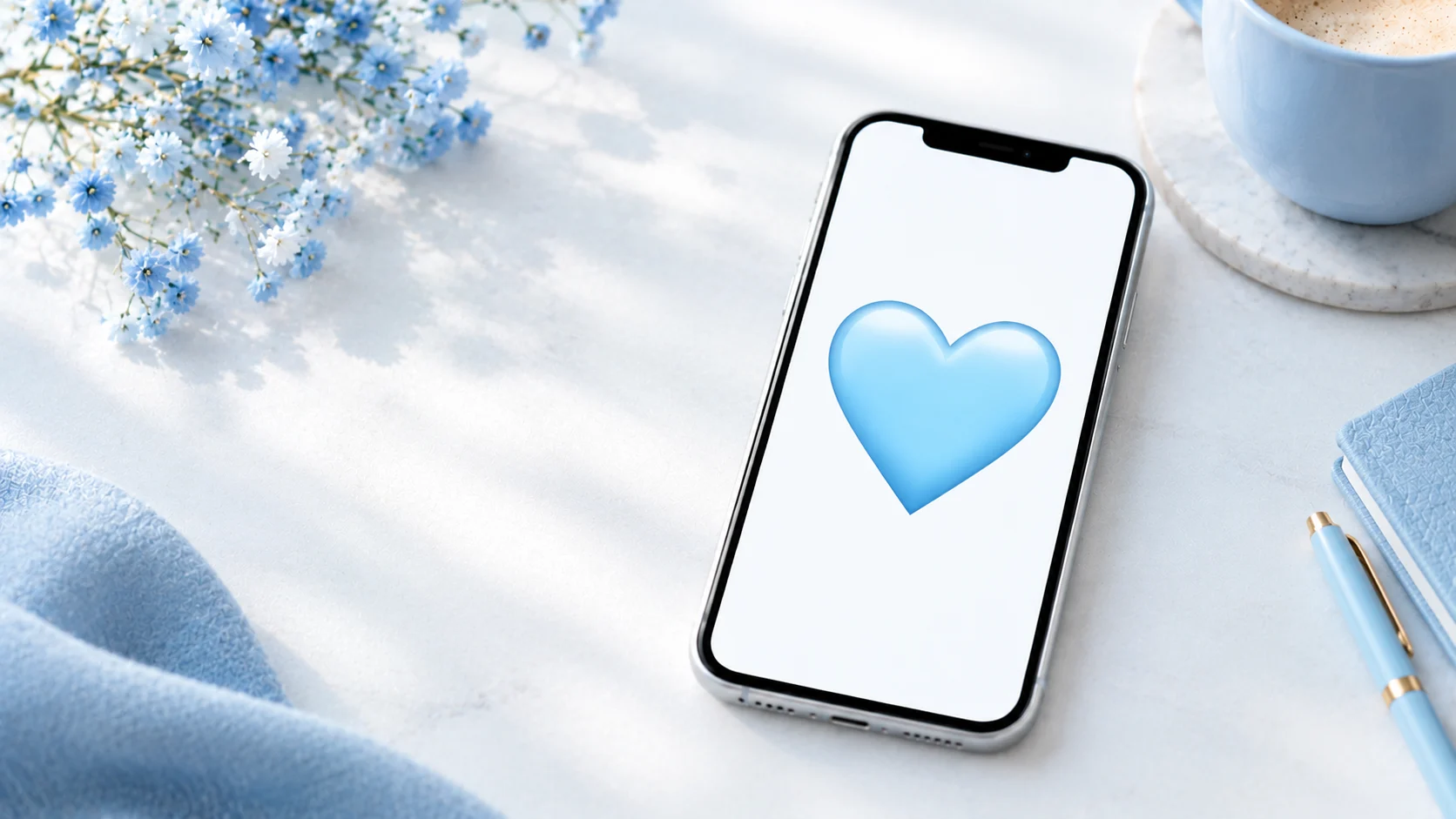
The 🩵 light blue heart emoji usually represents affection, friendship, peace, support, and calm feelings. It can express care without the intensity often associated with a red heart, but its meaning depends on the conversation and the relationship between the people texting.
The light blue heart emoji 🩵 is a heart symbol often used to express gentle affection, trust, friendship, and emotional support. Its soft blue color can give messages a calm, caring, or comforting tone.
People may send it to friends, family members, romantic partners, or anyone they want to show appreciation for. Unlike ❤️, which is commonly associated with strong love and romance, 🩵 can feel more relaxed or understated. However, there is no single meaning that applies to every message. The words, relationship, and situation help determine what the sender intends.
What Does the 🩵 Light Blue Heart Emoji Mean?
The 🩵 emoji is officially called Light Blue Heart. It belongs to the heart-shaped emoji family and is commonly used to communicate affection, care, and positive feelings.
Here are its common interpretations:
- Friendship: Showing appreciation for a friend or celebrating a close bond.
- Gentle affection: Expressing care in a soft, understated way.
- Emotional support: Offering kindness, encouragement, or comfort.
- Peace and calm: Representing a relaxed, peaceful mood.
- Trust and loyalty: Symbolizing a dependable or meaningful connection.
- Personal color preference: Sharing an appreciation for the color blue or using it to match a particular aesthetic.
These are common informal interpretations, not separate official definitions. The emoji’s meaning can change depending on the message in which it appears.
For example, “Thanks for always being there 🩵” expresses appreciation and support. “I love this blue outfit 🩵” may simply reflect an interest in the color.
What Does 🩵 Mean in Texting?
In text messages, the light blue heart adds warmth and emotion without requiring a long explanation. It can soften a message, show appreciation, or reinforce a friendly connection.
| Example message | Likely meaning | Context |
|---|---|---|
| “Thank you for helping me 🩵” | Gratitude | The heart adds warmth. |
| “You’re the best friend ever 🩵” | Friendship and appreciation | The words emphasize a close bond. |
| “Hope you feel better soon 🩵” | Care and support | It adds a comforting tone. |
| “Miss you 🩵” | Affection or longing | The relationship helps clarify the feeling. |
| “Blue is my favorite color 🩵” | Love of the color blue | The context is about color preference. |
A light blue heart does not automatically mean romantic interest. It can be affectionate, friendly, supportive, or simply decorative.
What Does 🩵 Mean From Someone You Like?
When someone you like sends 🩵, it may communicate affection, warmth, or appreciation. However, the emoji alone cannot tell you that person has romantic feelings.
Consider these examples:
- “Had a great time with you 🩵” — A warm response that may be friendly or romantic.
- “Good luck today 🩵” — Encouragement and support.
- “Thinking of you 🩵” — A caring message whose meaning depends on your relationship.
Look at the entire conversation rather than treating one emoji as proof of attraction. How the person communicates with you over time provides more useful context.
Is the Light Blue Heart Emoji Romantic or Just Friendly?
The 🩵 emoji can be used in romantic and nonromantic relationships. Its soft color may give it a gentle, affectionate feel, but it does not have a fixed romantic meaning.
It may feel friendly when:
- A friend uses it to say thank you.
- Someone adds it to a supportive message.
- It appears in a casual conversation with other friendly emojis.
It may feel romantic when:
- It accompanies an affectionate message to a partner.
- It appears in a conversation about shared feelings.
- The surrounding words clearly express romantic interest.
The relationship and message matter more than the color of the heart. Some people use 🩵 with everyone, while others reserve it for particular people or occasions.
Light Blue Heart Emoji vs. Other Heart Emojis
Heart emojis come in several colors, and people often use them to express different shades of emotion. These differences are informal conventions rather than strict rules.
| Emoji | Official Name | Common Meaning | Tone | Where or When It Is Used |
|---|---|---|---|---|
| 🩵 | Light Blue Heart | Gentle affection, friendship, support | Calm, caring | Friendly texts and supportive messages |
| ❤️ | Red Heart | Love and deep affection | Strong, loving | Romantic messages and close relationships |
| 💙 | Blue Heart | Trust, loyalty, friendship | Steady, supportive | Appreciation and friendly messages |
| 🤍 | White Heart | Care, peace, sincerity | Soft, gentle | Comforting messages and expressions of care |
| 🩷 | Pink Heart | Affection, sweetness, fondness | Warm, playful | Loving messages and friendship |
| 💜 | Purple Heart | Affection, admiration, support | Expressive | Appreciation and supportive conversations |
| 💚 | Green Heart | Nature, care, or a connection to green | Fresh, positive | Environmental topics and personal color preferences |
| 🖤 | Black Heart | Dark humor, style, or intense emotion | Edgy, expressive | Jokes, alternative aesthetics, and emotional messages |
🩵 vs. 💙: What’s the Difference?
The main difference is the shade of blue. 🩵 is light blue, while 💙 is blue.
The light blue heart may feel softer, gentler, or more delicate in some conversations. The blue heart may be chosen to express loyalty, trust, or friendship. However, these interpretations overlap, and many people choose between them based on personal preference or the look they want.
🩵 vs. ❤️: What’s the Difference?
The red heart is widely associated with love and strong affection, while the light blue heart can communicate care in a softer or more understated way.
Neither emoji has a guaranteed romantic meaning. A red heart can be friendly, and a light blue heart can be romantic, depending on the context.
🩵 vs. 🤍: What’s the Difference?
The light blue heart may suggest calmness, gentle affection, or a preference for blue. The white heart is often associated with peace, sincerity, or a simple expression of care.
Both can work in supportive messages, and neither has one universal interpretation.
Why Do People Use the 🩵 Emoji?
People use the light blue heart for several reasons:
- To make a message feel warmer or more personal.
- To show support without writing a lengthy response.
- To express friendship or appreciation.
- To match blue-themed photos, outfits, or social media designs.
- To communicate affection in a gentle, understated way.
Some people also use it because they prefer light blue to other heart colors. The color alone does not establish a particular personality, relationship status, or emotional intention.
How to Respond to the Light Blue Heart Emoji
The best response depends on the message that came with the heart.
- For a friendly message: “You’re so sweet, thank you 🩵”
- For emotional support: “I really appreciate that 🩵”
- For a romantic message: “That means a lot to me ❤️”
- For a casual conversation: “Sending one back 🩵”
- When you’re unsure what it means: Reply naturally to the message rather than focusing on the emoji alone.
You can also send a heart emoji in return if that feels appropriate to your relationship.
Does the 🩵 Emoji Look the Same on Every Device?
Not necessarily. The appearance of 🩵 can vary slightly across Apple, Google, Samsung, and other platforms. Differences in color, shading, and shape may occur depending on the device and software version.
The official emoji identity remains the same even when its artwork differs. If a message looks slightly different on another device, that does not automatically indicate a change in meaning.
Official Name and Unicode Details
The Unicode Consortium identifies 🩵 as Light Blue Heart.
| Detail | Information |
|---|---|
| Emoji | 🩵 |
| Official Unicode name | Light Blue Heart |
| Unicode code point | U+1FA75 |
| Category | Smileys & Emotion |
| Subcategory | Emotion |
| Unicode version | Unicode 15.0 |
| Approval year | 2022 |
The emoji was included in Unicode 15.0, released in September 2022. Its official name identifies the heart and its color; interpretations such as friendship, support, and gentle affection come from informal usage.
Copy and Paste the Light Blue Heart Emoji
🩵
Light Blue Heart Copy 🩵
You can use 🩵 in text messages, social media captions, comments, bios, and supportive notes whenever a light blue heart suits the message.
FAQs
Does 🩵 mean friendship?
It can. The light blue heart is often used to show friendship, appreciation, and care. The exact meaning depends on the relationship and surrounding words.
Does 🩵 mean love?
It can express love or affection, but it does not always indicate romantic love. Friends, family members, and partners may all use it differently.
Is 🩵 a positive emoji?
Generally, yes. It is commonly associated with care, warmth, support, and other positive feelings, although personal interpretations can vary.
What does 🩵 mean from a girl or a guy?
The emoji does not have a different official meaning based on the sender’s gender. Its interpretation depends on the message, relationship, and communication style.
What does 🩵 mean on social media?
On social media, it can express affection, friendship, appreciation, or a connection to a blue-themed aesthetic. The surrounding caption or post helps clarify the intended meaning.
When was the light blue heart emoji introduced?
The 🩵 emoji was included in Unicode 15.0 in 2022.
Conclusion
The 🩵 light blue heart emoji commonly expresses gentle affection, friendship, trust, and emotional support. It can be used in casual messages, close relationships, and social media posts. Although it may communicate romantic feelings in the right context, it does not automatically mean love or attraction. Pay attention to the words, relationship, and situation to understand its intended meaning.
See Also More :
- Teeth Emoji Meaning | Smiles, Dental Care & Everyday Texts In 2026
- Eggplant Emoji | What It Really Means in Texts & Social Media In 2026
- Fox Emoji | What It Means in Texts, Chat & Social Media In 2026