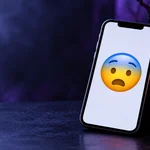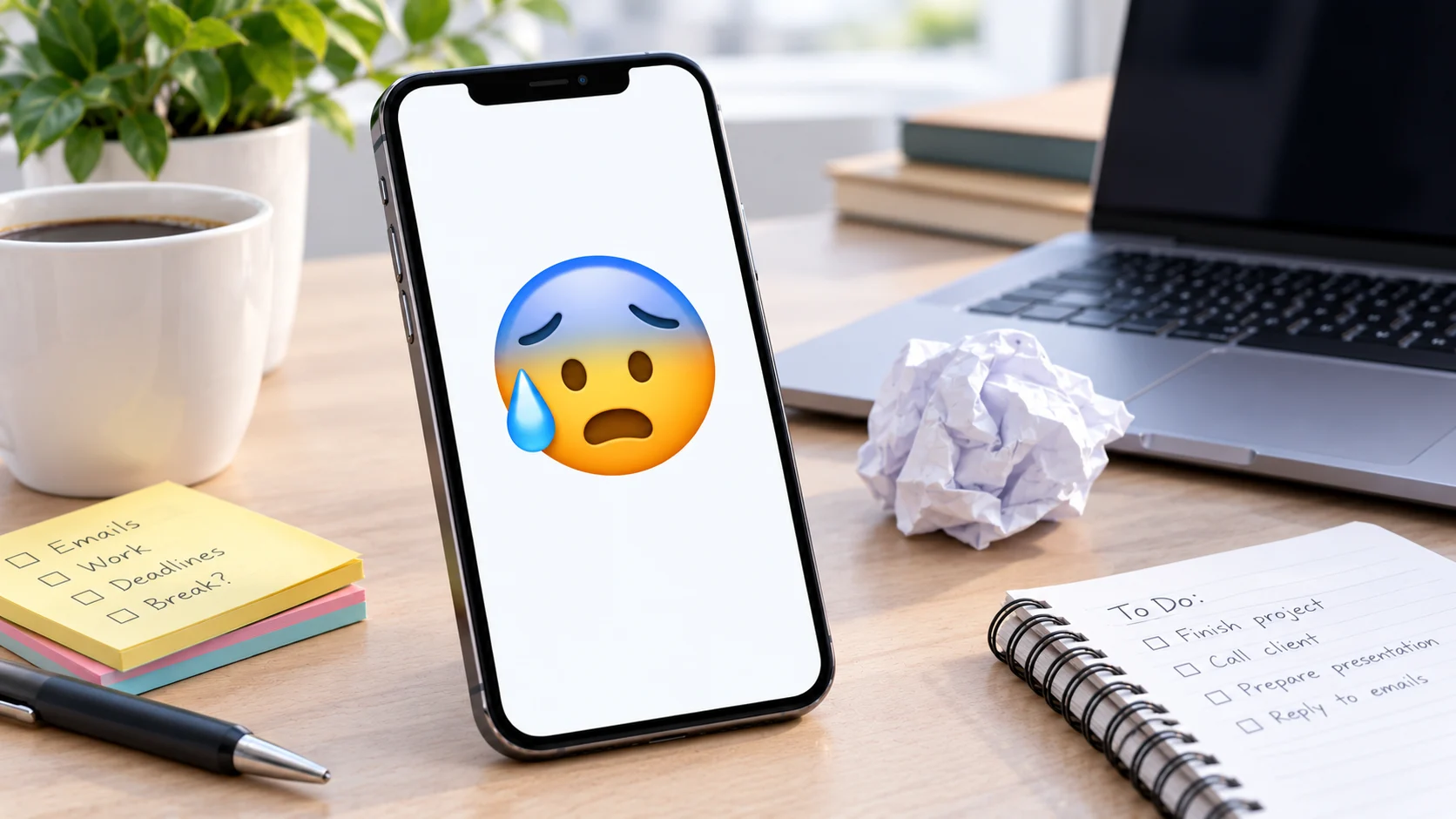
The stressed emoji 😰 usually expresses anxiety, nervousness, pressure, worry, or feeling overwhelmed. It is officially called Anxious Face with Sweat and shows a worried expression with a bead of sweat.
In a text, 😰 can mean “I’m really stressed,” “I’m nervous about this,” or “This is making me anxious,” but the exact feeling depends on the message around it.
What Does the Stressed Emoji 😰 Mean?
😰 is commonly used when someone wants to show stress, anxiety, nervousness, worry, or pressure. The furrowed eyebrows, open mouth, sweat drop, and pale-blue forehead give it a tense appearance.
The official Unicode name is Anxious Face with Sweat. Unicode lists related keywords such as “anxious,” “nervous,” “rushed,” “scared,” and “sweat,” which helps explain why people may use 😰 when describing a stressful situation.
For example:
“I have three deadlines tomorrow 😰”
Here, 😰 adds emotional weight to the statement. It suggests the person feels under pressure rather than simply saying they have work to do.
The emoji can also communicate a smaller amount of tension:
“I hope I didn’t send that email to the wrong person 😰”
In this case, it may express nervousness or worry about what could happen next.
Common feelings behind 😰
Depending on the situation, 😰 can suggest:
- Anxiety
- Stress
- Nervousness
- Worry
- Fear
- Pressure
- Feeling rushed
- Discomfort about an uncertain situation
It does not automatically mean that someone is seriously distressed. In casual conversation, it can also be an exaggerated reaction to something uncomfortable or stressful.
😰 Meaning in Text Messages
When someone sends 😰 in a text, look at the words around it before deciding what they mean.
“I’m going to be late 😰”
This usually suggests worry about the consequences of being late.
“The exam starts in five minutes 😰”
Here, the emoji emphasizes nervousness and pressure.
“I thought I lost my wallet 😰”
The emoji can show the sudden worry caused by the situation.
“That was way too close 😰”
In this context, 😰 may express relief mixed with lingering nervousness.
The same emoji can therefore cover several related feelings. It is better to read it as a visual signal of tension or anxiety than as a single fixed emotion.
Is 😰 a Stress or Anxiety Emoji?
Yes, 😰 is commonly used to express stress and anxiety, even though “stressed emoji” is not its official Unicode name.
Unicode officially identifies it as Anxious Face with Sweat. Emojipedia describes it as an emoji that can convey anxiety, fear, sadness, or disappointment.
That makes 😰 a useful choice when the stress is connected to a specific situation:
- A difficult deadline
- An uncertain result
- An awkward situation
- A stressful appointment
- Waiting for an important answer
- Being rushed
- Worrying about something that might go wrong
If the main feeling is exhaustion rather than anxiety, another emoji may communicate the idea more clearly.
Does 😰 Mean Someone Is Overwhelmed?
It can.
For example:
“I have work, homework, and errands to finish tonight 😰”
The emoji makes the sentence feel more emotionally loaded. It can suggest that the person feels like they have too much happening at once.
However, you should not assume that 😰 proves someone is overwhelmed. The surrounding message matters.
Compare:
“Traffic is terrible today 😰”
with:
“I haven’t slept all week 😰”
The first may express frustration and temporary pressure. The second suggests a much stronger sense of fatigue or strain.
Can 😰 Be Used in a Funny or Exaggerated Way?
Yes. Like many facial emojis, 😰 does not always describe a serious emotional state.
Someone might write:
“They just announced a surprise quiz 😰”
The person may genuinely be nervous, but the emoji can also make the message playful or dramatic.
Another example:
“You ate the last slice of pizza 😰”
Here, the emoji is likely exaggerated for humor rather than a literal expression of anxiety.
Context helps distinguish a real concern from playful overstatement.
What Does 😰 Mean From Someone?
If someone sends you 😰, it usually means they are reacting emotionally to something in the conversation.
They may be:
- Worried about what you said
- Nervous about an upcoming event
- Feeling pressured
- Reacting to bad or uncertain news
- Showing that something makes them uncomfortable
- Using exaggeration to make a casual message more expressive
It does not automatically indicate romantic interest, anger, rejection, or any other specific relationship meaning.
The best interpretation comes from the person’s words, the conversation history, and their usual communication style.
Is 😰 Flirting?
😰 is not inherently a flirting emoji.
It can appear in a playful or affectionate conversation, but the emoji itself primarily communicates anxiety, nervousness, pressure, or worry.
For example:
“You really expect me to sing in front of everyone? 😰”
That is more naturally read as nervousness.
If someone is using 😰 alongside clearly affectionate or playful language, the overall conversation may feel different. But the emoji alone is not enough to establish romantic interest.
😰 vs. 😟 vs. 😬 vs. 😩: What’s the Difference?
These emojis can overlap, especially when someone is trying to describe stress.
| Emoji | Official Name | Common Meaning | Tone | Where or When It Is Used |
|---|---|---|---|---|
| 😰 | Anxious Face with Sweat | Anxiety, worry, pressure, nervousness | Tense, worried | Stressful situations, uncertainty, deadlines, nervous reactions |
| 😟 | Worried Face | Concern, worry, uneasiness | Concerned, subdued | When something feels wrong or uncertain |
| 😬 | Grimacing Face | Awkwardness, nervousness, discomfort | Awkward, tense | Embarrassing moments, uncomfortable situations, nervous reactions |
| 😩 | Weary Face | Exhaustion, frustration, feeling unable to cope | Drained, frustrated | Long days, difficult tasks, repeated problems |
| 😫 | Tired Face | Tiredness, frustration, emotional overload | Exhausted, dramatic | Being worn out, struggling with something, exaggerated reactions |
| 😤 | Face with Steam From Nose | Irritation, anger, determination, frustration | Forceful, intense | Being annoyed, standing firm, or reacting strongly |
| 😥 | Sad but Relieved Face | Disappointment mixed with relief | Sad, relieved | When something goes badly but ends better than expected |
| 😅 | Grinning Face with Sweat | Nervous relief, awkwardness, “that was close” | Light, embarrassed | After a near-mistake or uncomfortable moment |
The biggest differences
😰 vs. 😟: Both can show worry, but 😰 has a stronger visual sense of physical anxiety or pressure because of the sweat and tense expression.
😰 vs. 😬: 😬 is often better for awkwardness, embarrassment, or an uncomfortable situation. 😰 more directly suggests worry or anxious pressure. Emojipedia describes 😬 as especially associated with nervousness, embarrassment, and awkwardness.
😰 vs. 😩: 😩 is more about being worn down, frustrated, or fed up. 😰 is more about nervous anticipation, worry, or pressure.
😰 vs. 😤: 😤 can communicate irritation or anger, while 😰 usually communicates anxiety or nervousness.
And 😰 vs. 😅: 😅 can make a stressful situation feel lighter, especially when the person is relieved afterward. 😰 generally keeps the focus on the tension itself.
Text Examples Using 😰
1. Deadline pressure
“I still have two reports to finish tonight 😰”
Likely meaning: The sender feels stressed or overwhelmed by the workload.
2. Nervous anticipation
“My interview starts in ten minutes 😰”
Likely meaning: The sender is nervous about what is about to happen.
3. Unexpected problem
“I just realized I sent the file to the wrong person 😰”
Likely meaning: The emoji emphasizes worry about a possible consequence.
4. Playful exaggeration
“You want me to go on stage and sing? 😰”
Likely meaning: The sender is jokingly or genuinely expressing nervousness.
5. Stress followed by relief
“I thought I missed my flight 😰”
If the situation was resolved, 😰 can show the stressful moment before relief. A follow-up such as “But I made it!” changes the emotional reading of the whole message.
Common Misunderstandings About 😰
It does not always mean fear
Fear is one possible interpretation, but 😰 can also express ordinary nervousness, pressure, worry, or stress.
It does not always mean a serious problem
People sometimes use the emoji dramatically for small inconveniences or funny situations.
It is not the same as crying
The sweat drop in 😰 is part of its anxious expression. It should not automatically be interpreted as a tear.
It does not prove how someone feels
An emoji provides a clue, not a complete explanation. A person’s actual words are usually more useful for understanding what they mean.
How to Respond to 😰
Your response should depend on what caused the stress.
If they seem genuinely worried, a supportive reply can work:
“You’ve got this. Take it one thing at a time.”
If they are dealing with a practical problem:
“Want me to help you figure it out?”
And if they are clearly joking:
“Haha, it’s not that bad 😄”
A simple question is often better than guessing what the emoji means.
What Is the Official Name of 😰?
The official Unicode name for 😰 is Anxious Face with Sweat. Its Unicode code point is U+1F630. Unicode lists it under the Smileys & Emotion category and includes keywords such as anxious, nervous, rushed, scared, and sweat.
The emoji was approved in Unicode 6.0 in 2010 and added to Emoji 1.0 in 2015. Its earlier Unicode name was Face with Open Mouth and Cold Sweat.
Its appearance can vary slightly between devices and platforms, but the core design remains a worried face with a sweat drop.
FAQs
What is the stressed emoji?
😰 is one of the clearest emojis for expressing stress, anxiety, nervousness, or pressure. Its official name is Anxious Face with Sweat.
What does 😰 mean from a friend?
It often means the friend is worried, nervous, pressured, or reacting to something uncomfortable. The surrounding conversation determines the exact meaning.
Is 😰 a sad emoji?
It can express sadness or disappointment in some contexts, but its stronger associations are anxiety, worry, nervousness, and tension.
Is 😰 the same as 😩?
No. 😰 generally focuses on anxiety or worry, while 😩 more often expresses weariness, frustration, or feeling drained.
What is the difference between 😰 and 😬?
😰 is usually more closely connected to anxiety and pressure. 😬 often communicates awkwardness, embarrassment, discomfort, or nervous tension.
Can I use 😰 for a stressful situation?
Yes. It works naturally when you want to show that a situation is making you nervous, worried, rushed, or stressed.
Conclusion
The stressed emoji 😰 usually communicates anxiety, nervousness, worry, or pressure. Its official name, Anxious Face with Sweat, describes the expression more precisely than the informal label “stressed emoji.”
The best way to understand 😰 is to read it with the message around it. It can describe genuine worry, temporary pressure, awkwardness, or playful exaggeration. When choosing between similar emojis, use 😰 for anxious tension, 😬 for awkwardness, and 😩 or 😫 when the main feeling is exhaustion or frustration.
See Also More:
- Hugging Emoji Meaning | From Warm Support to Playful Excitement In 2026
- Flex Emoji Meaning | What It Means in Text, Chats & Conversations In 2026
- Emoji Combo Meaning | How Two or More Emojis Create a New Message In 2026