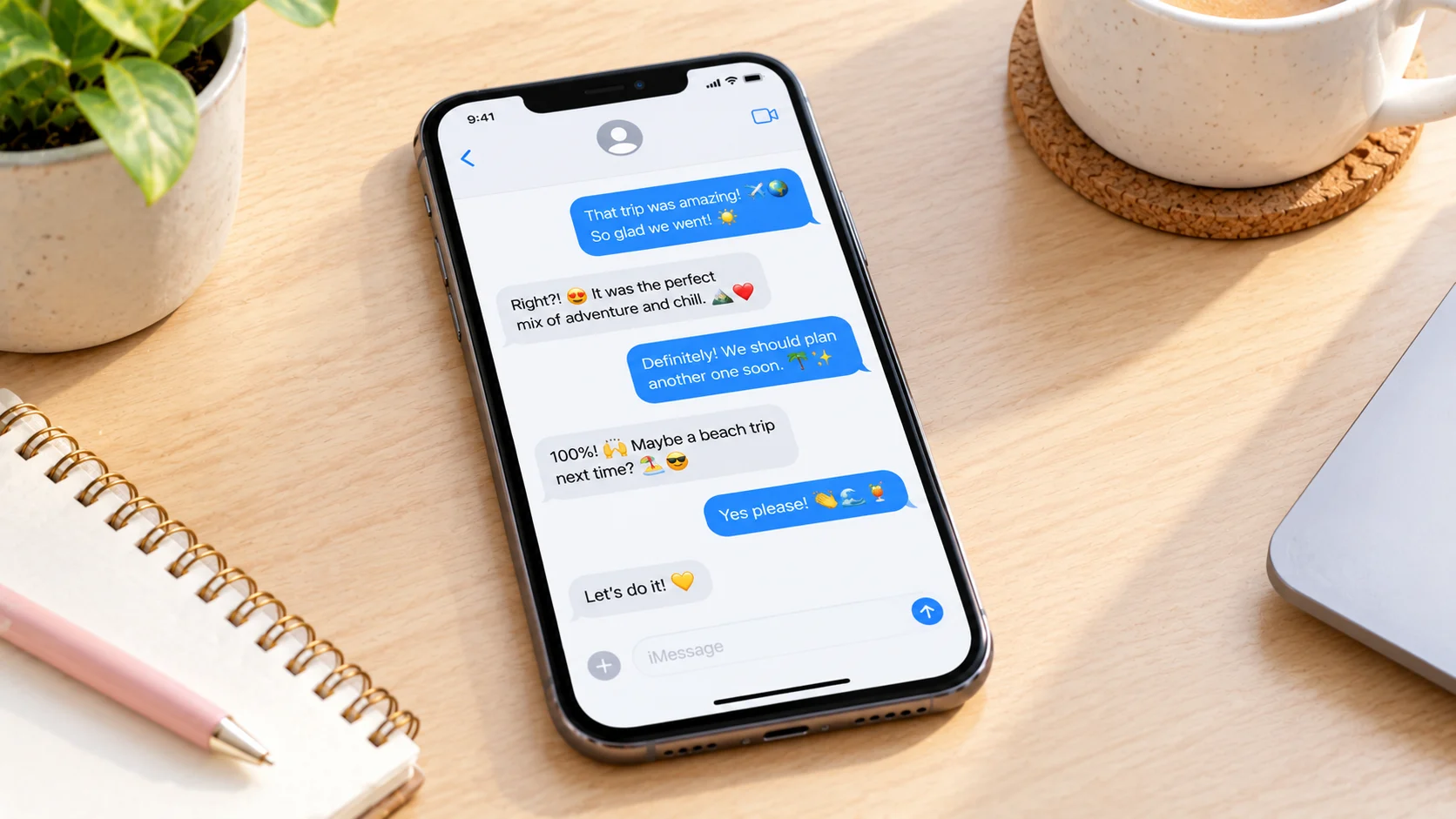
Emoji combos combine two or more emojis to create a fuller reaction or idea. Their meaning depends on the emojis used and the surrounding conversation. For example, ❤️🥹 may express heartfelt emotion, while 😂💀 can exaggerate that something is extremely funny. These are common interpretations, not fixed definitions.
An emoji combo is two or more emojis used together to express an idea, reaction, mood, or message that may be harder to communicate with one emoji alone. For example, 😂😭 can suggest laughing so hard that you are crying, while 👀🔥 can emphasize that something looks exciting, impressive, or worth watching.
There is no single universal meaning for most emoji combinations. The meaning usually comes from the individual emojis, the order they appear in, the written text around them, and the situation. Some combinations are simple and literal, while others are playful, exaggerated, sarcastic, affectionate, or based on internet slang.
What Is an Emoji Combo?
An emoji combo is simply a group of emojis placed together in a message.
The combination can work in several ways:
- Add emphasis: 🔥🔥 can make a reaction feel stronger.
- Combine ideas: 🎂🎉 can suggest a birthday celebration.
- Show a reaction: 😭😂 can express overwhelming laughter or mixed emotions.
- Create a visual phrase: 👀☕ can suggest watching or waiting for some interesting information.
- Add humor: 🤦♂️😂 can make frustration sound more playful.
- Set a mood: 🌙✨ can create a calm, dreamy, or nighttime feeling.
The important point is that an emoji combo does not automatically become a new official emoji. Unicode does define certain standardized emoji sequences, including sequences that use a Zero Width Joiner (ZWJ), but many combinations people type in everyday messages are simply separate emoji characters placed next to each other.
How Emoji Combinations Get Their Meaning
The meaning of a combination often comes from the relationship between its parts.
Consider:
😂 + 😭 = 😂😭
The first emoji represents laughter, while the second represents intense crying. Together, they can suggest that something is so funny that the person is “crying laughing.”
Now compare:
❤️ + 🥹 = ❤️🥹
This pairing can communicate strong affection, gratitude, or being emotionally touched.
The same principle works with less emotional combinations:
📚 + ☕ = 📚☕
This may suggest studying with coffee, reading, or a quiet study session.
In other words, emoji combos work a little like visual shorthand. The reader interprets the individual symbols together.
Emoji Combo Meaning in Texting
In a text conversation, combinations are often used to make a short response more expressive.
A single emoji may give a basic reaction, while a combination can add another layer.
For example:
“That ending 😂😭”
This can mean the sender found the ending extremely funny.
“You actually did it 😭👏”
Here, the crying face may express being overwhelmed or impressed rather than sadness, while the clapping hands add approval.
“Okayyy 👀😂”
This can signal playful curiosity or amusement.
The words matter just as much as the emojis. A combination that looks affectionate in one conversation could simply be friendly in another.
Popular Types of Emoji Combos
There is no official list of “correct” emoji combos. People create combinations based on the message they want to convey.
Reaction Combos
These show a strong emotional response.
Examples:
- 😂😭 — extremely funny or laughing hard
- 😭💀 — exaggerated reaction to something very funny or shocking
- 😳👀 — surprise, curiosity, or “wait, what?”
- 🤦😂 — frustration mixed with humor
Celebration Combos
These are useful for good news or achievements.
Examples:
- 🎉🥳 — celebration and excitement
- 🏆👏 — achievement and congratulations
- 🎂🎉 — birthday celebration
- 🙌🎊 — excitement or congratulations
Affectionate Combos
These can communicate warmth, appreciation, or emotional support.
Examples:
- ❤️🥹 — heartfelt affection or being touched
- 🫶❤️ — care, appreciation, or affection
- 🥰❤️ — warmth and affection
- 🤗❤️ — supportive or caring feelings
An affectionate combo does not automatically mean romantic interest. The relationship and conversation matter.
Playful or Funny Combos
These are often used when the sender wants a reaction to feel less serious.
Examples:
- 😂💀 — very funny or “I’m done”
- 🤡😭 — joking about an embarrassing situation
- 👀🍿 — watching an interesting situation unfold
- 🙃😂 — awkwardness mixed with humor
Aesthetic or Mood Combos
Some combinations are chosen mainly because they create a certain visual mood.
Examples:
- 🌙✨ — nighttime, calm, or dreamy mood
- 🌸🦋 — soft, springlike, or nature-inspired feeling
- ☁️✨ — dreamy or peaceful mood
- 🌊☀️ — beach, summer, or relaxing atmosphere
These combinations are especially dependent on personal style and context.
Emoji Combos Compared With Similar Emoji Choices
| Emoji | Official Name | Common Meaning | Tone | Where or When It Is Used |
|---|---|---|---|---|
| 😂 | Face with Tears of Joy | Strong laughter | Playful | Funny texts and reactions |
| 😭 | Loudly Crying Face | Intense emotion, sadness, or exaggerated reaction | Dramatic | Emotional or very funny messages |
| 💀 | Skull | “I’m dead” from laughter or shock | Humorous, dramatic | Jokes and exaggerated reactions |
| 👀 | Eyes | Looking, noticing, curiosity, or interest | Curious, playful | Reactions and teasing |
| 🔥 | Fire | Excellent, exciting, impressive, or intense | Energetic | Praise and reactions |
| ❤️ | Red Heart | Love, care, appreciation, or warmth | Affectionate | Supportive and personal messages |
| 🥹 | Face Holding Back Tears | Being touched, emotional, grateful, or overwhelmed | Tender | Heartfelt reactions |
| 🙌 | Raising Hands | Celebration, praise, or excitement | Positive | Good news and congratulations |
The biggest difference is that a single emoji has its own basic identity, while an emoji combo lets multiple ideas interact.
For example, 😂 is already a clear laughing reaction. But 😂😭 can make the reaction feel more intense. Similarly, 👀 can express curiosity, while 👀🔥 may suggest that something is especially interesting or impressive.
How to Read an Emoji Combo Correctly
When someone sends several emojis together, avoid assigning a fixed meaning immediately.
Look at four things:
1. The Written Message
Compare:
“That was so embarrassing 😂😭”
with:
“I can’t believe you told them 😂😭”
Both use the same combo, but the surrounding words give the reaction a different focus.
2. The Conversation
A combination can refer to something mentioned earlier.
If someone has been talking about a funny movie and sends 😂🎬, the meaning is likely connected to the movie.
3. The Sender’s Style
Some people use many emojis in almost every message. Others rarely use them.
That difference can affect how strong a particular combination feels.
4. The Emoji Order
Order can sometimes change the way a combo is read.
For example:
❤️🔥
is a standardized emoji sequence with a specific combined presentation, while:
❤️🔥
is commonly read as two separate emojis placed together.
Unicode documents several kinds of emoji sequences, including standardized ZWJ sequences that can display as a single glyph when supported.
Does an Emoji Combo Have an Official Meaning?
Usually, no.
Unicode standardizes emoji characters and certain emoji sequences, but it does not give every user-created combination a universal conversational definition. Unicode’s current emoji charts distinguish individual emoji characters from sequences, including ZWJ sequences and other defined sequences.
That means a combination such as 😂😭 can have a widely understood informal meaning without being an official Unicode emoji with its own name.
This distinction matters because online lists sometimes present creative combinations as though every one has an official definition. It is safer to treat most everyday combinations as context-based expressions.
Emojipedia also explains that emoji meanings are assessed using intended meanings, real-world use, alternative meanings, and cross-platform design details. That helps explain why the meaning of an emoji or combination can vary by context.
Can Emoji Combos Be Sarcastic?
Yes. An emoji combination can support sarcasm, but the emojis alone do not prove that a message is sarcastic.
For example:
“Great, another meeting 🙃👏”
The words and the upside-down face together may suggest that “great” is not meant literally.
But if someone writes:
“Great news! 🙃👏”
the exact meaning still depends on the situation and the sender’s normal style.
Look at the complete message rather than treating one emoji as a secret code.
Can Emoji Combos Be Flirty?
Sometimes a combination can be used in a playful or affectionate way, but an emoji combo does not prove romantic interest.
For example:
“You looked great today 😊✨”
may sound warm or complimentary.
A different conversation could make the same combination simply friendly.
If you are trying to understand what someone meant, consider the words, previous conversation, relationship, and overall communication style instead of relying on the emoji combination alone.
Emoji Combo Examples in Realistic Texts
The following examples are hypothetical illustrations, not messages collected from real users.
Example 1
“That video took me out 😂💀”
Likely meaning: The video was extremely funny.
Why context matters: The skull is being used dramatically rather than literally.
Example 2
“You remembered! 🥹❤️”
Likely meaning: The sender feels touched, grateful, or affectionate.
Why context matters: The written message gives the combination a warm emotional meaning.
Example 3
“Wait… they actually said that? 👀😭”
Likely meaning: Surprise mixed with an intense reaction.
Why context matters: The words show that the sender is reacting to unexpected information.
Example 4
“We won! 🏆🎉”
Likely meaning: Celebration and excitement.
Why context matters: The trophy gives the combination an achievement-related meaning, while the party emoji adds celebration.
Example 5
“Monday again 🙃☕”
Likely meaning: A playful or resigned reaction to starting another week.
Why context matters: The words and coffee emoji create a casual mood rather than a serious complaint.
How to Respond to an Emoji Combo
Your response should match the tone of the original message.
If someone sends a funny combo:
😂😭
You could reply:
- “I know 😂”
- “That was actually hilarious 😭”
- “I’m still laughing”
If someone sends a supportive combination:
🫶❤️
A natural response could be:
- “Thank you ❤️”
- “I really appreciate that.”
- “That means a lot.”
If you cannot tell what someone means, it is fine to ask directly:
“Wait, what do you mean by that? 😂”
That is often clearer than guessing.
Why Emoji Combos Can Be Misunderstood
Emoji combinations are flexible, which is part of their appeal. It is also why they can be confusing.
A few common problems include:
- Different interpretations: 😂😭 may mean laughing hard to one person and mixed emotions to another.
- Different communication styles: Someone who uses many emojis may not intend a strong message every time.
- Cultural differences: Some emoji meanings can vary across communities and regions.
- Platform design: The same emoji can look somewhat different across devices.
- Inside jokes: Friends may create combinations that have a meaning understood only within their group.
When a message matters, the surrounding words are usually more useful than trying to decode the emojis alone.
Are Emoji Combos the Same as Emoji Sequences?
Not always.
In everyday conversation, “emoji combo” can mean any group of emojis typed next to each other.
In Unicode terminology, an emoji sequence can refer to a defined sequence of characters that works together as an emoji. Unicode’s documentation includes modifier sequences, flag sequences, keycap sequences, and ZWJ sequences.
A ZWJ sequence uses the invisible Zero Width Joiner character to connect emoji components. For example, Unicode lists sequences such as ❤️🔥, which is presented as Heart on Fire.
So:
😂😭
is normally just two emojis next to each other.
But:
❤️🔥
is a standardized emoji sequence.
That technical difference is useful when searching for an official emoji name or checking a combination is supported as a single emoji.
Copy-and-Paste Emoji Combos
😂😭
😂💀
👀🔥
🥹❤️
🫶❤️
😭😂
🙌🎉
🏆👏
🎂🎉
🌙✨
☕📚
👀🍿
FAQs
What does an emoji combo mean?
An emoji combo is a group of two or more emojis used together to communicate a reaction, idea, mood, or emphasis. Its meaning depends on the individual emojis and the context.
What is the most common emoji combo?
There is no single universally “most common” emoji combo. Different combinations serve different purposes, and informal usage changes with the conversation.
Can I make my own emoji combo?
Yes. You can place compatible emojis next to each other in a message. The resulting combination may have a meaning that is obvious, playful, or personal to your conversation.
Do emoji combos have official names?
Most user-created combinations do not have official Unicode names. Some specific emoji sequences are standardized and have official or CLDR names, while ordinary combinations remain separate emoji characters.
Why does the same emoji combo mean different things?
Meaning depends on context, wording, relationship, communication style, and sometimes cultural expectations. The same combination can be funny in one message and emotional in another.
What is the difference between an emoji combo and an emoji sequence?
An emoji combo is a broad everyday term for multiple emojis used together. An emoji sequence is a more technical Unicode concept referring to defined sequences of emoji-related characters.
Conclusion
An emoji combo gives people a simple way to combine emotions, reactions, objects, and ideas in one message. Some combinations are easy to understand, while others depend heavily on context or personal style.
The safest way to interpret one is to read the entire message, consider the conversation, and avoid assuming that a particular combination has one fixed meaning.
See Also More:
- Family Emoji Meaning | What It Means in Text & Messages In 2026
- Foot Emoji | Walking, Feet, Movement & Everyday Chats In 2026
- Emoji Keyboard Shortcut on Mac | The Fastest Way to Open Emojis In 2026





4 thoughts on “Emoji Combo Meaning | How Two or More Emojis Create a New Message In 2026”