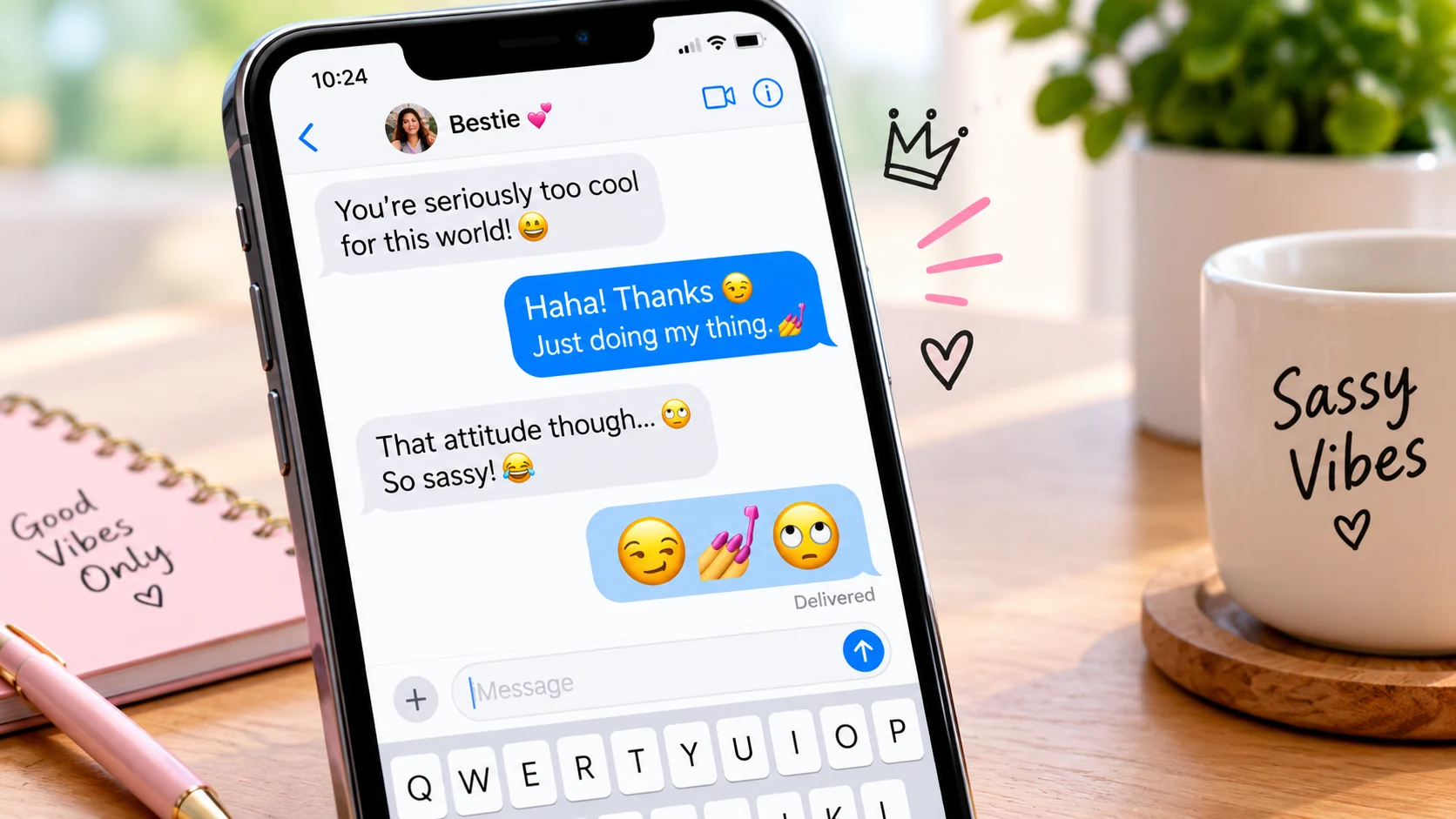
A sassy emoji usually adds attitude, confidence, playful sarcasm, teasing, or an “I said what I said” feeling to a message. There is no single official emoji called the “sassy emoji.”
The emojis most often associated with a sassy tone include 😏 Smirking Face, 💅 Nail Polish, 🙄 Face with Rolling Eyes, and 💁 Person Tipping Hand. The best choice depends on you want to sound confident, teasing, dismissive, playful, or sarcastic.
What Does the Sassy Emoji Mean?
The phrase “sassy emoji” is an informal description rather than the official name of one emoji. Different emojis can create a sassy tone depending on the message around them.
For example:
- 😏 can suggest a sly, smug, mischievous, or teasing attitude.
- 💅 can express confidence, sass, glamour, or an unbothered attitude.
- 🙄 can show annoyance, disbelief, sarcasm, or playful attitude.
- 💁 can give a message a confident, matter-of-fact, or slightly cheeky feel.
- 🤨 can add skepticism or a questioning “Really?” reaction.
So if someone searches for the sassy emoji meaning, they may actually be looking for several different emojis rather than one specific character.
Why Do People Use Sassy Emojis?
A sassy emoji can change the emotional tone of plain text.
Compare:
“Okay.”
with:
“Okay 😏”
The first message can sound neutral. The second may sound teasing, confident, or slightly suggestive depending on the conversation.
Likewise:
“I told you so 💅”
can feel more playful and self-assured than the same words without the emoji.
The emoji does not automatically create a particular emotion. The surrounding words, relationship between the people, and usual communication style all matter.
The Most Common Emojis Used for a Sassy Tone
😏 Smirking Face
😏 Smirking Face is one of the clearest choices when someone wants a sly, cheeky, smug, or teasing tone.
Emojipedia describes it as a yellow face with a sly, smug, mischievous, or suggestive expression. It can also be used for flirtation or innuendo, so its meaning can be more suggestive than other “sassy” choices.
For example:
“You really thought I wouldn’t notice 😏”
Here, the emoji makes the message feel knowingly teasing.
But:
“Nice job 😏”
could mean genuine playful approval, smug teasing, or something more suggestive. Context matters.
💅 Nail Polish
💅 Nail Polish is another common choice for a sassy or confident tone.
Its literal meaning relates to painting fingernails, beauty, or self-care. Informally, it can also express confidence, sass, glamour, or a relaxed “I’m not bothered” attitude.
Example:
“I said what I said 💅”
The emoji adds confidence and attitude rather than sadness or anger.
It can also be completely literal:
“Fresh manicure 💅”
In that case, there may be no sass at all.
🙄 Face with Rolling Eyes
🙄 Face with Rolling Eyes is useful when the attitude comes from annoyance, disbelief, impatience, or playful sarcasm.
Emojipedia notes that it can convey disdain, disapproval, frustration, or boredom, while its tone can also be playful, sassy, resentful, or sarcastic.
Example:
“Sure, because that always works 🙄”
Here, the emoji makes the sarcasm much clearer.
💁 Person Tipping Hand
💁 Person Tipping Hand can give a message a confident, cheeky, or “here’s the answer” attitude.
It can work well when someone is jokingly presenting information or acting extra confident.
Example:
“Well, I did warn you 💁”
The emoji makes the statement feel more playful and theatrical.
It does not automatically mean that the sender is being rude.
🤨 Face with Raised Eyebrow
🤨 Face with Raised Eyebrow is better when the attitude comes from doubt or skepticism.
Its official name is Face with Raised Eyebrow, and it can express suspicion, skepticism, concern, disbelief, or disapproval.
Example:
“You expect me to believe that? 🤨”
This sounds questioning rather than playful or flirtatious.
Sassy Emojis Compared With Similar Emojis
| Emoji | Official Name | Common Meaning | Tone | Where or When It Is Used |
|---|---|---|---|---|
| 😏 | Smirking Face | Sly, smug, cheeky, or teasing | Playful, confident, sometimes suggestive | Teasing texts, jokes, playful reactions |
| 💅 | Nail Polish | Confidence, sass, glamour, or being unbothered | Confident, playful | Reactions, captions, jokes, self-care messages |
| 🙄 | Face with Rolling Eyes | Annoyance, disbelief, sarcasm, or exasperation | Sassy, sarcastic, dismissive | Reactions to frustrating or ridiculous comments |
| 💁 | Person Tipping Hand | Confident presentation or cheeky attitude | Playful, confident | Jokes, explanations, “I told you so” moments |
| 🤨 | Face with Raised Eyebrow | Doubt, skepticism, or disbelief | Questioning, skeptical | Challenging a claim or reacting to something suspicious |
| 😒 | Unamused Face | Irritation, displeasure, or skepticism | Negative, unimpressed | Showing that something is annoying or not funny |
| 😉 | Winking Face | A joke, playful suggestion, or teasing | Light, playful, sometimes flirty | Friendly teasing and humorous messages |
| 😜 | Winking Face with Tongue | Goofiness, joking, or playful mischief | Silly, energetic | Clearly unserious jokes and playful teasing |
Which Sassy Emoji Should You Choose?
The biggest difference is what kind of attitude you want to show.
Choose 😏 when you want a sly or knowingly teasing expression.
Choose 💅 when you want confident, stylish, or unbothered energy.
Choose 🙄 when you are reacting to something annoying, ridiculous, or hard to believe.
Choose 💁 when you want a playful “there you go” or “I told you so” feeling.
Choose 🤨 when you are questioning something.
And choose 😉 when you want a lighter, friendlier kind of teasing.
One easy mistake is treating 😏 and 🙄 as interchangeable. They can both feel sassy, but 😏 usually comes from a smirk, while 🙄 is based on an eye-roll and is more likely to signal annoyance or sarcasm. Emojipedia specifically distinguishes 😏 Smirking Face from 😒 Unamused Face by its wry smile.
What Does a Sassy Emoji Mean in Text?
In texting, a sassy emoji usually works as a tone marker. It tells the reader how the words are intended to sound.
For example:
“I knew you’d come around 💅”
This may sound confident and playful.
“Oh, you finally answered 🙄”
This may sound annoyed or teasing.
“You noticed? 😏”
This can sound knowingly playful or teasing, but the exact meaning depends heavily on the conversation.
This is why it is risky to interpret an emoji by itself. The same emoji can feel friendly in one conversation and sarcastic in another.
Is a Sassy Emoji Flirty?
Sometimes, but not always.
😏 is the clearest example because Smirking Face can be used for flirtation or suggestive humor.
However, using 😏 does not prove that someone is flirting. The surrounding words and the relationship between the people matter more than the emoji alone.
For example:
“You think you’re funny 😏”
could be playful teasing.
But:
“Great job on the presentation 💅”
is more naturally read as confident or playful praise.
A sassy emoji can add personality without carrying a romantic meaning.
Is a Sassy Emoji Rude?
It can be.
The emoji itself does not guarantee that a message is rude, but certain combinations can make a message sound dismissive or mocking.
For example:
“Whatever 🙄”
is much more dismissive than:
“Whatever 😅”
The first emoji reinforces annoyance or impatience. The second can soften the statement and make it sound more awkward or lighthearted.
If you are unsure how a message will sound, consider the words first and then choose an emoji that matches the intended tone.
Sassy Emoji Text Examples
Playful confidence
“I told you I’d win 💅”
Likely meaning: The sender is celebrating being right or successful in a playful way.
Why context matters: Without the emoji, the sentence could sound more serious. 💅 adds attitude and confidence.
Teasing
“You missed me already? 😏”
Likely meaning: Playful teasing.
Why context matters: 😏 can sometimes suggest flirtation, but it can also simply signal a joke or smug teasing.
Sarcasm
“Oh, that’s a brilliant idea 🙄”
Likely meaning: The sender probably does not think the idea is brilliant.
Why context matters: The words sound positive, while the eye-roll changes the tone.
Skepticism
“And how exactly did that happen? 🤨”
Likely meaning: The sender is questioning the explanation.
Why context matters: 🤨 is more skeptical than glamorous or playful.
Literal use
“I finally painted my nails 💅”
Likely meaning: The emoji is simply related to a manicure.
Why context matters: Not every use of 💅 is sassy.
What Does It Mean When Someone Sends a Sassy Emoji?
Look at the complete message rather than trying to decode the emoji alone.
Ask:
- What did the person actually say?
- Were they joking or being serious?
- Is this how they normally text?
- What happened immediately before the message?
- Does the emoji reinforce the words or contradict them?
For example, 🙄 after a funny complaint between friends may be playful. The same emoji during an argument may sound dismissive.
Likewise, 😏 can be harmless teasing in one conversation and more suggestive in another.
There is no reliable rule that says a sassy emoji has one fixed meaning based on who sent it.
How to Respond to a Sassy Emoji
Your response should match the tone of the original message.
For playful teasing, you could answer:
“Oh, so we’re being confident today? 😂”
For a sarcastic message:
“Okay, okay, I get the point 😅”
For a confusing message:
“Wait, are you joking or serious?”
For a confident “I told you so” moment:
“Fine, you were right this time.”
You do not need to match the exact emoji. A natural response is usually better than trying to decode every symbol.
Common Misunderstandings About Sassy Emojis
“Sassy emoji” is not an official Unicode name
There is no official Unicode emoji named Sassy Emoji. “Sassy” is a description people use for certain emoji tones.
For example, Unicode lists 😏 as Smirking Face, 🙄 as Face with Rolling Eyes, 🤨 as Face with Raised Eyebrow, and 💅 as Nail Polish.
😏 does not always mean flirting
Smirking Face can be flirtatious, but it can also express smugness, mischief, self-confidence, or cheeky humor.
💅 does not always mean attitude
Nail Polish can simply refer to nails, beauty, or self-care. Its sassy meaning comes from context.
🙄 does not always mean anger
An eye-roll can be serious, but it can also be playful or sarcastic. The surrounding conversation helps determine the tone.
Official Emoji Details
Because “sassy emoji” is an informal phrase, there is no single Unicode code point or official release date for it.
Some of the main emojis associated with the term include:
- 😏 Smirking Face — U+1F60F
- 🙄 Face with Rolling Eyes — U+1F644
- 🤨 Face with Raised Eyebrow — U+1F928
- 💅 Nail Polish — U+1F485
Unicode’s current emoji charts identify these as separate emoji characters with their own official names.
Emoji artwork can also vary between platforms and versions, so the same character may have slightly different visual details on different devices. Emojipedia notes notable historical appearance differences for several of these emojis.
FAQs
What is the sassy emoji?
There is no single official sassy emoji. 😏, 💅, 🙄, and 💁 are among the emojis that can commonly create a sassy tone, depending on the message.
What emoji means “sassy”?
💅 is a strong choice for confident or unbothered sass, while 😏 works better for sly or teasing sass. 🙄 is more suited to sarcastic or annoyed sass.
What does 😏 mean from someone?
😏 is officially Smirking Face. It can suggest smugness, mischief, confidence, teasing, or flirtation. The meaning depends on the conversation, so it does not automatically indicate romantic interest.
What does 💅 mean in texting?
💅 can literally refer to nail polish or a manicure. In informal texting, it can also suggest confidence, sass, glamour, or an “unbothered” attitude.
What is the difference between 😏 and 🙄?
😏 uses a smirk and often feels sly, cheeky, or teasing. 🙄 uses an eye-roll and more often expresses annoyance, disbelief, boredom, or sarcasm.
Can a sassy emoji be friendly?
Yes. A sassy emoji can make friendly teasing, jokes, or confident comments feel more playful. Context determines the attitude feels fun or disrespectful.
Conclusion
A sassy emoji is not one specific Unicode character. It is a casual way to describe emojis that add attitude, confidence, teasing, sarcasm, or an unbothered tone.
For sly or cheeky energy, 😏 is a natural choice. For confident sass, 💅 often fits better. For sarcastic annoyance, 🙄 is clearer, while 🤨 works when the main feeling is skepticism.
The safest way to understand any of them is to read the emoji together with the words and the conversation around it.
See Also More:
- Family Emoji Meaning | What It Means in Text & Messages In 2026
- Foot Emoji | Walking, Feet, Movement & Everyday Chats In 2026
- Emoji Keyboard Shortcut on Mac | The Fastest Way to Open Emojis In 2026