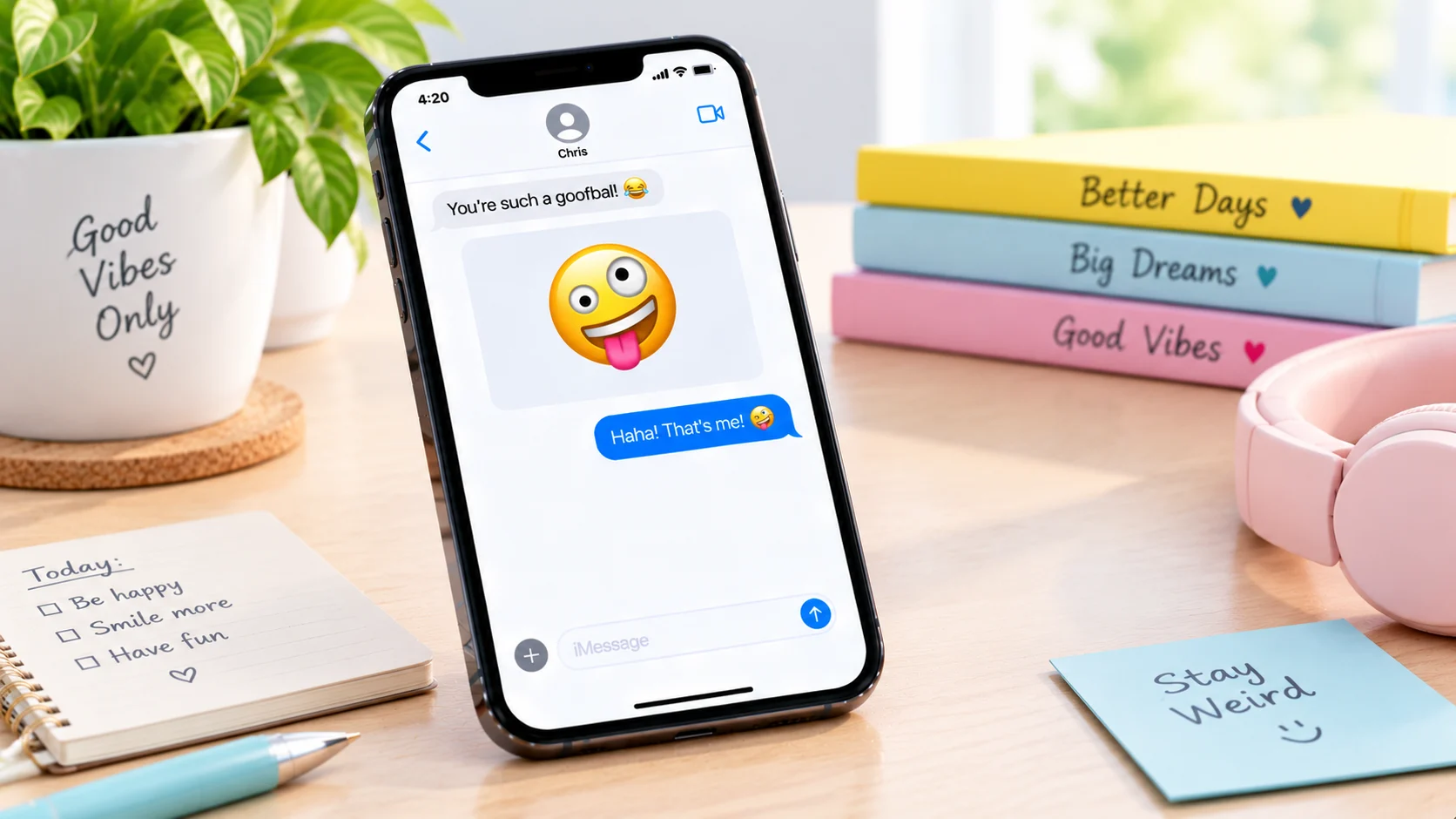
🤪 means “I’m being silly,” “That was ridiculous,” or “I’m just joking around.”
The dumb emoji 🤪 usually refers to the Zany Face emoji, which expresses silliness, goofiness, playful behavior, or acting a little ridiculous. People may use it after making a silly joke, admitting a harmless mistake, or teasing a friend.
Its exact meaning depends on the conversation. It can make a message feel funny and lighthearted, but in some situations, it can also suggest sarcasm, embarrassment, or exaggerated craziness. The emoji’s official name is Zany Face, not “Dumb Face,” so the word “dumb” describes an informal interpretation rather than its official Unicode name.
What Does the Dumb Emoji 🤪 Mean?
The 🤪 emoji shows a face with an uneven expression, one eye larger than the other, and its tongue sticking out. Its unusual appearance makes it a natural choice for expressing goofy reactions and playful nonsense.
People commonly use it to communicate these ideas:
- Being silly: Acting goofy or doing something ridiculous for fun.
- Making a joke: Showing that a comment is not meant to be taken too seriously.
- Admitting a mistake: Lightening the mood after doing something foolish.
- Playful teasing: Poking fun at a friend without necessarily intending to offend.
- Exaggerated reactions: Making an ordinary situation sound hilariously absurd.
The emoji does not automatically mean that someone is unintelligent. In everyday texting, it is often closer to “I’m being ridiculous” than a serious judgment about intelligence.
What Does 🤪 Mean in Text Messages?
In texting, 🤪 adds a playful or exaggerated tone to words that might otherwise sound confusing, blunt, or serious.
For example:
| Text message | Likely meaning |
|---|---|
| “I forgot my own password again 🤪” | Laughing at a personal mistake. |
| “That was the weirdest idea ever 🤪” | Finding something absurd or amusing. |
| “I’m in a silly mood today 🤪” | Feeling playful and goofy. |
| “You actually did that? 🤪” | Reacting with surprise or teasing, depending on the relationship. |
| “I have no idea what I’m doing 🤪” | Admitting confusion in a humorous way. |
These examples illustrate possible interpretations, not fixed meanings. The words around the emoji and the sender’s usual communication style help determine the tone.
Is 🤪 a Rude Emoji or a Friendly One?
The 🤪 emoji is usually playful rather than rude, but it can feel insulting when used to mock someone’s behavior or intelligence.
Its tone depends on who sends it, what they say, and both people understand the joke.
- Friendly: “We’re both acting ridiculous today 🤪”
- Self-deprecating: “I wore my shirt backward all morning 🤪”
- Sarcastic: “Wow, what a brilliant plan 🤪”
- Potentially insulting: “You really thought that would work 🤪”
The last two examples may sound mocking if the conversation is already tense. If you are unsure how a message was intended, look at the surrounding words rather than assuming the emoji reveals the sender’s feelings.
What Is the Difference Between 🤪 and Other Silly Emojis?
Several emojis can communicate humor, foolishness, or playful reactions, but each has a slightly different tone.
| Emoji | Official Name | Common Meaning | Tone | Where or When It Is Used |
|---|---|---|---|---|
| 🤪 | Zany Face | Being goofy, silly, or ridiculous | Wild, playful | Jokes, funny mistakes, silly reactions |
| 😜 | Winking Face with Tongue | Cheeky humor or teasing | Mischievous, friendly | Jokes between friends |
| 😝 | Squinting Face with Tongue | Playful silliness or joking disgust | Goofy, exaggerated | Funny reactions and lighthearted teasing |
| 🙃 | Upside-Down Face | Irony, awkwardness, or playful frustration | Dry, ironic | Awkward situations and sarcastic remarks |
| 🤡 | Clown Face | Clowning around or making a fool of oneself | Comedic or mocking | Jokes, embarrassing mistakes, self-criticism |
| 🤦 | Person Facepalming | Frustration or disbelief at a mistake | Exasperated | Responding to an obvious error |
| 😅 | Grinning Face with Sweat | Nervous laughter or relief | Awkward, relieved | Near-misses and uncomfortable moments |
| 😵💫 | Face with Spiral Eyes | Dizziness, confusion, or feeling overwhelmed | Disoriented, dramatic | Confusing events or overwhelming information |
| 😂 | Face with Tears of Joy | Strong amusement or laughter | Happy, humorous | Funny messages, jokes, and reactions |
🤪 vs. 😜: Which One Is More Playful?
Both emojis can make a message feel silly. However, 😜 often suggests cheeky teasing or a playful wink, while 🤪 emphasizes a more exaggerated, goofy expression.
Example:
- “You can’t beat me at this game 😜” sounds teasing.
- “I just tried to cook without reading the recipe 🤪” sounds goofy and self-deprecating.
🤪 vs. 🤡: What’s the Difference?
The 🤪 emoji generally communicates silliness without necessarily suggesting that someone has made a fool of themselves. The 🤡 emoji can suggest clowning around, embarrassment, or being foolish.
For instance, “I sent the message to the wrong group 🤡” may express embarrassment about a mistake. “I sent the message with five typos 🤪” makes the situation sound more lighthearted.
🤪 vs. 🙃: Is There a Difference in Tone?
Yes. 🤪 usually conveys obvious silliness, while 🙃 often expresses irony, awkwardness, or frustration disguised as humor.
Compare “I have three tests tomorrow 🤪,” which may sound like exaggerated joking, with “I have three tests tomorrow 🙃,” which may suggest reluctant acceptance or frustration.
Choose 🤪 for goofy fun and 🙃 when the situation feels awkward or ironic.
What Does 🤪 Mean From Someone?
When someone sends 🤪 to you, they may be joking, teasing, admitting a silly mistake, or trying to keep the conversation lighthearted.
The meaning becomes clearer when you consider the message itself.
- After a joke: They may be signaling that they are not being serious.
- After a mistake: They may be laughing at themselves.
- During friendly teasing: They may be inviting you to joke back.
- After a confusing statement: They may be exaggerating how strange or ridiculous the situation feels.
- During an argument: It could come across as dismissive or sarcastic.
Does 🤪 Mean Flirting?
Not necessarily. The emoji can appear in a flirty conversation, but it is also common as a general expression of silliness.
For example, “You always make me laugh 🤪” could be friendly or flirtatious depending on the relationship and the rest of the conversation. The emoji alone does not prove romantic interest.
How to Respond to the Dumb Emoji
Your response can match the sender’s tone without making assumptions about what they meant.
If they are joking
“LOL, you’re ridiculous 😂”
If they made a silly mistake
“It happens to the best of us 😅”
If you want to tease them back
“What is going on in your head? 🤪”
If you cannot tell what they mean
“Wait, are you serious or joking? 😂”
You do not have to reply with another emoji. A simple text response can work just as well.
Copy and Paste the 🤪 Emoji
🤪
Zany Face · Silly · Goofy · Playful Copy 🤪 Emoji
You can paste 🤪 into text messages, captions, comments, and other conversations whenever you want to express goofy humor or an exaggerated silly reaction.
Official Name and Emoji Details
According to the Unicode emoji charts, the official name of 🤪 is Zany Face. “Dumb emoji” is an informal search term that describes one possible interpretation of the character.
- Emoji: 🤪
- Official Unicode name: Zany Face
- Unicode code point: U+1F92A
- Category: Smileys & Emotion
- Common interpretations: Goofy, silly, zany, playful, or exaggerated behavior
Unicode standardizes the character and its name, but it does not assign one universal meaning to every message in which the emoji appears. Informal interpretations develop through everyday communication and depend on context.
The emoji may also look slightly different across Apple, Google, Samsung, and other platforms. These design differences generally do not change the character’s identity, although they can affect how its expression looks to a reader.
For the official character listing, see the .
FAQs
What is the dumb emoji called?
The emoji most commonly associated with the phrase “dumb emoji” is 🤪, officially called Zany Face. It is used to express silliness, goofy behavior, and exaggerated humor.
Does 🤪 mean stupid?
Not necessarily. It usually communicates playful foolishness or acting ridiculous rather than making a serious statement about someone’s intelligence.
Is 🤪 sarcastic?
It can be. In a joking conversation, it often signals silliness. After a critical or exaggerated statement, it may communicate sarcasm or mockery.
What emoji means acting dumb on purpose?
🤪 is a suitable choice for acting goofy on purpose. 😜 works well for cheeky teasing, while 🤡 can emphasize making a fool of yourself.
Can I use 🤪 in a professional message?
It depends on the situation. It may be fine in a casual conversation with coworkers, but it can seem too informal in a serious work email, formal request, or sensitive discussion.
Is 🤪 the same as 😵💫?
No. 🤪 generally expresses goofiness or silliness. 😵💫, officially called Face with Spiral Eyes, more often conveys dizziness, confusion, or feeling overwhelmed.
Conclusion
The dumb emoji 🤪 is best understood as a playful expression of silliness, goofy behavior, or exaggerated humor. Although it can sometimes sound sarcastic or mocking, its meaning depends on the message and the relationship between the people communicating.
When you want to show that you are joking around rather than being serious, 🤪 is a natural option. When clarity matters, let your words explain the joke.
See Also More:
- Outlook Emojis Explained | Meanings, Shortcuts & Email Tips In 2026
- Train Emoji Meaning | Travel, Trains, & Texting Explained In 2026
- Soccer Emoji Meaning | What It Says in Texts, Sports Chats & More In 2026