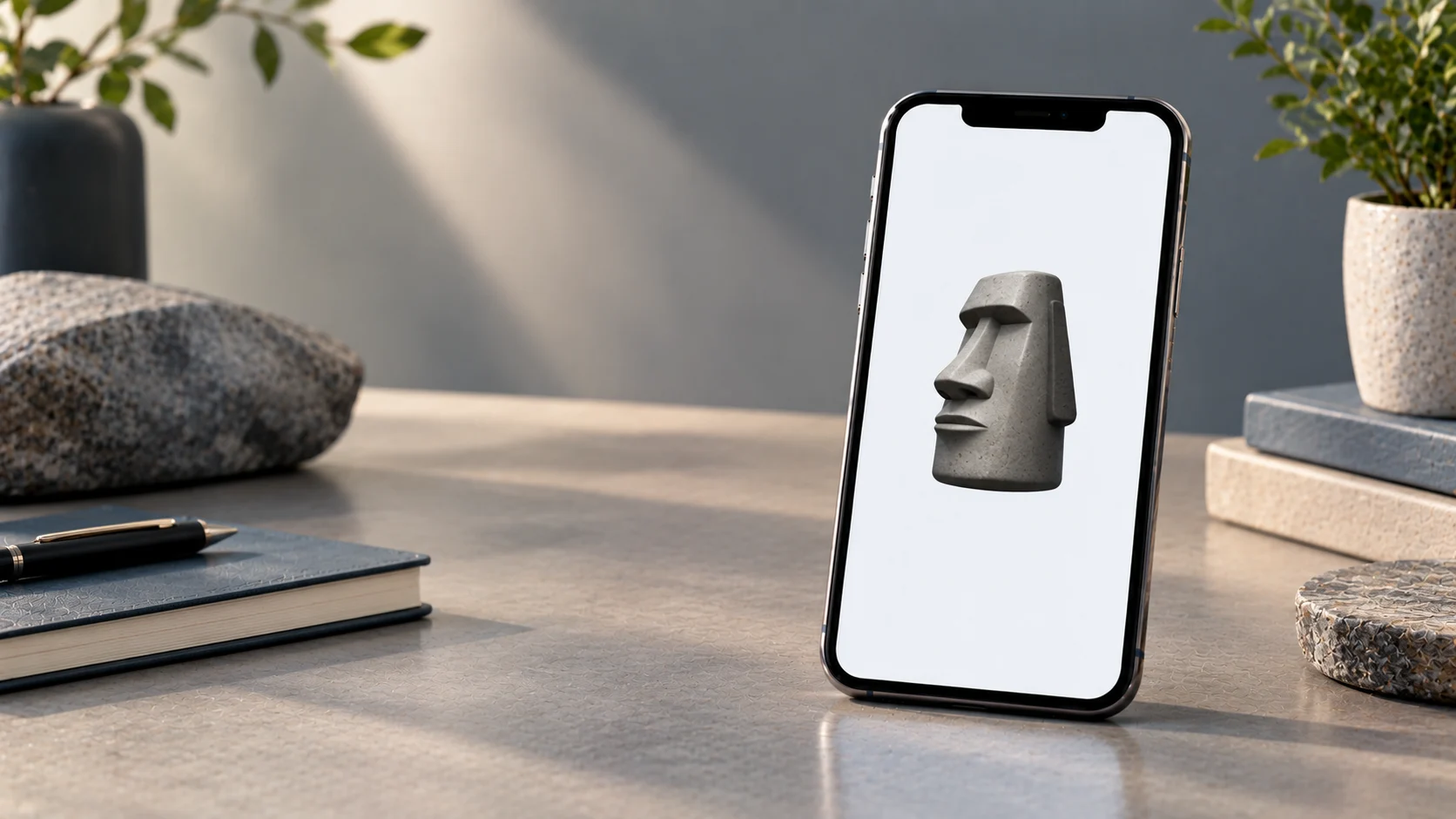
The 🗿 stone face emoji usually represents a stoic expression, an unbothered attitude, awkward silence, or a deadpan reaction. Online, it can also convey sarcasm, confidence, or the feeling of staying serious when something is ridiculous.
The 🗿 stone face emoji, officially called Moai, depicts a large stone head inspired by the monumental statues of Rapa Nui (Easter Island). Although its design comes from real cultural monuments, its meaning in texting and internet conversations has expanded.
People often use it to react without showing emotion, express a serious or unbothered attitude, or make a joke feel deliberately awkward. Depending on the context, it may suggest confidence, silence, or dry humor. Understanding the surrounding message is the best way to tell 🗿 is being used literally, humorously, or as a deadpan reaction.
What Does the 🗿 Stone Face Emoji Mean in Texts?
The 🗿 emoji can communicate several feelings without using words. Its expressionless stone face makes it useful for reactions that sound serious, awkward, or deliberately emotionless.
Common meanings include:
- Stoicism: Staying calm and showing little emotion.
- Awkward silence: Reacting to an uncomfortable or strange comment.
- Deadpan humor: Making a joke by responding with a completely straight face.
- Unbothered confidence: Suggesting that something does not affect you.
- Internet meme humor: Adding an exaggerated, stone-faced reaction to a ridiculous situation.
For example, if a friend sends a surprisingly awkward message, replying with 🗿 can suggest, “I have no words.” In a joking conversation, it may simply make the reaction funnier.
These are informal interpretations, not separate official meanings assigned by Unicode. The context determines which interpretation makes the most sense.
What Does 🗿 Mean on Social Media and in Memes?
On social media, 🗿 often works as a visual punchline. Instead of responding with a laughing face, an angry face, or a long explanation, someone may use the stone face to create a dry, emotionless reaction.
You might see it used in situations like these:
- Someone makes an obvious statement, and the response is 🗿.
- A funny situation becomes unexpectedly awkward, and someone sends 🗿.
- A person describes staying calm during a stressful moment and adds 🗿.
- A meme shows someone acting unusually serious about something silly.
The emoji can also appear in internet memes associated with a stoic or confident persona. These interpretations are informal and can vary between online communities.
Remember: 🗿 does not always mean confidence or toughness. Sometimes it simply means that a situation is strange, funny, or difficult to respond to.
What Does 🗿 Mean From Someone?
When someone sends you 🗿, they may be reacting to your message rather than expressing a specific emotion.
For example:
| Message or situation | Possible interpretation |
|---|---|
| You make an unexpected joke, and they reply 🗿 | A deadpan reaction |
| You share an awkward story, and they send 🗿 | They may be speechless or amused |
| You say something obvious, and they reply 🗿 | Playful disbelief or dry humor |
| You describe staying calm under pressure, followed by 🗿 | Stoicism or an unbothered attitude |
| They send 🗿 without any other context | An unclear reaction, possibly a meme reference |
A single emoji cannot tell you for certain someone is annoyed, impressed, joking, or uninterested. If the meaning matters, consider the conversation as a whole or ask what they meant.
Related Emojis Similar to 🗿
Several emojis can communicate silence, seriousness, confusion, or exaggerated reactions. However, each has a different visual meaning.
| Emoji | Official Name | Common Meaning | Tone | Where or When It Is Used |
|---|---|---|---|---|
| 🗿 | Moai | Stoic, deadpan, or meme reaction | Expressionless, humorous | Awkward moments and internet jokes |
| 😐 | Neutral Face | Little or no visible emotion | Neutral, restrained | Plain reactions or mild disapproval |
| 😑 | Expressionless Face | Frustration or an unimpressed reaction | Dry, annoyed | Repetitive situations or obvious comments |
| 😶 | Face Without Mouth | Silence or having no words | Quiet, awkward | Speechless reactions |
| 🤨 | Face with Raised Eyebrow | Doubt or suspicion | Skeptical | Questioning an unexpected claim |
| 😶🌫️ | Face in Clouds | Confusion or feeling mentally foggy | Hazy, uncertain | Confusing or overwhelming moments |
| 💀 | Skull | Figurative shock or intense amusement | Dramatic, humorous | Unexpected jokes and surprising reactions |
| 😂 | Face with Tears of Joy | Strong laughter | Cheerful, playful | Funny messages and amusing stories |
🗿 vs. 😐 vs. 😑: Which One Should You Use?
The main difference is the expression each emoji conveys.
- 🗿 Moai: Best when you want a stone-faced, meme-style reaction or a deliberately deadpan response.
- 😐 Neutral Face: Better for showing little emotion without adding a strong meme reference.
- 😑 Expressionless Face: More suitable for an unimpressed or frustrated reaction.
- 😶 Face Without Mouth: Useful when you want to suggest silence or having nothing to say.
The 💀 emoji differs from 🗿 because it often emphasizes shock or laughter rather than a calm, expressionless reaction. These meanings are common informal interpretations, not fixed rules.
How to Respond to the 🗿 Emoji
Your reply depends on what the other person was reacting to. Here are some natural options:
- For a funny reaction: “Why that face? 😂”
- For an awkward moment: “Yeah… I don’t even know what to say.”
- For playful confusion: “What does that mean? 😭”
- For a meme exchange: “🗿🗿”
- When you are unsure: “Wait, how should I interpret that?”
You do not have to respond with another emoji. A simple message can help clarify the conversation if the stone face leaves you confused.
What Is the Official Name of 🗿?
The official Unicode name for 🗿 is Moai. It depicts a stylized stone head inspired by the monumental statues of Rapa Nui, also known as Easter Island. These statues are significant cultural heritage and should be distinguished from the emoji’s later internet meanings.
Here are the key details:
| Detail | Information |
|---|---|
| Emoji | 🗿 |
| Official Unicode name | Moai |
| Unicode code point | U+1F5FF |
| Unicode version | Unicode 6.0 |
| Approval year | 2010 |
| Common informal meanings | Stoicism, deadpan humor, silence, meme reactions |
Unicode identifies the character as a moai, while its associations with awkwardness, confidence, and internet humor come from how people use it in conversations. Meaning, Copy And Paste+1
Copy and Paste the Stone Face Emoji
🗿
Moai emoji Copy 🗿
You can copy 🗿 into text messages, comments, captions, and meme conversations whenever its expressionless or humorous tone fits.
FAQs
Does 🗿 mean sigma?
It can be used in memes associated with a stoic, confident, or self-controlled persona. However, the emoji does not officially mean “sigma,” and its interpretation depends on the context. Meaning, Copy And Paste
Does 🗿 mean someone is emotionless?
Not necessarily. Its expressionless appearance can represent a lack of visible emotion, but people also use it for jokes, awkward reactions, and playful exaggeration.
Is 🗿 rude to send in a text?
Not automatically. Among friends, it may be a harmless joke or a deadpan reaction. In a serious conversation, however, it might seem dismissive if the recipient expects a thoughtful response.
Why do people use 🗿 after a joke?
The stone face creates a contrast between a funny situation and a completely serious expression. That contrast can make the joke feel more awkward, dry, or absurd.
Is 🗿 the same as 😐?
No. Both can appear emotionless, but 🗿 depicts a stone statue and is often used as a meme reaction. 😐 depicts a neutral human face and is more directly associated with an ordinary neutral expression.
Conclusion
The 🗿 stone face emoji represents a stone statue, but in texting and internet memes, it often conveys stoicism, awkward silence, deadpan humor, or an unbothered attitude. Its meaning depends on the conversation, so it should not automatically be interpreted as anger, confidence, or disinterest.
See Also More :
- Plane Emoji Meaning | What It Represents in Texts & Travel In 2026
- How to Open the Emoji Keyboard | On Windows, Mac, iPhone & Android In 2026
- Pinky Promise Emoji | Trust, Promises, & Secret Agreements In 2026