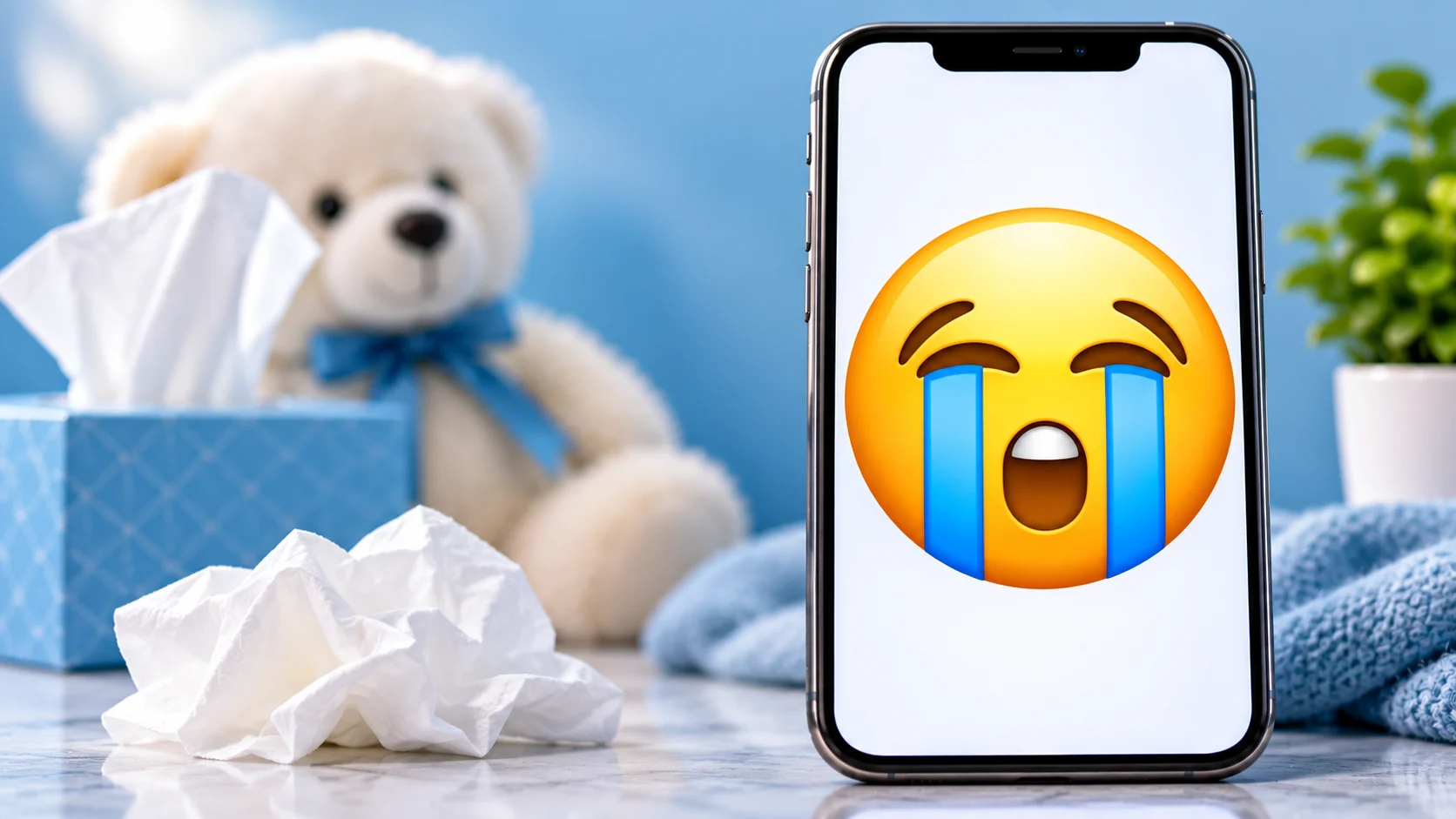
The sobbing emoji 😭 usually expresses intense sadness, emotional pain, or uncontrollable crying. It can also represent overwhelming happiness, laughter, or dramatic reactions, depending on the conversation.
The sobbing emoji 😭 is commonly used to express strong emotions, especially sadness, heartbreak, disappointment, or feeling overwhelmed. Its official Unicode name is Loudly Crying Face, and its streams of tears make it one of the most expressive crying emojis. However, 😭 does not always mean someone is genuinely upset.
In casual texting and social media conversations, people also use it to react to something hilarious, adorable, touching, or surprisingly exciting. Understanding the surrounding words and conversation helps you recognize the sender is expressing real sadness, playful exaggeration, or an emotional reaction.
What Does the Sobbing Emoji 😭 Mean in Text Messages?
In texting, 😭 is often used to communicate emotions that feel too strong for ordinary words. It can express sadness, disappointment, laughter, excitement, or an exaggerated reaction to something surprising.
Common interpretations include:
- Deep sadness: Reacting to upsetting news or an emotional situation.
- Heartbreak: Expressing disappointment or feeling emotionally hurt.
- Overwhelming laughter: Showing that something is extremely funny.
- Emotional happiness: Reacting to touching, sweet, or heartwarming moments.
- Dramatic reaction: Emphasizing how strongly someone feels about an ordinary situation.
For example, “I miss my best friend so much 😭” suggests sadness or longing, while “This video is too funny 😭” communicates laughter rather than genuine distress.
The emoji’s official name describes its crying expression, but everyday usage can be much broader. Emojipedia – The Latest Emoji News+1
Why Do People Use 😭 Instead of 😢?
Both emojis represent crying, but they create different levels of emotional intensity.
- 😭 Loudly Crying Face: Suggests intense or overwhelming emotion, often expressed dramatically.
- 😢 Crying Face: Usually communicates a quieter, more restrained feeling of sadness.
For example, “I feel sad about the news 😢” sounds gentle and serious. “I can’t believe the show is over 😭” may express a much more dramatic reaction, even when the situation is not genuinely upsetting.
Neither emoji has one fixed emotional meaning. The surrounding words help determine the tears are serious, playful, or exaggerated.
Does 😭 Always Mean Someone Is Sad?
No. Although 😭 visually represents intense crying, people also use it for positive and humorous reactions.
Here are three common situations:
1. Genuine sadness
“I’m really going to miss everyone 😭”
The emoji reinforces an emotional goodbye.
2. Something extremely funny
“That joke was so unexpected 😭”
Here, the tears represent laughter or amusement.
3. Something heartwarming
“They surprised her with a birthday party 😭”
The emoji can communicate being touched or overwhelmed by a sweet moment.
This difference is especially important when interpreting messages. Do not assume someone is genuinely upset simply because they send 😭.
What Does 😭 Mean From Someone?
When someone sends 😭 in a conversation, they may be expressing sadness, laughing at something, or reacting dramatically to a situation.
The meaning depends on what happened before the message and how that person usually communicates.
Consider these examples:
- “I can’t believe you remembered my birthday 😭” — They may feel touched or pleasantly surprised.
- “I failed my favorite class 😭” — They are expressing disappointment or sadness.
- “You’re making me laugh so hard 😭” — They are showing amusement.
- “My favorite character is gone 😭” — They are reacting emotionally to a fictional event.
The sender’s relationship with you does not automatically change the emoji’s meaning. Friends, family members, and romantic partners can all use it in different ways.
Is the Sobbing Emoji Dramatic or Sarcastic?
The 😭 emoji can make an ordinary reaction sound more dramatic. This is common in playful conversations where someone wants to exaggerate how strongly they feel.
For example:
- “I have so much homework 😭” — Playfully expressing frustration.
- “My favorite snack is sold out 😭” — Showing exaggerated disappointment.
- “That outfit looks amazing 😭” — Expressing strong admiration.
It can also appear in sarcastic messages, especially when the words suggest the person is not genuinely upset.
However, sarcasm is not its default meaning. Look at the full message before deciding someone is joking or expressing a real emotion.
Related Crying Emojis and Their Meanings
The sobbing emoji belongs to a group of facial expressions associated with tears, sadness, emotional reactions, and laughter. These alternatives have different expressions and can communicate different levels of intensity.
| Emoji | Official Name | Common Meaning | Tone | Where or When It Is Used |
|---|---|---|---|---|
| 😭 | Loudly Crying Face | Intense crying or overwhelming emotions | Dramatic, emotional | Sad news, laughter, emotional reactions |
| 😢 | Crying Face | Sadness or disappointment | Gentle, serious | Apologies and upsetting news |
| 🥹 | Face Holding Back Tears | Feeling touched or emotional | Tender, heartfelt | Gratitude and heartwarming moments |
| 🥺 | Pleading Face | Asking for something or seeking sympathy | Soft, pleading | Requests and emotional reactions |
| 😥 | Sad but Relieved Face | Sadness mixed with relief | Worried, relieved | Difficult situations that turn out okay |
| 😓 | Downcast Face with Sweat | Stress or disappointment | Anxious, uncomfortable | Difficult tasks and stressful moments |
| 😞 | Disappointed Face | Unhappiness or disappointment | Subdued, serious | Bad news and unmet expectations |
| 😂 | Face with Tears of Joy | Strong laughter | Humorous, playful | Jokes and hilarious situations |
😭 vs. 😂: Which One Should You Use?
These two emojis are sometimes confused because both feature tears.
However, their usual conversational meanings are different:
- 😭 Loudly Crying Face: Represents intense crying, but can also express exaggerated laughter, excitement, or emotional reactions.
- 😂 Face with Tears of Joy: Specifically depicts laughter with tears and is a more direct choice for something hilarious.
For example, use 😂 when reacting to a funny joke. Use 😭 when you want to express an overwhelming reaction that could be sadness, laughter, or dramatic amusement.
😭 vs. 🥹: What’s the Difference?
The main difference is the emotional expression.
- 😭 shows tears flowing down the face, suggesting intense emotion.
- 🥹 shows someone holding back tears, often suggesting gratitude, pride, or being touched.
For example, “Thank you for always supporting me 🥹” communicates heartfelt appreciation, while “I’m going to miss you so much 😭” expresses a stronger emotional reaction.
How to Respond to the 😭 Emoji
Your response should depend on the sender is genuinely upset, joking, or sharing something emotional.
Here are some natural replies:
| Situation | Possible response |
|---|---|
| Someone shares sad news | “I’m sorry. I hope things get better.” |
| Someone reacts to a funny joke | “I knew you’d find that hilarious 😂” |
| Someone feels disappointed | “That’s unfortunate. Hopefully, it works out.” |
| Someone shares something touching | “That’s honestly so sweet 🥹” |
| Someone exaggerates a small problem | “Haha, you’ll be okay!” |
If you cannot tell wether the person is joking or upset, a simple question such as “Are you okay, or are you laughing?” can help avoid misunderstanding.
Does the 😭 Emoji Look Different on Different Devices?
Yes. The appearance of 😭 can vary across Apple, Google, Samsung, Microsoft, and other platforms.
Some versions show thick streams of tears running down both cheeks, while others use slightly different facial details, colors, or tear shapes.
Despite these visual differences, the emoji represents the same Unicode character and retains the official name Loudly Crying Face. Its informal meanings can still vary between conversations and users. Meaning, Copy And Paste+1
Official Name and Unicode Details
Here are the basic identification details of the sobbing emoji.
| Detail | Information |
|---|---|
| Emoji | 😭 |
| Official Unicode name | Loudly Crying Face |
| Unicode code point | U+1F62D |
| Category | Smileys & Emotion |
| Subcategory | Face Concerned |
| Unicode version | Unicode 6.0 |
| Approval year | 2010 |
| Emoji version | Emoji 1.0 (2015) |
The emoji was included in Unicode 6.0 in 2010 and later became part of Emoji 1.0 in 2015. Its official name describes the crying expression, while its everyday use includes many other emotional reactions. Unicode+1
Copy and Paste the Sobbing Emoji
😭
Loudly Crying Face Copy 😭
You can copy and paste 😭 into text messages, social media captions, comments, and other conversations. It works for expressing sadness, laughter, emotional excitement, and dramatic reactions.
FAQs
What does 😭 mean from a girl or boy?
The emoji generally has the same range of meanings regardless of who sends it. It may express sadness, laughter, disappointment, or an exaggerated reaction. The conversation matters more than the sender’s gender.
Does 😭 mean crying or laughing?
It can mean either. Its official name refers to loud crying, but informal texting often uses it to show that something is extremely funny or emotionally overwhelming.
Is 😭 stronger than 😢?
Usually, yes, in terms of visual intensity. 😭 shows heavy streams of tears, while 😢 has a more restrained crying expression. However, their emotional meanings depend on context.
Does 😭 mean someone misses you?
It can express sadness or longing when someone talks about missing another person. However, receiving this emoji alone does not confirm that someone misses you.
Can 😭 be used for happiness?
Yes. People sometimes use it when they feel touched, excited, grateful, or overwhelmed by something positive.
What is the difference between 😭 and 🥺?
😭 usually represents intense crying or overwhelming emotion. 🥺 is a pleading expression that can communicate vulnerability, affection, or a request for sympathy.
Is 😭 appropriate for serious conversations?
It can be appropriate when someone genuinely wants to express sadness, but its humorous use may cause confusion. For serious messages, clear words are helpful, especially when discussing difficult news or offering sympathy.
Conclusion
The 😭 sobbing emoji is more expressive than a simple crying face. It can communicate sadness, disappointment, overwhelming happiness, laughter, or playful exaggeration. Although its official name is Loudly Crying Face, its everyday meaning depends heavily on context. Understanding the message around it helps you recognize someone is genuinely upset, joking, or simply expressing a strong emotional reaction.
See Also More :
- Teeth Emoji Meaning | Smiles, Dental Care & Everyday Texts In 2026
- Eggplant Emoji | What It Really Means in Texts & Social Media In 2026
- Fox Emoji | What It Means in Texts, Chat & Social Media In 2026