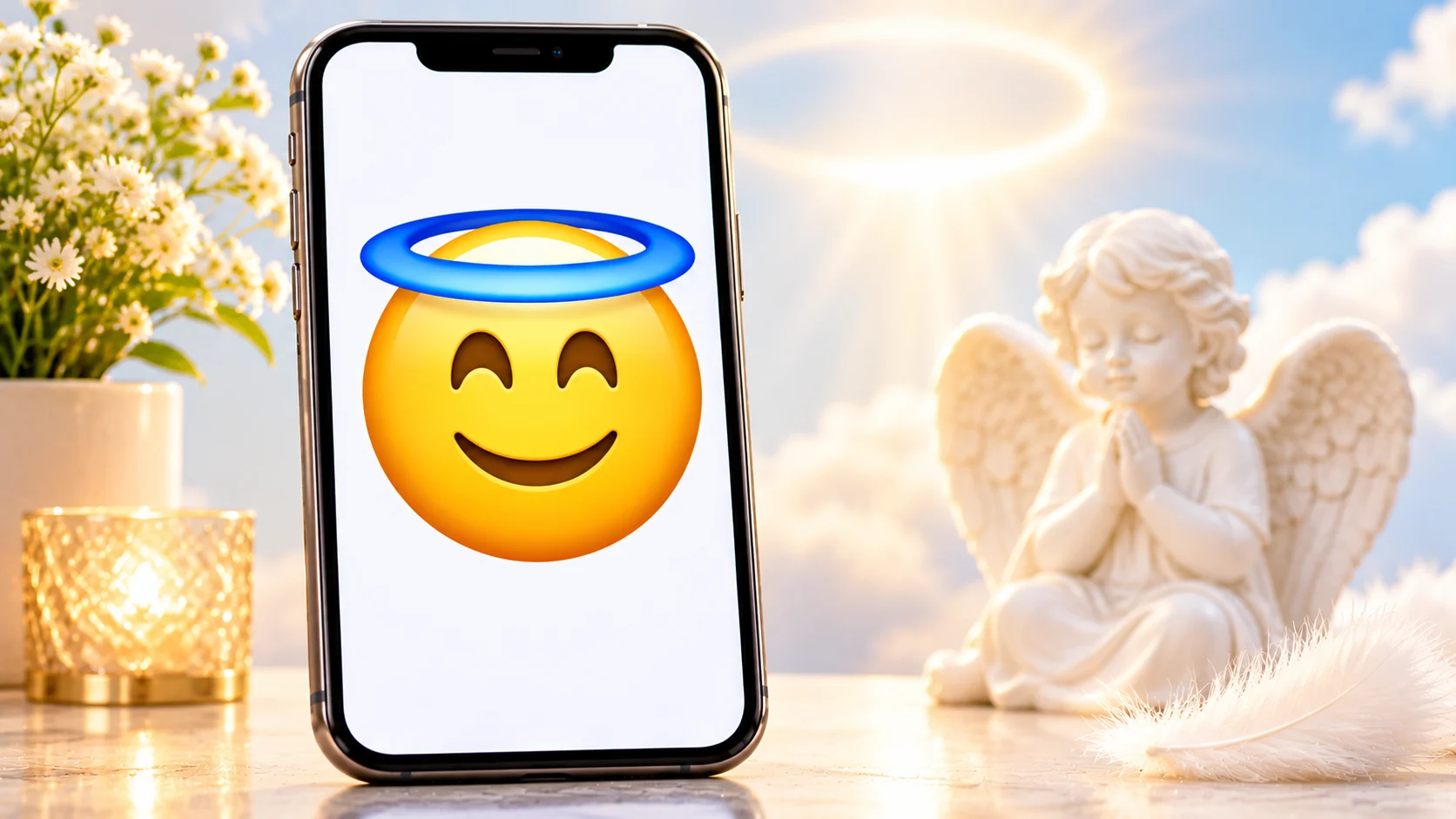
The angel emoji 😇 usually represents kindness, innocence, goodness, or good intentions. It can also add a playful tone when someone is joking about behaving like an angel or pretending to be innocent.
The 😇 angel emoji is commonly used to show that someone is being kind, helpful, or well-behaved. It can express genuine goodness, gratitude, or a sense of innocence. In casual conversations, it may also be used playfully when someone wants to appear innocent after doing something mischievous.
Its meaning depends on the message and the relationship between the people chatting. It appears in a thank-you message, a friendly comment, or a joke, the angel emoji often gives a conversation a sweet, gentle, or lighthearted tone.
What Does the Angel Emoji 😇 Mean?
The angel emoji 😇 is officially called Smiling Face with Halo. The name “angel emoji” is a common nickname because the face has a halo floating above its head.
It can carry several meanings depending on the conversation:
- Innocence: Suggests that someone has done nothing wrong.
- Kindness: Shows a gentle, caring, or helpful attitude.
- Good behavior: Represents doing something thoughtful or making a good choice.
- Playful mischief: Can jokingly suggest “I’m innocent” when the sender may not be telling the whole story.
- Blessings or goodness: May express a peaceful, positive, or spiritual feeling.
The emoji does not always have a serious religious meaning. In everyday texting, it is often used in a lighthearted way.
Common Ways People Use the 😇 Angel Emoji
1. To Show Innocence
Someone may use 😇 to suggest they are innocent or have not done anything wrong. It can be sincere or playful.
Examples:
- “I didn’t touch your snacks 😇”
- “I finished all my work on time 😇”
- “Who, me? I’m innocent 😇”
2. To Show Kindness and Good Intentions
The emoji can add a sweet tone to a message about helping someone or doing something thoughtful.
Examples:
- “I helped my friend with homework today 😇”
- “You are always so kind to everyone 😇”
- “I brought you a little gift 😇”
3. To Say Thank You
People sometimes use 😇 when thanking someone for a kind favor. It can make the message feel warm and appreciative.
Examples:
- “Thanks for helping me out 😇”
- “You saved my day. Thank you 😇”
- “That was really thoughtful of you 😇”
4. To Joke About Being Well-Behaved
The angel emoji can create humor when someone claims to be behaving perfectly. The joke often comes from the contrast between the innocent-looking face and the situation.
Examples:
- “I only ate one cookie 😇”
- “I promise I’ll behave today 😇”
- “I have never caused trouble in my life 😇”
5. To Express a Peaceful or Spiritual Feeling
In some conversations, 😇 can refer to angels, blessings, heaven, or a feeling of peace. The surrounding words usually make this meaning clearer.
Examples:
- “Sending you positive thoughts 😇”
- “May you have a peaceful day 😇”
- “Feeling grateful for everything today 😇”
What Does 😇 Mean From Someone in a Text?
When someone sends 😇 in a text, they may be showing kindness, acting innocent, or adding a playful tone to what they said.
For example:
- “You’re an angel 😇” — A warm way to appreciate someone’s help.
- “I didn’t do anything 😇” — A playful claim of innocence.
- “Have a wonderful day 😇” — A gentle and positive wish.
- “I finished everything early 😇” — May show pride in being responsible.
The emoji alone cannot tell you exactly what the sender feels or intends. Read it with the message and the conversation around it.
Is the Angel Emoji 😇 Sincere or Sarcastic?
It can be either. A sincere use of 😇 communicates kindness, innocence, or good intentions. A sarcastic or teasing use suggests that someone is pretending to be innocent or unusually well-behaved.
| Message | Possible Meaning |
|---|---|
| “Thanks for being there for me 😇” | Genuine appreciation |
| “I never make mistakes 😇” | Playful exaggeration |
| “I cleaned the whole room 😇” | Pride in doing something helpful |
| “I didn’t eat the last piece 😇” | Possibly pretending to be innocent |
Context, punctuation, and the sender’s usual humor can help you understand the intended tone.
Difference Between 😇 and 👼
People sometimes use both emojis when talking about angels, but they show different things.
- 😇 Smiling Face with Halo: A smiling face wearing a halo. Often describes someone’s behavior, innocence, or kind attitude.
- 👼 Baby Angel: A baby-like angel with wings and a halo. Often represents an angel, cherub, baby, or angelic figure.
If someone says “You’re an angel 😇,” they are usually praising your kindness. The 👼 emoji is more likely to represent an angel as a figure or character.
How to Reply to the Angel Emoji 😇
Your reply can depend on the sender is being sincere, playful, or appreciative.
| If They Send | A Natural Reply |
|---|---|
| “You’re an angel 😇” | “That’s so sweet of you!” |
| “I didn’t do anything 😇” | “Hmm, are you sure? 😂” |
| “Thanks for helping 😇” | “You’re welcome!” |
| “I’ll behave today 😇” | “I’ll believe it when I see it!” |
| “Have a blessed day 😇” | “Thank you, you too!” |
You do not have to reply with another emoji. A simple message can work just as well.
Angel Emoji vs. Similar Emojis
These emojis can all express positive feelings, innocence, or spiritual ideas, but each has its own tone.
| Emoji | Official Name | Common Meaning | Tone | Where or When It Is Used |
|---|---|---|---|---|
| 😇 | Smiling Face with Halo | Innocence, goodness, kindness | Sweet, playful | Showing good intentions or pretending to be innocent |
| 👼 | Baby Angel | Angel, cherub, innocence | Gentle, symbolic | Talking about angels, babies, or angelic figures |
| 😈 | Smiling Face with Horns | Mischief, naughty behavior | Cheeky, mischievous | Joking about trouble or playful rule-breaking |
| 😊 | Smiling Face with Smiling Eyes | Happiness, warmth, appreciation | Friendly, gentle | Responding kindly or showing gratitude |
| 🥰 | Smiling Face with Hearts | Affection, love, happiness | Warm, affectionate | Expressing fondness or appreciation |
| 🙏 | Folded Hands | Thanks, prayer, request | Respectful, grateful | Saying thank you or asking for support |
| 🕊️ | Dove | Peace, hope, harmony | Calm, peaceful | Sharing messages about peace or remembrance |
| ✨ | Sparkles | Excitement, magic, emphasis | Bright, positive | Adding a special or cheerful feeling to a message |
The biggest difference is that 😇 focuses on innocence or an angelic attitude, while 👼 represents an angel figure. The 😈 emoji offers a playful contrast, and 😊 is a more general way to show happiness or friendliness.
Is the Angel Emoji Religious?
Not necessarily. Although the halo can give 😇 a spiritual or religious association, many people use it in ordinary conversations without referring to religion.
It may appear in messages about kindness, good behavior, gratitude, or playful innocence. In a religious conversation, it can also connect with angels, blessings, or heaven. The meaning depends on the topic and the sender’s intended message.
FAQs
What is the official name of the 😇 emoji?
Its official Unicode name is Smiling Face with Halo. “Angel emoji” is a common informal name.
What does 😇 mean from a friend?
A friend may use it to show kindness, claim innocence, or joke about behaving well. The exact meaning depends on what they said.
Does 😇 mean someone is innocent?
It can represent innocence or good behavior. However, it may also be used sarcastically when someone is joking about being innocent.
What is the difference between 😇 and 👼?
The 😇 emoji is a smiling face with a halo, while 👼 is a baby angel with wings. The first often describes an attitude or behavior; the second represents an angelic figure.
Can I use 😇 to say thank you?
Yes. You can add it to a thank-you message to make your appreciation feel warm and friendly.
Does 😇 always have a religious meaning?
No. It is often used casually to express kindness, innocence, or playful humor without any religious meaning.
Conclusion
The angel emoji 😇 usually represents innocence, kindness, good intentions, and positive behavior. It can also add humor when someone jokingly acts as if they have done nothing wrong. Although it has a spiritual association, its everyday meaning is often casual and friendly. Look at the surrounding message to understand the sender is being sincere, playful, or sarcastic.
See Also More :
- Teeth Emoji Meaning | Smiles, Dental Care & Everyday Texts In 2026
- Eggplant Emoji | What It Really Means in Texts & Social Media In 2026
- Fox Emoji | What It Means in Texts, Chat & Social Media In 2026