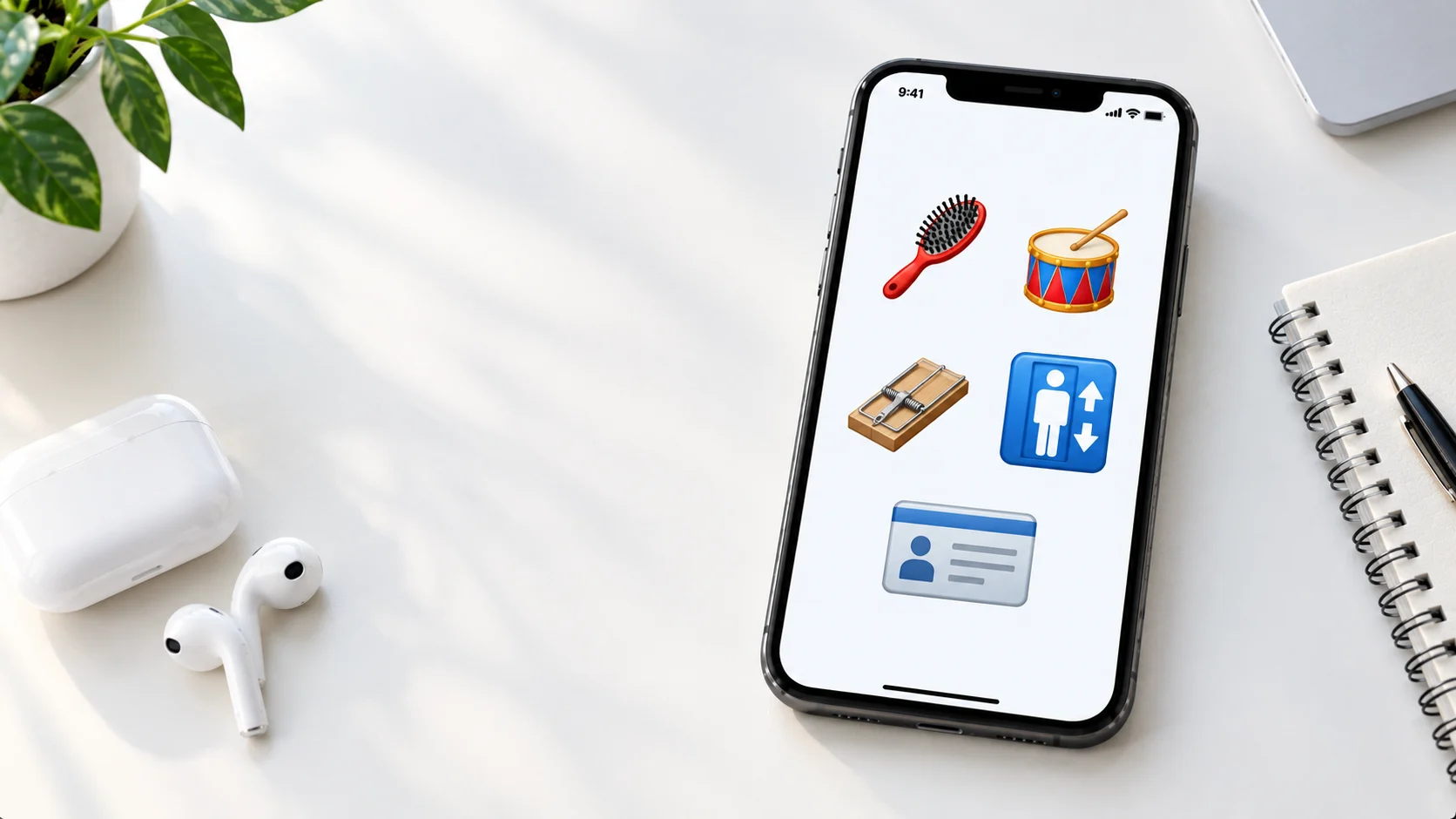
The least used emoji refers to an emoji that appears less often in messages, posts, and online conversations than others. There is no single emoji that is universally the least used, because usage varies by platform, country, language, and time period.
Some emojis appear everywhere, while others are rarely seen in everyday conversations. The least used emoji can refer to an unusual symbol, a specialized object, or an emoji that people find difficult to use naturally. However, identifying the single rarest emoji requires reliable usage data for a specific platform and period.
The Unicode Consortium standardizes emoji characters, but it does not publish a definitive ranking of every emoji by overall usage across all digital communication. Exploring less familiar emojis can help you discover symbols for specific objects, activities, and ideas that common smileys and hearts cannot express as precisely.
What Is the Least Used Emoji in the World?
There is no confirmed, universally accepted answer for the single least used emoji worldwide. The answer depends on which messages, platforms, countries, and time periods are measured.
The Unicode Consortium has published emoji frequency data based on multiple sources. Its published ranking explains that usage varies and that newer emojis may appear less frequently because they take time to reach devices.
Flags have also been described by Unicode’s Emoji Subcommittee as among the least frequently used emoji categories in its technical recommendations. However, this does not establish which individual emoji is currently the rarest.
Why Are Some Emojis Rarely Used?
Some emojis appear less often in everyday conversations because they represent specific objects, activities, or ideas rather than common emotions.
Here are several reasons an emoji may receive less use:
- Specialized meaning: An emoji representing a particular tool or object may only fit certain conversations.
- Limited everyday relevance: People may rarely need to mention the object or activity it represents.
- Unfamiliar appearance: Users may not recognize an emoji or know its official name.
- Newer release: Recently introduced emojis may not be supported on every device.
- Regional differences: Symbols associated with specific places, traditions, or activities may be more relevant to some communities than others.
An emoji being rare does not mean it is useless. It may be the perfect choice when a conversation calls for that specific meaning.
Examples of Uncommon or Specialized Emojis
The following emojis represent relatively specific objects or concepts. They are useful examples of less familiar symbols, not a verified ranking of the world’s least used emojis.
| Emoji | Official Name | Common Meaning | Tone | Where or When It Is Used |
|---|---|---|---|---|
| 🪤 | Mouse Trap | A trap or catching something | Practical, playful | Discussions about traps or figurative situations |
| 🪮 | Hair Pick | A hair styling tool | Neutral | Hair care and grooming |
| 🪇 | Maracas | A musical percussion instrument | Festive | Music, dancing, and instruments |
| 🪪 | Identification Card | An ID card or identification | Informational | Identity documents and verification discussions |
| 🛗 | Elevator | An elevator or lift | Practical | Buildings, accessibility, and directions |
| 🪬 | Hamsa | A hand-shaped symbol associated with protection | Symbolic | Cultural, decorative, or protective symbolism |
| 🪯 | Khanda | A Sikh religious symbol | Cultural, respectful | Sikh identity, culture, and religion |
| 🪈 | Flute | A musical instrument | Creative | Music, instruments, and performances |
These emojis differ from everyday smileys and hearts because their meanings are more specific. For example, 🪮 is useful when discussing a grooming tool, while 🪇 fits a conversation about percussion instruments.
Official emoji names can be checked in the Unicode Consortium’s Full Emoji List.
Are Flag Emojis the Least Used Emojis?
Flag emojis are often mentioned when people discuss less frequently used emoji categories. Unicode’s technical recommendations have identified flags as a low-frequency category, but usage differs by region and context.
A national flag may be used frequently in conversations about a country, international sports, travel, or national celebrations, while another flag may appear much less often in a particular dataset.
It is therefore more accurate to say that some flag emojis can be uncommon in general usage data than to claim that one specific flag is definitively the least used emoji in the world.
How Can You Find Emoji Usage Statistics?
If you want to investigate which emojis are used least often, start with reliable frequency data rather than unsourced online lists.
- Check Unicode’s emoji frequency page. Review its ranking and the explanation of how the data is grouped.
- Check the date and scope. Older rankings may not reflect current emoji usage.
- Identify the platform or dataset. Usage on a social network may differ from usage in private messages.
- Look for actual measurements. A claim about the rarest emoji should identify its source, period, and method.
Unicode’s frequency information is useful for understanding broad usage patterns, but it should not be treated as a live ranking of every emoji across all platforms.
Does a Rare Emoji Have a Special Meaning?
No. An emoji does not gain a hidden meaning simply because it is rarely used.
Its interpretation still depends on its official name, common usage, and the context in which someone sends it. A specialized symbol may have cultural, religious, technical, or personal significance, but rarity alone does not prove that it represents a secret message or coded meaning.
If someone sends you an unfamiliar emoji, check what the symbol represents before guessing what the sender intended.
FAQs
What is the number one least used emoji?
There is no reliably established, current worldwide number-one least used emoji across all platforms. Unicode publishes frequency rankings, but the data have specific sources and limitations.
Are newer emojis used less often?
They can be. Unicode notes that newer emojis often have lower recorded frequency because it takes time for them to reach devices and become available to users.
Why do some emojis rarely appear in texts?
Some emojis represent specialized objects, instruments, symbols, or activities that do not come up in ordinary conversations as often as happiness, love, or laughter.
Are rare emojis the same as hidden or secret emojis?
No. A rarely used emoji is simply one that appears less often in a particular dataset or context. Rarity does not automatically indicate a hidden meaning.
Where can I find a list of rare emojis?
The Unicode Consortium’s emoji frequency page provides frequency information and explains its ranking method. Its Full Emoji List is useful for checking official names and identifying unfamiliar symbols.
Conclusion
The least used emoji is not a fixed, universally confirmed character. Usage depends on the platform, region, time period, and type of conversation being measured. Specialized symbols and some flag emojis may appear less frequently than familiar smileys, but identifying the single rarest emoji requires clear, current data. The best approach is to check reliable frequency rankings and use uncommon emojis when their meanings fit the message.
See Also More:
- 🌴 Palm Tree Emoji | What It Says About Summer, Travel & Relaxation In 2026
- Emoji Sad Meaning | How to Understand Sad Faces in Messages In 2026
- I Love You Emoji Meaning | How to Express Love, Care & Affection In 2026