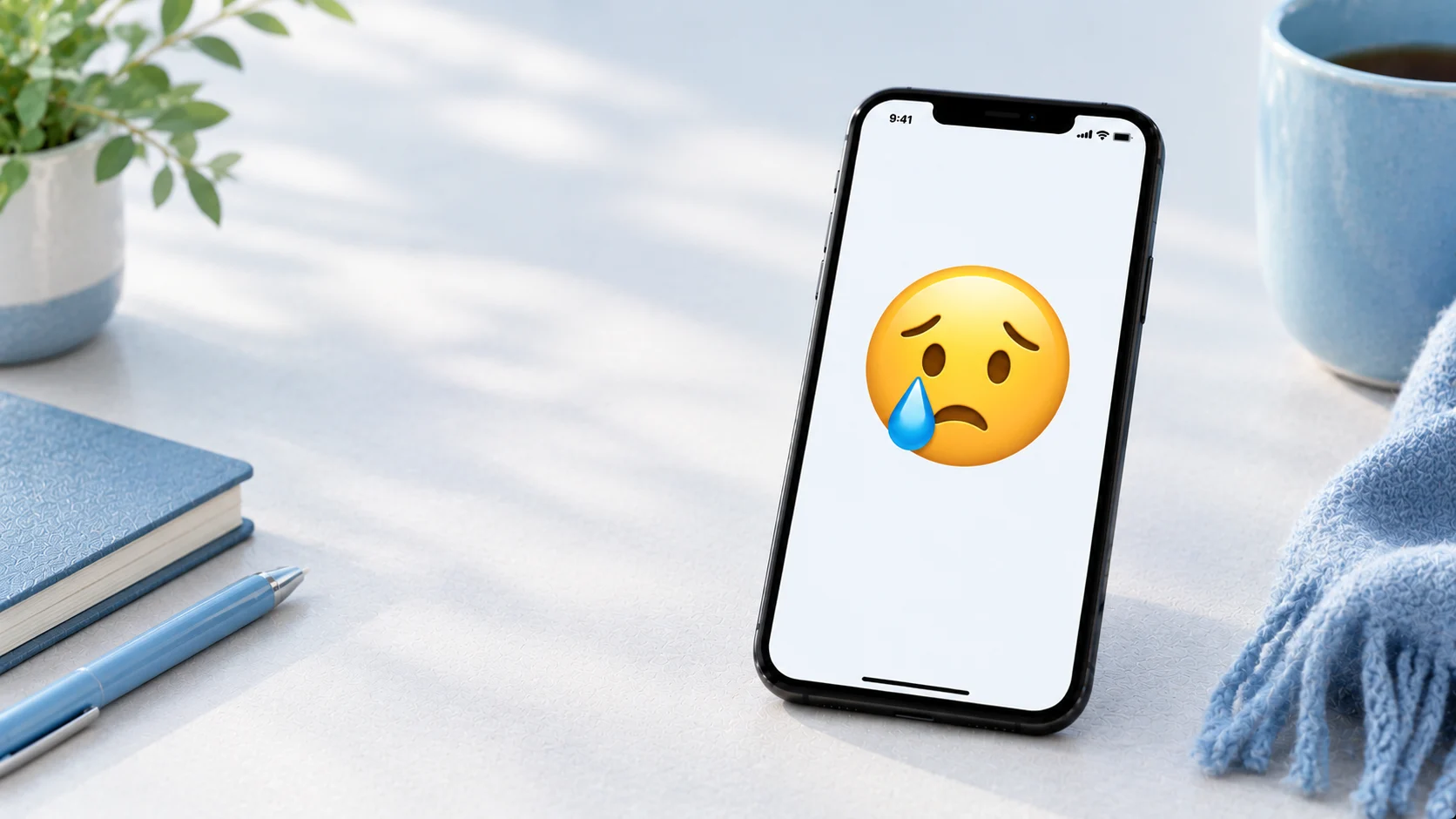
The sad emoji 😢 usually expresses sadness, disappointment, sympathy, or emotional hurt. Its meaning depends on the message and can range from mild disappointment to genuine sorrow or a caring response to someone else’s struggles.
The sad emoji 😢, officially called Crying Face, is commonly used to express sadness, disappointment, sympathy, or feeling emotionally hurt. People send it when something upsetting happens, when they miss someone, or when they want to show support for another person’s difficult experience.
However, not every sad-looking emoji communicates the same feeling. Some suggest quiet disappointment, while others show intense crying or an attempt to hold back tears. Understanding the words around the emoji, the conversation, and the sender’s usual style can help you interpret its meaning without assuming exactly how someone feels.
What Does the Sad Emoji 😢 Mean?
The 😢 emoji shows a face with a sad expression and a tear. Its official Unicode name is Crying Face. In everyday messages, it often communicates sadness or disappointment, but it can also help someone show sympathy and emotional support.
Here are the most common meanings:
- Sadness: Expressing that something feels upsetting or painful.
- Disappointment: Reacting to plans that fell through or an unwanted outcome.
- Missing someone: Showing that you wish someone were nearby.
- Sympathy: Responding with care when another person shares difficult news.
- Emotional sensitivity: Showing that a story, memory, or situation has affected you.
For example, “I wish you could come today 😢” suggests disappointment or missing someone. “I’m sorry that happened 😢” uses the emoji to express sympathy.
The emoji does not always reveal how serious the feeling is. A person might use it for a small disappointment or a genuinely upsetting situation.
What Does 😢 Mean in Text Messages?
In texting, 😢 adds emotional meaning to words. It can make a message feel more personal and help communicate sadness when facial expressions and tone of voice are missing.
| Example message | Likely meaning | Context |
|---|---|---|
| “I miss you 😢” | Missing someone | The words express longing. |
| “My plans got canceled 😢” | Disappointment | Something the sender wanted did not happen. |
| “That’s such sad news 😢” | Sympathy or sorrow | The sender reacts to upsetting information. |
| “The movie ending 😢” | Feeling moved or sad | A fictional story has affected the sender. |
| “Only one day left together 😢” | Sadness about separation | The message expresses reluctance to say goodbye. |
These examples are illustrative, not fixed definitions. The same emoji may communicate different feelings depending on the relationship and conversation.
What Does 😢 Mean When Someone Sends It to You?
When someone sends you 😢, they may be sharing their own sadness or responding to something you have said.
The surrounding message is usually the best clue:
- After disappointing news: They may feel sad about the outcome.
- After you share a problem: They may be expressing sympathy.
- During a conversation about missing someone: They may be showing that they miss you too.
- After a funny or emotional story: They may be reacting dramatically or playfully.
Avoid assuming that the sender is angry, upset with you, or asking for help solely because they used this emoji. If you are unsure, a gentle question such as “Are you okay?” can help clarify what they mean.
Is 😢 a Sadness Emoji or a Sympathy Emoji?
It can be both. The difference depends on whose feelings the message is expressing.
When expressing personal sadness: The sender is usually communicating their own disappointment, hurt, or sorrow.
Example: “I can’t make it to the party 😢”
When expressing sympathy: The sender is reacting to someone else’s difficult experience.
Example: “I’m sorry you’re going through this 😢”
The emoji itself does not identify whose feelings are involved. The surrounding words usually make that clear.
Related Sad Emojis and Their Meanings
Several emojis communicate sadness, but they differ in facial expression and emotional intensity. The Unicode Consortium assigns each character an official name, while its everyday meaning depends on how people use it.
| Emoji | Official Name | Common Meaning | Tone | Where or When It Is Used |
|---|---|---|---|---|
| 😢 | Crying Face | Sadness or sympathy | Sad, gentle | Disappointment and supportive messages |
| 😭 | Loudly Crying Face | Intense emotion or exaggerated crying | Dramatic | Deep sadness or strong reactions |
| 😥 | Sad but Relieved Face | Sadness mixed with relief | Uneasy, relieved | Difficult situations that ended safely |
| 😞 | Disappointed Face | Disappointment or discouragement | Downcast | Unwanted results and failed plans |
| ☹️ | Frowning Face | Unhappiness or displeasure | Mildly negative | Disagreement and disappointing news |
| 🥺 | Pleading Face | Asking for sympathy or showing vulnerability | Tender, pleading | Emotional requests and heartfelt messages |
| 🥹 | Face Holding Back Tears | Being moved or trying not to cry | Tender, emotional | Touching moments and heartfelt gratitude |
| 😔 | Pensive Face | Sadness or thoughtful regret | Quiet, reflective | Regret, reflection, and difficult feelings |
😢 vs. 😭: What’s the Difference?
The 😢 emoji typically conveys sadness with a single visible tear, while 😭 has an exaggerated crying expression with streams of tears. As a result, 😭 often feels more intense or dramatic.
However, people sometimes use 😭 humorously to react to something extremely funny, exciting, or overwhelming. The words around it help distinguish genuine sadness from playful exaggeration.
😢 vs. 😔: Which One Should You Use?
The 😢 emoji makes sadness more visible through its tear. The 😔 emoji, officially called Pensive Face, suggests a quieter, more reflective mood.
Use 😢 when you want to express sadness, disappointment, or sympathy. Choose 😔 when you want to communicate regret, contemplation, or subdued disappointment.
Neither emoji has a guaranteed emotional meaning, so choose the one that best matches the feeling you want to convey.
How to Respond to the Sad Emoji 😢
Your response should depend on what the other person is communicating. If they seem upset, a caring message is often more helpful than trying to guess why they feel that way.
Here are some natural responses:
- When someone is disappointed: “Aw, I’m sorry. I hope things work out.”
- When someone misses you: “I miss you too. Hope we can catch up soon.”
- When someone shares difficult news: “I’m sorry you’re dealing with that. I’m here to listen.”
- When the meaning is unclear: “What’s wrong? Want to talk about it?”
You do not need to use an emoji in every reply. A thoughtful message can communicate care just as clearly.
Does the Sad Emoji 😢 Have Different Meanings on Different Devices?
The appearance of 😢 can vary slightly across Apple, Google, Samsung, and other platforms. Differences may include the shape of the eyes, the position of the tear, and the curve of the mouth.
These visual variations do not change the official Unicode name. The emoji remains recognizable as a crying face, although small design differences can affect how its expression appears.
Official Name and Unicode Details
The following details identify the 😢 emoji in the Unicode standard.
| Detail | Information |
|---|---|
| Emoji | 😢 |
| Official Unicode name | Crying Face |
| Unicode code point | U+1F622 |
| Category | Smileys & Emotion |
| Unicode version | Unicode 6.0 |
| Approval year | 2010 |
Its official name identifies the character, not every possible meaning. Sadness, sympathy, disappointment, and other interpretations come from how the emoji is used in conversation.
Copy and Paste the Sad Emoji
😢
You can copy this emoji and use it in text messages, social media captions, comments, or supportive replies. It is useful when you want to express sadness, disappointment, or sympathy in a simple, recognizable way.
FAQs
What does 😢 mean from someone?
It usually communicates sadness, disappointment, or sympathy. The sender might be sharing their own feelings or reacting to something you told them. Read the surrounding message before deciding what they mean.
Does 😢 mean someone is crying?
It represents a crying face, but it does not prove that the person is physically crying. People also use it to express disappointment, sympathy, or sadness without literally shedding tears.
Is 😢 different from 😭?
Yes. 😢 generally expresses sadness with a single tear, while 😭 has a more dramatic crying expression. Both can communicate sorrow, but 😭 can also be used for exaggerated or playful reactions.
Can 😢 be used to show sympathy?
Yes. It can communicate that you feel sorry for someone or are affected by their difficult experience. Adding a supportive sentence can make your intended meaning clearer.
Does 😢 always mean something bad happened?
No. It may reflect a minor disappointment, missing someone, a touching story, or playful exaggeration. The surrounding words and conversation provide important clues.
What is the difference between 😢 and 🥹?
😢 usually communicates sadness or disappointment. 🥹, officially called Face Holding Back Tears, often suggests being emotionally moved, touched, grateful, or close to tears. Both can express strong feelings, but their emotional tones differ.
Conclusion
The 😢 sad emoji, officially known as Crying Face, commonly expresses sadness, disappointment, sympathy, or missing someone. Its meaning can range from a small setback to a deeply emotional moment, depending on the conversation. When interpreting this emoji, consider the words around it instead of assuming the sender feels a particular way. If someone sends it in response to a difficult situation, a kind and thoughtful reply can help you respond appropriately.
See Also More :
- Teeth Emoji Meaning | Smiles, Dental Care & Everyday Texts In 2026
- Eggplant Emoji | What It Really Means in Texts & Social Media In 2026
- Fox Emoji | What It Means in Texts, Chat & Social Media In 2026









2 thoughts on “😢 Emoji Sad Meaning | How to Understand Sad Faces in Messages In 2026”