The 😬 emoji, officially called Grimacing Face, usually expresses awkwardness, embarrassment, nervousness, or discomfort. It is commonly used when something feels uncomfortable, embarrassing, or difficult to react to. It can also communicate tension, an awkward smile, or a reaction to something socially uncomfortable, depending on the conversation.
The cringe emoji 😬 is often used when someone feels awkward, embarrassed, nervous, or uncomfortable about a situation. Its tightly clenched teeth and wide eyes create an expression that looks like an uneasy smile rather than genuine happiness. People use it to react to embarrassing stories, uncomfortable conversations, awkward mistakes, and moments when they do not know what to say.
Although 😬 is commonly associated with cringe-worthy situations, it can also express nervousness or tension. The surrounding words and conversation help determine the sender feels embarrassed, uncomfortable, or simply unsure how to respond.
What Does the 😬 Cringe Emoji Mean?
The 😬 emoji usually represents an uncomfortable or awkward reaction. Its facial expression features a wide-eyed look and tightly clenched teeth, suggesting tension rather than a relaxed smile.
Although people commonly call it the cringe emoji, its official Unicode name is Grimacing Face.
Here are its common interpretations:
- Awkwardness: Reacting to an uncomfortable social situation.
- Embarrassment: Showing discomfort after a mistake or embarrassing moment.
- Nervousness: Expressing uncertainty before something challenging.
- Cringe: Reacting to something awkward, embarrassing, or difficult to watch.
- Tension: Showing discomfort about an uncertain outcome.
- Uncertainty: Suggesting that someone does not know what to say.
For example, someone might write, “I accidentally called my teacher Mom 😬.” The emoji communicates embarrassment and awkwardness without needing a long explanation.
Its meaning is not always negative. Sometimes it simply makes an uncomfortable situation feel less serious or adds humor to an awkward story.
What Does 😬 Mean in Text Messages?
In text messages, 😬 often acts as a reaction to something uncomfortable, embarrassing, or unexpected.
The exact meaning depends on the words accompanying it.
| Example message | Likely meaning | Why it fits |
|---|---|---|
| “That was so awkward 😬” | Social discomfort | The emoji reinforces the uncomfortable feeling. |
| “I forgot about the meeting 😬” | Embarrassment or worry | The sender recognizes a mistake. |
| “I hope everything goes well 😬” | Nervousness | The expression suggests uncertainty. |
| “He sent that message to the wrong person 😬” | Secondhand embarrassment | The situation sounds uncomfortable. |
| “I don’t think that joke was funny 😬” | Discomfort | The emoji softens a negative reaction. |
One important detail is that 😬 can express both personal embarrassment and secondhand embarrassment. Someone might use it after making an awkward mistake or when watching another person experience an uncomfortable moment.
What Does the Cringe Emoji Mean From Someone?
When someone sends 😬 directly to you, they may be expressing discomfort, nervousness, or an awkward reaction to something you said.
For example:
- “Oops, I didn’t mean to say that 😬” — The sender may feel embarrassed.
- “Are you really going to do that? 😬” — They may feel uncertain or uncomfortable.
- “That conversation was awkward 😬” — They are reacting to an uncomfortable interaction.
However, do not automatically assume the person is judging you or making fun of you. They may simply be acknowledging an awkward moment or trying to keep the conversation light.
The surrounding message and your previous conversation provide better clues than the emoji alone.
Is 😬 Always a Cringe Reaction?
No. Although 😬 is often called the cringe emoji, it can communicate several different emotions.
Its most common uses include:
- Awkward reaction: When a conversation or situation feels uncomfortable.
- Nervous smile: When someone is unsure about an upcoming event.
- Embarrassment: When something goes wrong or feels socially awkward.
- Discomfort: When someone does not agree with or enjoy a situation.
- Secondhand embarrassment: When watching someone else do something awkward.
For example, “I have to speak in front of everyone tomorrow 😬” suggests nervousness rather than embarrassment.
Similarly, “That was difficult to watch 😬” expresses discomfort or secondhand embarrassment.
The emoji’s meaning depends on the situation, so it should not automatically be interpreted as criticism or disapproval.
😬 vs. 😳 vs. 😅: What’s the Difference?
Several facial emojis can express embarrassment or nervousness, but their expressions are different.
- 😬 Grimacing Face: Shows awkwardness, discomfort, or nervous tension.
- 😳 Flushed Face: Often expresses embarrassment, surprise, or feeling overwhelmed.
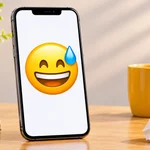
- 😅 Grinning Face with Sweat: Suggests nervous laughter, relief, or an awkward situation handled with humor.
The main difference is the facial expression. 😬 has clenched teeth, 😳 has wide eyes and flushed cheeks, while 😅 combines a smile with a sweat drop.
Related Emojis and Their Meanings
| Emoji | Official Name | Common Meaning | Tone | Where or When It Is Used |
|---|---|---|---|---|
| 😬 | Grimacing Face | Awkwardness and discomfort | Uncomfortable | Cringe moments and embarrassing situations |
| 😳 | Flushed Face | Embarrassment or surprise | Shy, shocked | Unexpected or awkward reactions |
| 😅 | Grinning Face with Sweat | Nervous laughter or relief | Playful, nervous | Close calls and uncomfortable jokes |
| 🫣 | Face with Peeking Eye | Nervous curiosity or embarrassment | Hesitant | Watching awkward situations |
| 😰 | Anxious Face with Sweat | Anxiety and worry | Stressed | Difficult or uncertain situations |
| 😖 | Confounded Face | Frustration or distress | Uncomfortable | Complicated or frustrating moments |
| 😓 | Downcast Face with Sweat | Stress or disappointment | Worried | Difficult tasks and stressful situations |
| 🙈 | See-No-Evil Monkey | Playful embarrassment | Shy, humorous | Awkward mistakes and embarrassing stories |
Which Emoji Should You Use?
The closest alternatives to 😬 are 😳 and 😅, but they communicate different reactions.
- Use 😬 when something feels awkward, uncomfortable, or cringe-worthy.
- Use 😳 when you feel embarrassed, surprised, or caught off guard.
- Use 😅 when you want to show nervous laughter or relief.
- Use 🫣 when something is so awkward that you almost do not want to look.
These differences are helpful when choosing an emoji, but people may use them differently depending on their personal texting style.
How to Respond to the 😬 Emoji
If someone sends 😬, the best response depends on what happened in the conversation.
Here are some natural replies:
| Situation | Possible response |
|---|---|
| Someone shares an embarrassing mistake | “Oh no! That must have been awkward.” |
| Someone feels nervous | “Don’t worry, you’ll be fine!” |
| Someone reacts to an uncomfortable situation | “Yeah, that was a little awkward.” |
| Someone makes a cringe-worthy joke | “Haha, that was something else!” |
| Someone seems unsure | “What’s wrong? Everything okay?” |
You can also ask what they mean if the message is unclear. Avoid assuming that they are making fun of you or expressing anger.
Does 😬 Look Different on iPhone and Android?
Yes. The appearance of 😬 can vary between Apple, Google, Samsung, Microsoft, and other platforms.
Some versions show clearly separated teeth, while others display a simpler white bar between the lips. The eyes and overall facial expression may also look slightly different.
These design differences can affect how uncomfortable or intense the emoji appears. However, the official Unicode identity remains the same across platforms.
Emojipedia documents these visual differences and explains how the design has changed over time. Meaning, Copy And Paste+1
Official Name and Unicode Details
The Unicode Consortium identifies 😬 as Grimacing Face. The word “cringe” is a common informal description rather than its official name.
| Detail | Information |
|---|---|
| Emoji | 😬 |
| Official Unicode name | Grimacing Face |
| Unicode code point | U+1F62C |
| Category | Smileys & Emotion |
| Subcategory | Face-Concerned |
| Unicode version | Unicode 6.1 |
| Approval year | 2012 |
| Emoji 1.0 inclusion | 2015 |
The emoji represents a grimacing facial expression, with a wide-eyed face and clenched teeth. Its common interpretations include nervousness, embarrassment, discomfort, and awkwardness. Unicode+1
Copy and Paste the Cringe Emoji
😬
Grimacing Face Copy 😬
You can copy 😬 and use it in text messages, social media captions, comments, and conversations whenever you want to express awkwardness, embarrassment, or nervousness.
FAQs
What does 😬 mean from someone?
It usually expresses awkwardness, embarrassment, nervousness, or discomfort. The sender may be reacting to something unexpected or socially uncomfortable.
Does 😬 mean cringe?
Yes. People commonly use it as a cringe reaction when something feels awkward, embarrassing, or uncomfortable to watch. However, it can also express nervousness or tension.
Is 😬 a negative emoji?
It generally communicates discomfort or tension rather than happiness. However, it is not always negative. People also use it playfully when sharing embarrassing stories or awkward mistakes.
Does 😬 mean someone is embarrassed?
It can. The clenched teeth and wide eyes create an uneasy expression that often represents embarrassment. It may also express secondhand embarrassment when someone reacts to another person’s awkward moment.
What is the difference between 😬 and 😅?
😬 usually expresses discomfort, awkwardness, or nervousness. 😅 combines a smile with a sweat drop and often suggests nervous laughter, relief, or an awkward situation handled with humor.
Can 😬 be used sarcastically?
Yes. Someone might use it to make a sarcastic or humorous reaction to an awkward situation. However, the surrounding words are needed to understand the message is genuinely uncomfortable or joking.
Conclusion
The 😬 cringe emoji is commonly used to express awkwardness, embarrassment, nervousness, and uncomfortable reactions. Its official name, Grimacing Face, describes its clenched-teeth expression. Someone is reacting to an embarrassing mistake, an awkward conversation, or an uncertain situation, the emoji helps communicate feelings that words alone may not fully express. Its exact meaning always depends on the conversation.
See Also More:
- Beggar Emoji Meaning | What It Means in Text and How to Use It In 2026
- Sexy Emoji Meaning | What These Emojis Really Mean In 2026
- Fist Emoji | What It Means in Text, Support, Solidarity & More In 2026