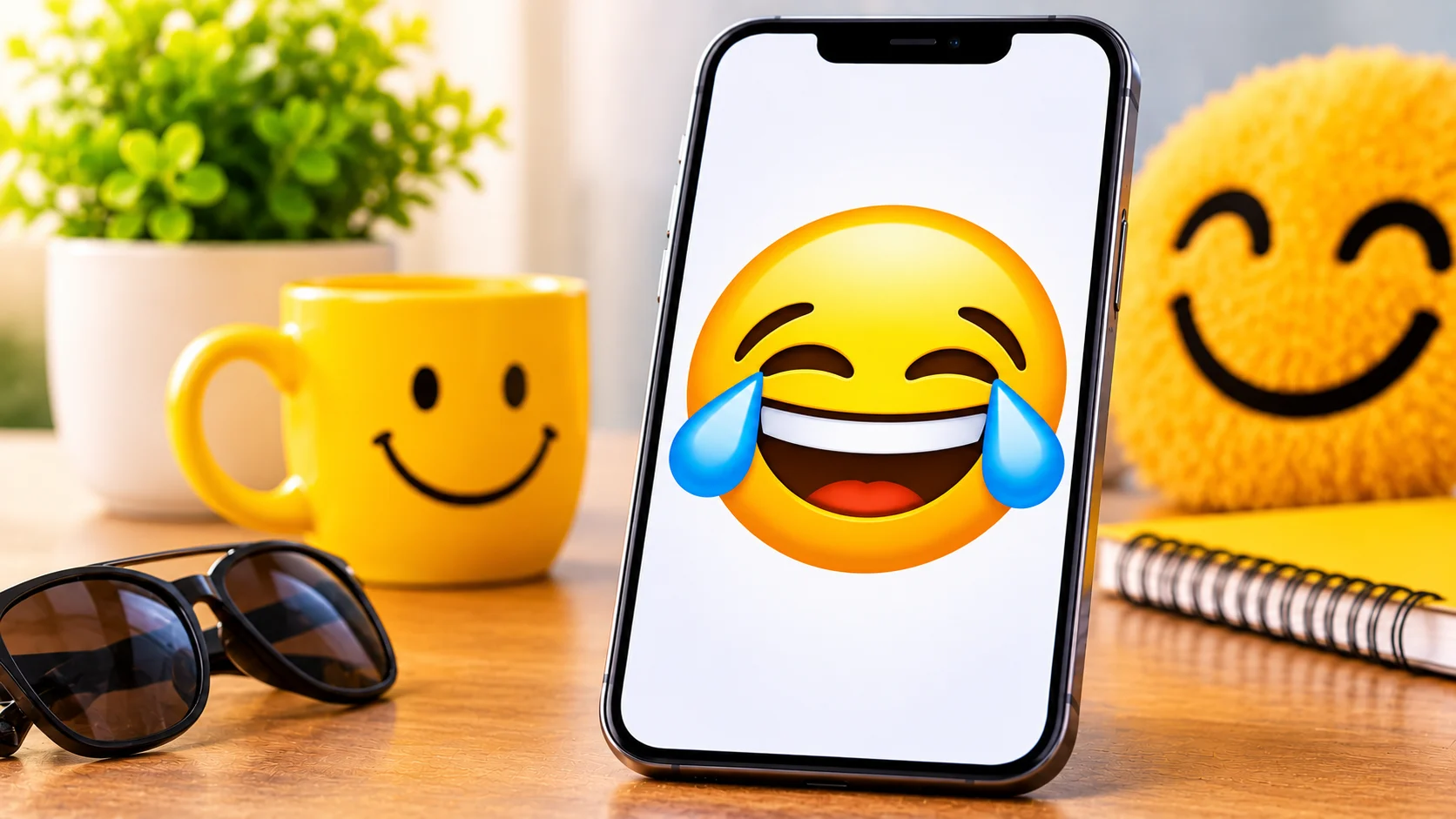
The 😂 emoji, commonly associated with “LOL,” usually means laughing hard, finding something hilarious, or reacting to a funny situation. It expresses stronger amusement than a simple smile, but depending on context, it can also communicate playful teasing or laughter at an awkward moment.
The LOL emoji is commonly represented by 😂, officially named Face with Tears of Joy. People use it in text messages, social media comments, and online conversations to show that something is funny or entertaining. It can replace the phrase “laughing out loud” or add a stronger reaction to a joke. However, not every laughing emoji has the same meaning.
Some express mild amusement, while others suggest uncontrollable laughter. Understanding the difference helps you choose the right expression and interpret someone’s message without assuming too much.
What Does the 😂 LOL Emoji Mean in Text Messages?
In texting, 😂 usually adds a stronger emotional reaction than simply writing “lol.” It shows that someone finds a message funny, enjoys a joke, or is reacting to something unexpected.
Here are some common interpretations:
- Genuine laughter: Something is genuinely funny.
- Playful humor: The sender is enjoying a lighthearted conversation.
- Teasing: Someone is joking about a friend’s comment or situation.
- Surprise and amusement: Something unexpected makes the person laugh.
- Awkward humor: The sender finds an uncomfortable situation funny.
For example, if someone texts, “I just walked into the wrong classroom 😂,” the emoji makes the embarrassing situation sound funny rather than serious.
The exact meaning depends on the conversation. A laughing emoji does not always mean the sender is laughing out loud.
What Does LOL Mean in Chat?
LOL stands for “Laughing Out Loud.” It is an internet abbreviation used to show amusement, laughter, or a playful reaction.
Although LOL and 😂 are closely connected, they are not exactly the same.
- LOL: A text abbreviation that can express amusement or make a message feel casual.
- 😂: An emoji that visually represents laughter and joy.
- LOL 😂: A combination that emphasizes a funny reaction.
For example:
“That’s the funniest thing I’ve heard today LOL 😂”
This message uses both the abbreviation and emoji to emphasize amusement.
Sometimes people also write LOL when something is only slightly funny or when they want to keep a conversation friendly. Therefore, it does not always mean someone is literally laughing.
What Does 😂 Mean When Someone Sends It to You?
When someone sends 😂 in response to your message, they usually find something you said funny or entertaining.
However, the meaning can change depending on the situation.
| Example message | Possible meaning | Context |
|---|---|---|
| “You’re so funny 😂” | They enjoyed your joke | A positive reaction |
| “I can’t believe you did that 😂” | Amusement or surprise | A playful response |
| “That was embarrassing 😂” | Laughing at an awkward moment | Lighthearted teasing |
| “Stop making me laugh 😂” | Strong amusement | Enjoying the conversation |
| “Yeah, that’s great 😂” | Possible sarcasm | Depends on the surrounding conversation |
If someone regularly responds with 😂, it may simply be their usual way of showing amusement. It does not automatically indicate flirting, attraction, or romantic interest.
Is the 😂 Emoji Friendly, Sarcastic, or Rude?
The 😂 emoji is usually friendly and humorous, but it can sometimes feel sarcastic or dismissive.
Friendly use: Someone sends 😂 after a funny story to show genuine amusement.
Playful teasing: A friend uses it after a harmless joke about something you did.
Sarcastic use: Someone adds 😂 to a statement that sounds exaggerated or ironic.
Potentially insensitive use: Sending 😂 in response to someone’s serious problem may make the sender appear dismissive or uncaring.
For example:
- “I forgot my own password again 😂” — Laughing at a personal mistake.
- “You really thought that would work? 😂” — Possibly playful teasing.
- “I’m having a difficult day 😂” — Could be nervous humor or an attempt to make a frustrating situation feel lighter.
Always consider the subject of the conversation before deciding the emoji is friendly or rude.
😂 vs. 🤣 vs. 😆: What’s the Difference?
These three emojis communicate laughter, but their facial expressions and common uses are slightly different.
- 😂 Face with Tears of Joy: Shows laughter so strong that tears appear. It works well for jokes and hilarious situations.
- 🤣 Rolling on the Floor Laughing: Suggests an exaggerated or especially strong laughing reaction.
- 😆 Grinning Squinting Face: Expresses energetic amusement, excitement, or laughter without the tears.
The differences are not strict rules. People often use all three to react to funny messages.
Related LOL and Laughing Emojis and Their Meanings
| Emoji | Official Name | Common Meaning | Tone | Where or When It Is Used |
|---|---|---|---|---|
| 😂 | Face with Tears of Joy | Laughing hard | Humorous | Funny messages and jokes |
| 🤣 | Rolling on the Floor Laughing | Extreme amusement | Exaggerated | Hilarious situations |
| 😆 | Grinning Squinting Face | Strong amusement | Playful | Jokes and funny reactions |
| 😄 | Grinning Face with Smiling Eyes | Happiness and laughter | Cheerful | Friendly conversations |
| 😅 | Grinning Face with Sweat | Nervous laughter or relief | Awkward, playful | Mistakes and uncomfortable moments |
| 😹 | Cat with Tears of Joy | Laughing at something funny | Playful | Funny animal content and jokes |
| 🤭 | Face with Hand Over Mouth | Surprise or concealed laughter | Mischievous | Unexpected jokes and funny secrets |
| 🫠 | Melting Face | Embarrassment or overwhelmed amusement | Humorous, awkward | Cringe moments and ironic reactions |
| 💀 | Skull | Extreme amusement in informal online slang | Dramatic, humorous | Reactions to hilarious comments |
Which Laughing Emoji Should You Use?
The best choice depends on how you want your reaction to feel.
- Choose 😂 for a normal, strong laughing reaction.
- Use 🤣 when something feels especially hilarious.
- Pick 😅 when you are laughing at an awkward mistake.
- Choose 😄 for a cheerful, friendly smile.
- Use 🤭 when something is funny or surprising and you want a more playful expression.
One important difference is that 💀 does not officially mean laughter. Its common laughing interpretation comes from informal internet slang, where it can suggest that something is so funny that the person is figuratively “dead.”
How to Respond to the LOL Emoji 😂
Your response depends on what the other person finds funny. You can keep your reply simple and natural.
When someone laughs at your joke
“I knew you’d find that funny 😂”
When someone shares a funny story
“That’s actually hilarious! 🤣”
When someone teases you
“Okay, don’t laugh at me! 😂”
When you do not understand the joke
“Wait, what’s so funny? 😂”
You can also respond with a simple “LOL” or “haha.” There is no need to use another emoji every time.
Does the LOL Emoji Look Different on Different Devices?
Yes. The 😂 emoji can have slightly different visual designs on Apple, Google, Samsung, and other platforms.
Its basic appearance remains a smiling face with tears coming from its eyes. However, the shape of the mouth, eyebrows, tears, and facial expression may vary.
These visual differences do not change its official Unicode identity or establish a different meaning on each device.
Official Name and Unicode Details of 😂
The Unicode Consortium officially identifies 😂 as Face with Tears of Joy.
Here are its basic technical details:
| Detail | Information |
|---|---|
| Emoji | 😂 |
| Official Unicode name | Face with Tears of Joy |
| Unicode code point | U+1F602 |
| Category | Smileys & Emotion |
| Subcategory | Face Smiling |
| Unicode version | Unicode 6.0 |
| Approval year | 2010 |
| Emoji version | Emoji 1.0 (2015) |
The official name describes the facial expression, while LOL is an informal abbreviation commonly associated with the emoji. Meaning, Copy And Paste+2
Copy and Paste the LOL Emoji
😂
Face with Tears of Joy
Copy and use it in your messages. Copy LOL Emoji
You can use 😂 in text messages, social media comments, captions, group chats, and casual conversations whenever you want to express laughter or amusement.
FAQs
What does 😂 mean from someone?
It usually means the person finds your message funny or entertaining. It can also express playful teasing or amusement, depending on the conversation.
Does LOL mean laughing out loud?
Yes. LOL is an abbreviation for “Laughing Out Loud.” It is commonly used in online conversations to express amusement, humor, or a playful reaction.
Is 😂 the same as LOL?
They have similar meanings, but they are different forms of communication. LOL is a written abbreviation, while 😂 is a visual emoji representing laughter.
Does 😂 mean someone is flirting?
Not necessarily. It usually expresses amusement or friendliness. Someone may use it during a flirty conversation, but the emoji alone does not establish romantic interest.
Can 😂 be used sarcastically?
Yes. Someone may use it to make an ironic comment sound playful or exaggerated. The surrounding words and conversation help reveal the intended tone.
What is the difference between 😂 and 🤣?
😂 is called Face with Tears of Joy and represents laughter with tears. 🤣 is called Rolling on the Floor Laughing and often communicates a more exaggerated laughing reaction.
Is 😂 appropriate for professional messages?
It depends on the workplace and conversation. It may be fine in casual team chats, but a simple written response is often more suitable for formal emails, serious discussions, or professional announcements.
Conclusion
The 😂 LOL emoji is a familiar way to express laughter, amusement, and playful reactions in digital conversations. Its official name is Face with Tears of Joy, and it is commonly used when something feels funny or entertaining.
Although it can sometimes communicate teasing or sarcasm, the surrounding message helps reveal its intended meaning. You choose 😂, 🤣, or 😆, each emoji offers a slightly different way to express laughter.
See Also More :
- Teeth Emoji Meaning | Smiles, Dental Care & Everyday Texts In 2026
- Eggplant Emoji | What It Really Means in Texts & Social Media In 2026
- Fox Emoji | What It Means in Texts, Chat & Social Media In 2026







6 thoughts on “😂 LOL Emoji Meaning | What It Really Means in Texts & Chats In 2026”