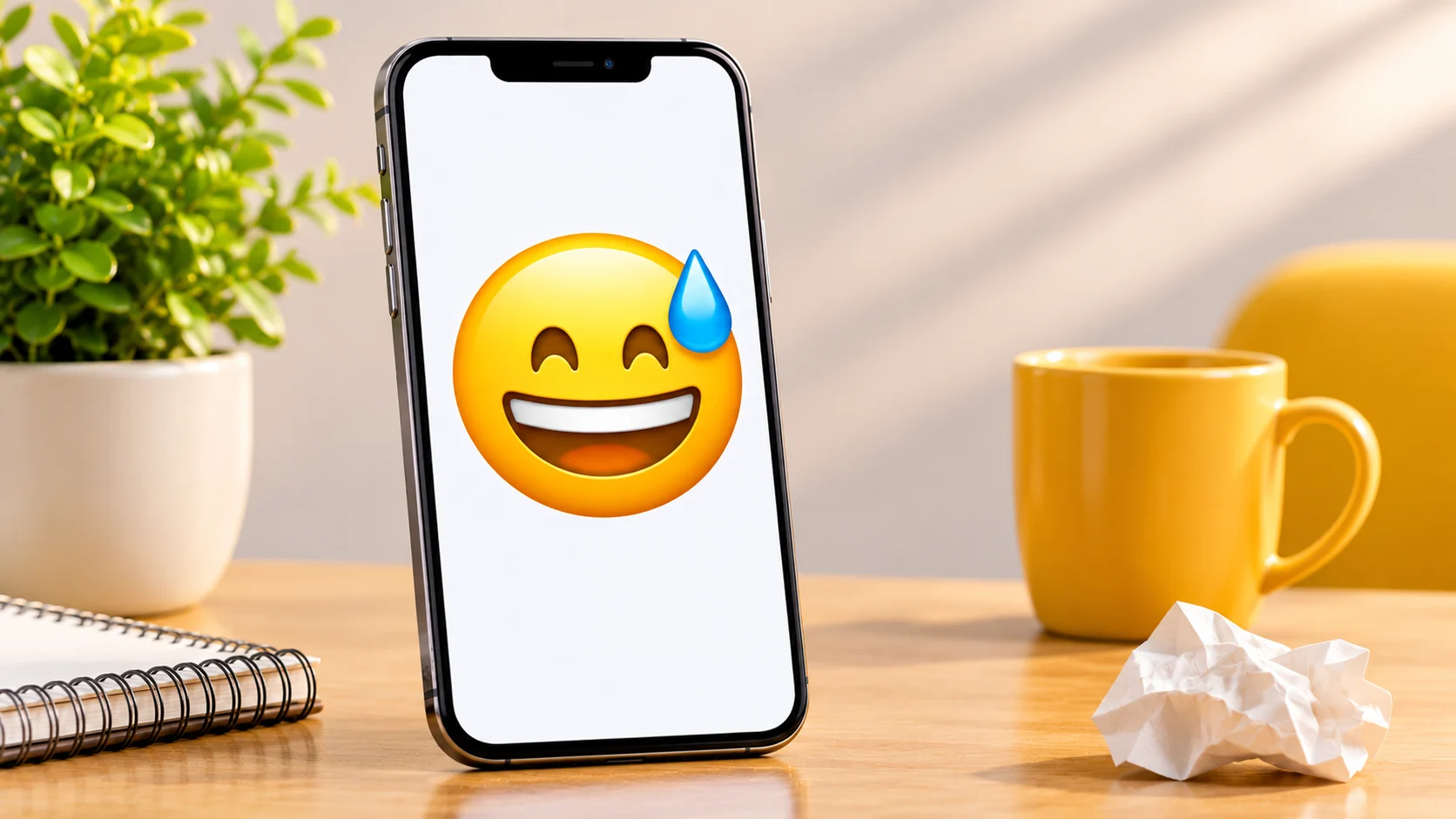
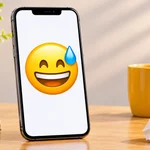
The 😅 sweat emoji usually expresses nervous laughter, awkwardness, embarrassment, relief, or happiness mixed with tension. It often means “That was close!” or “I’m laughing, but I’m a little nervous.” Its exact meaning depends on the conversation, surrounding words, and emotional tone.
The sweat emoji 😅 is commonly used when someone feels awkward, nervous, embarrassed, or relieved after a stressful or uncomfortable moment. Officially called Grinning Face with Sweat, it combines a smiling expression with a single drop of sweat, creating a mix of happiness and tension. People often add it to messages after making a mistake, narrowly avoiding trouble, or laughing at an uncomfortable situation.
However, 😅 does not always express nervousness. It can also show relief, playful embarrassment, or an attempt to make a difficult message sound less serious.
What Does the 😅 Sweat Emoji Mean?
The 😅 emoji represents a combination of smiling and sweating. Unlike a regular happy face, its sweat drop adds another emotional layer, suggesting that something may feel uncomfortable, stressful, or slightly embarrassing.
Its common interpretations include:
- Nervous laughter: Laughing when a situation feels uncomfortable.
- Embarrassment: Reacting to an awkward mistake or unexpected moment.
- Relief: Showing happiness after avoiding a problem.
- Awkwardness: Making an uncomfortable conversation feel lighter.
- Tension: Expressing nervousness while trying to remain cheerful.
- Playful humor: Laughing at a situation that did not go exactly as planned.
For example, “I almost forgot about the meeting 😅” suggests nervousness mixed with relief. The sender is acknowledging a close call while keeping the message lighthearted.
The emoji does not always indicate genuine stress. Sometimes it simply adds a playful tone to an otherwise ordinary message.
What Does 😅 Mean in Text Messages?
In texting, 😅 often communicates feelings that are difficult to express with words alone. It can soften a confession, make an apology sound less serious, or show that someone is laughing at an awkward situation.
Consider these examples:
| Example message | Likely meaning | Why it fits |
|---|---|---|
| “I sent that message to the wrong person 😅” | Embarrassment | The sender recognizes an awkward mistake. |
| “That exam was harder than I expected 😅” | Nervousness | The smile softens the frustration. |
| “I made it just in time 😅” | Relief | The sender avoided being late. |
| “I completely forgot your birthday 😅” | Awkwardness | The emoji acknowledges an uncomfortable mistake. |
| “That joke was terrible 😅” | Playful embarrassment | The sender laughs at an unsuccessful joke. |
The surrounding words help determine the meaning. A message about avoiding trouble may express relief, while a message about making a mistake may communicate embarrassment.
Why Do People Use 😅 Instead of a Regular Smiling Emoji?
A regular smiling emoji usually communicates happiness or friendliness. The 😅 emoji adds a sense of tension or awkwardness.
For example:
- “I passed the test 😀” expresses straightforward happiness.
- “I barely passed the test 😅” suggests relief after a stressful experience.
The sweat drop changes the emotional tone. It makes the smile feel less carefree and more connected to a difficult, funny, or uncomfortable moment.
People may also use 😅 to soften messages that could otherwise sound too direct or embarrassing.
Does 😅 Mean Nervousness or Relief?
It can mean either, depending on the situation.
How to Pass the IMT Theory Test in English (2026 Guide) – English Driving School Portugal Blog
Nervousness
“I hope I answered everything correctly 😅”
The emoji suggests uncertainty and nervous laughter.
A woman who feels relieved looking at the computer screen
Relief
“Finally finished my assignment 😅”
The emoji suggests that a stressful task is over.
Awkwardness
“I called my teacher by the wrong name 😅”
The emoji makes an embarrassing moment sound lighter.
These interpretations are not fixed. The same emoji can express several feelings at once, such as embarrassment mixed with relief.
😅 Is the Sweat Emoji Positive or Negative?
The 😅 emoji is usually a mix of positive and uncomfortable emotions. Its smiling face gives it a friendly appearance, while the sweat drop suggests nervousness, pressure, or an awkward situation.
It can communicate different feelings depending on the message:
- Positive: “I finally completed everything 😅” — Happiness mixed with relief.
- Neutral: “I wasn’t expecting that 😅” — Surprise with a slightly awkward reaction.
- Negative or uncomfortable: “I think I made a big mistake 😅” — Embarrassment or nervousness.
- Playful: “I have no idea what I’m doing 😅” — Laughing at a difficult situation.
Although it can appear in uncomfortable conversations, 😅 does not automatically mean someone is unhappy or upset. It often helps keep a message lighthearted.
What Does 😅 Mean From Someone?
When someone sends you 😅, they may be expressing nervous laughter, embarrassment, relief, or an awkward reaction.
For example:
- “Sorry, I completely forgot 😅” — They may feel embarrassed about forgetting something.
- “That was close 😅” — They are relieved that a problem was avoided.
- “I didn’t see that coming 😅” — They may feel surprised or slightly uncomfortable.
- “Haha, you caught me 😅” — They are responding playfully to being noticed.
If someone sends this emoji after a personal or serious message, consider the full conversation before deciding what they mean. It does not automatically indicate flirting, dishonesty, or discomfort with you.
😅 vs. 😂 vs. 😊: What’s the Difference?
These three emojis can all appear in cheerful conversations, but they communicate different expressions.
- 😅 Grinning Face with Sweat: A smile mixed with nervousness, awkwardness, embarrassment, or relief.
- 😂 Face with Tears of Joy: Strong laughter when something is extremely funny.
- 😊 Smiling Face with Smiling Eyes: Gentle happiness, kindness, warmth, or appreciation.
For example, use 😅 when you narrowly avoid a mistake, 😂 when something makes you laugh hard, and 😊 when you want to send a warm, friendly response.
Related Emojis and Their Meanings
Several emojis look or feel similar to 😅 because they express laughter, nervousness, embarrassment, or relief. However, each one has a slightly different emotional tone.
| Emoji | Official Name | Common Meaning | Tone | Where or When It Is Used |
|---|---|---|---|---|
| 😅 | Grinning Face with Sweat | Nervous laughter or relief | Awkward, playful | Close calls and uncomfortable moments |
| 😓 | Downcast Face with Sweat | Stress or disappointment | Worried | Difficult situations and stressful tasks |
| 😰 | Anxious Face with Sweat | Fear or strong anxiety | Nervous | Worrying situations and tense moments |
| 😥 | Sad but Relieved Face | Disappointment mixed with relief | Emotional | Difficult situations that end well |
| 😂 | Face with Tears of Joy | Intense laughter | Humorous | Funny jokes and hilarious moments |
| 🤣 | Rolling on the Floor Laughing | Extreme amusement | Highly playful | Something exceptionally funny |
| 😬 | Grimacing Face | Awkwardness or discomfort | Tense | Uncomfortable conversations |
| 🥵 | Hot Face | Physical heat or intense conditions | Overwhelmed | Hot weather, exercise, or heat |
| 😊 | Smiling Face with Smiling Eyes | Warmth and happiness | Gentle | Friendly messages and appreciation |
Important Differences Between Similar Emojis
The closest alternatives to 😅 are 😓, 😬, and 😥.
- 😅 vs. 😓: 😅 combines a grin with sweat, often suggesting nervous laughter or relief. 😓 has a downcast expression and more clearly suggests stress or disappointment.
- 😅 vs. 😬: 😬 communicates an awkward or uncomfortable reaction without the cheerful grin of 😅.
- 😅 vs. 😥: 😥 combines sadness with relief, while 😅 generally has a more playful or cheerful expression.
- 😅 vs. 😂: 😂 focuses on laughter, whereas 😅 often suggests that something is funny but also uncomfortable or stressful.
Choose the emoji that best matches the feeling you want to express rather than treating these faces as interchangeable.
How to Respond to the 😅 Emoji
Your response depends on why the person sent it. You can keep your reply friendly, playful, or supportive.
| Situation | Natural response |
|---|---|
| Someone makes an awkward mistake | “Haha, don’t worry. It happens!” |
| Someone narrowly avoids trouble | “Glad everything worked out!” |
| Someone feels nervous | “You’ll be fine. Don’t stress!” |
| Someone laughs at an uncomfortable moment | “I know exactly what you mean 😂” |
| Someone admits forgetting something | “No worries, it happens to everyone.” |
If you cannot understand the intended meaning, a simple question such as “Everything okay?” can help clarify the situation.
Does the Sweat Emoji Look Different on Different Devices?
Yes. The 😅 emoji may have slightly different designs on Apple, Google, Samsung, and other platforms.
Some versions show differences in:
- The shape of the eyes.
- The size and position of the sweat drop.
- The shape of the smile.
- The mouth and teeth details.
- The overall facial expression.
These are visual differences rather than separate meanings. The emoji remains recognizable as a smiling face with a sweat drop.
Official Name and Unicode Details
The Unicode Consortium includes 😅 in its official emoji collection. Here are its basic identification details:
| Detail | Information |
|---|---|
| Emoji | 😅 |
| Official emoji name | Grinning Face with Sweat |
| Unicode code point | U+1F605 |
| Category | Smileys & Emotion |
| Subcategory | Face Smiling |
| Unicode version | Unicode 6.0 |
| Approval year | 2010 |
The emoji was included in Unicode 6.0 in 2010. Its official name identifies the smiling facial expression and sweat, while meanings such as nervous laughter, embarrassment, and relief come from everyday conversational use. Unicode+1
Copy and Paste the Sweat Emoji
😅
Grinning Face with Sweat Copy 😅
You can copy and paste 😅 into text messages, social media captions, comments, and everyday conversations whenever you want to express nervous laughter, embarrassment, or relief.
FAQs
What does 😅 mean from a girl or a boy?
The emoji generally has the same common interpretations regardless of who sends it. It may express nervousness, embarrassment, awkward laughter, or relief. The conversation matters more than the sender’s gender.
Does 😅 mean someone is embarrassed?
It can. People often use 😅 after making a mistake, experiencing an awkward moment, or saying something slightly uncomfortable. However, it can also express relief or playful humor.
Is 😅 a laughing emoji?
Yes, it can represent laughter, particularly nervous or awkward laughter. Unlike 😂, which focuses on strong amusement, 😅 often combines humor with tension or embarrassment.
What does 😅 mean after saying sorry?
It may soften an apology or show that the person feels awkward about what happened. For example, “Sorry I’m late 😅” can communicate embarrassment while keeping the message friendly.
Is 😅 the same as the smiling sweat emoji?
Yes. People commonly call 😅 the sweat emoji, smiling sweat emoji, or nervous smile emoji. Its official Unicode name is Grinning Face with Sweat.
Can 😅 be used sarcastically?
Yes. Someone may use it to make a frustrating or uncomfortable situation sound humorous. However, the surrounding words are needed to understand the sender is being sarcastic.
Conclusion
The 😅 sweat emoji combines a cheerful smile with a drop of sweat to express nervous laughter, embarrassment, awkwardness, or relief. It is especially useful when someone wants to acknowledge an uncomfortable moment without making the conversation too serious.
Although it can sometimes represent happiness or playful humor, its exact meaning depends on context. When interpreting this emoji, pay attention to the message rather than assuming the sender feels only one emotion.
See Also More :
- Teeth Emoji Meaning | Smiles, Dental Care & Everyday Texts In 2026
- Eggplant Emoji | What It Really Means in Texts & Social Media In 2026
- Fox Emoji | What It Means in Texts, Chat & Social Media In 2026





2 thoughts on “😅 Sweat Emoji | What It Really Means in Texts & Conversations In 2026”