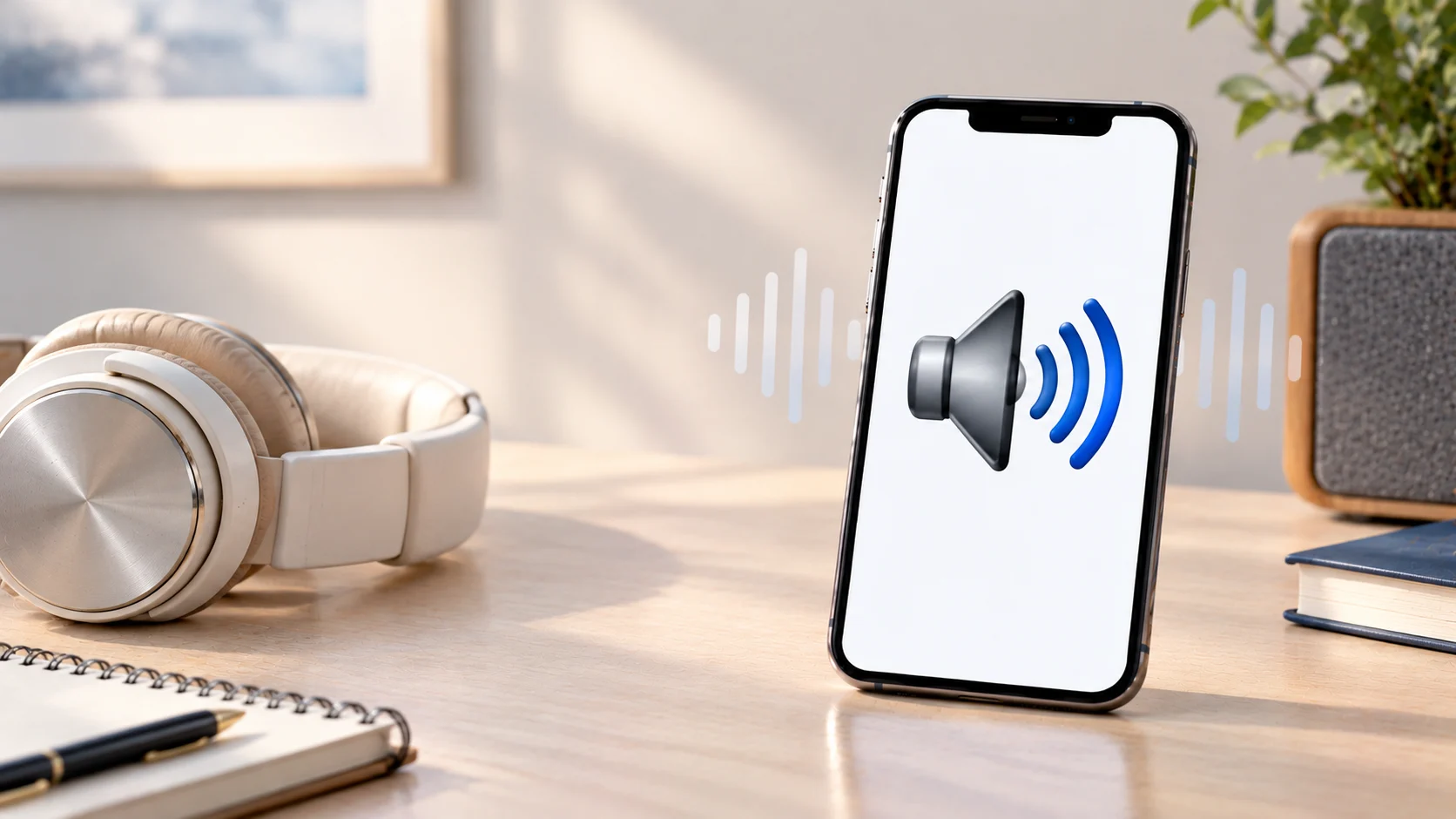
The speaker emoji 🔊 usually represents loud sound, high volume, music, or an audio announcement. It can also emphasize an important message or suggest that someone should turn up the volume.
The speaker emoji 🔊 is commonly used to represent sound, music, volume, and audio playback. Its official Unicode name is Speaker High Volume, and its three sound waves give it a strong connection with loud or amplified audio. People may use it when sharing music, discussing speakers, reacting to loud noises, or reminding someone to increase their device volume.
Depending on the conversation, it can also emphasize an announcement or draw attention to something important. Understanding the surrounding words helps determine whether 🔊 refers to actual sound, excitement, or a message that deserves attention.
What Does the Speaker Emoji 🔊 Mean?
The 🔊 emoji shows a loudspeaker with three sound waves coming from it. Its main purpose is to represent loud or amplified sound.
Common interpretations include:
- High volume: Turning up the sound on a phone, computer, or speaker.
- Music and audio: Sharing or discussing music, songs, and sound playback.
- Loud noise: Reacting to something that sounds particularly loud.
- Announcements: Drawing attention to spoken information or an important message.
- Emphasis: Making a statement feel louder, stronger, or more noticeable.
For example, “Turn up the volume 🔊” directly connects the emoji with louder audio. In “This song sounds amazing 🔊,” it emphasizes the music and listening experience.
The emoji generally relates to sound rather than a specific emotion. Its tone can be enthusiastic, informative, or attention-grabbing depending on the message.
What Does 🔊 Mean in Texting?
In text messages, 🔊 often works as a visual way to emphasize sound, music, or something that should be heard.
People may use it to make their messages more expressive or draw attention to audio-related content.
| Example Message | Likely Meaning | Context |
|---|---|---|
| “Turn up the volume 🔊” | Increase the sound | A direct volume reference |
| “This song is amazing 🔊” | Enjoying loud music | Music appreciation |
| “Listen to this 🔊” | Pay attention to audio | Sharing a sound or recording |
| “The speakers are powerful 🔊” | Strong sound output | Discussing audio equipment |
| “Make some noise! 🔊” | Excitement or enthusiasm | Celebrations or events |
The emoji can also emphasize a statement, but it does not automatically mean someone is shouting or angry.
🔊 Speaker Emoji Meaning on Social Media
On social media, the 🔊 emoji can accompany music clips, videos, audio posts, and announcements.
Common examples include:
- Music posts: Highlighting a favorite song or musical performance.
- Video captions: Encouraging viewers to pay attention to the audio.
- Announcements: Drawing attention to spoken information.
- Audio recommendations: Suggesting that someone listen to a particular recording.
- Exciting content: Adding emphasis to an energetic post.
For example, a caption such as “This beat is incredible 🔊” suggests enthusiasm about the music.
The emoji does not have a separate official meaning on each social platform. Its interpretation mainly depends on the content and surrounding caption.
Difference Between 🔊, 🔉, and 🔈
These three emojis represent different sound levels. Their main difference is the number of sound waves shown beside the speaker.
- 🔊 Speaker High Volume: Represents loud sound or increased volume.
- 🔉 Speaker Medium Volume: Represents a moderate sound level.
- 🔈 Speaker Low Volume: Represents quiet or low-volume audio.
They are useful when discussing sound settings, audio playback, or listening preferences.
Related Sound and Audio Emojis and Their Meanings
| Emoji | Official Name | Common Meaning | Tone | Where or When It Is Used |
|---|---|---|---|---|
| 🔊 | Speaker High Volume | Loud sound or increased volume | Strong, energetic | Music and loud audio |
| 🔉 | Speaker Medium Volume | Moderate sound | Neutral | Normal audio settings |
| 🔈 | Speaker Low Volume | Quiet or low sound | Subtle | Soft audio and reduced volume |
| 🔇 | Muted Speaker | No sound or muted audio | Quiet | Muting devices |
| 📢 | Loudspeaker | Public announcement | Attention-grabbing | Notices and announcements |
| 📣 | Megaphone | Cheering or making a loud announcement | Energetic | Events and celebrations |
| 🎧 | Headphone | Listening to audio | Casual | Music and podcasts |
| 🎵 | Musical Note | Music or a melody | Lighthearted | Songs and music captions |
| 🎶 | Musical Notes | Music or singing | Playful | Musical moments and performances |
The biggest distinction is between 🔊, 📢, and 📣.
- 🔊 represents sound volume or audio playback.
- 📢 represents a loudspeaker used for announcements.
- 📣 represents a megaphone, often associated with cheering or calling attention to something.
Meanwhile, 🔇 communicates the opposite of 🔊 by representing muted or silent audio.
How to Respond to the Speaker Emoji
Your response depends on the message accompanying the emoji.
- When someone shares music: “That’s a great song! 🎵”
- When someone recommends audio: “I’ll give it a listen!”
- When someone discusses volume: “I can hear it loud and clear!”
- When someone makes an announcement: “Thanks for letting me know!”
- When the meaning is unclear: “Are you talking about music or sound volume?”
A simple response is usually enough. There is no need to assume a deeper emotional meaning.
Does the Speaker Emoji Look Different on iPhone and Android?
Yes. The 🔊 emoji may have slight visual differences across Apple, Google, Samsung, and other platforms.
Depending on the device, the speaker’s shape, color, and sound-wave design may vary. However, the basic meaning remains connected to loud or amplified sound.
These design differences do not change its official Unicode identity.
Official Name and Unicode Details
The Unicode Consortium provides the standard identification details for the speaker emoji.
| Detail | Information |
|---|---|
| Emoji | 🔊 |
| Official Unicode name | Speaker High Volume |
| Unicode code point | U+1F50A |
| Category | Objects |
| Subcategory | Sound |
| Unicode version | Unicode 6.0 |
| Approval year | 2010 |
The official name describes a speaker producing high-volume sound. Meanings such as music appreciation, audio recommendations, and emphasizing messages are informal interpretations based on context. Unicode+1
Copy and Paste the Speaker Emoji
🔊
Speaker High Volume Copy 🔊
You can use 🔊 in text messages, music captions, video descriptions, audio recommendations, and conversations about sound.
FAQs
What does 🔊 mean from someone?
It usually represents loud sound, music, or increased volume. Someone may also use it to emphasize an audio-related message.
Is 🔊 a music emoji?
It is commonly used in music-related conversations, especially when discussing loud music or sound playback. However, its official meaning is Speaker High Volume rather than music itself.
What does 🔊 mean on social media?
It can highlight music, video audio, sound effects, or announcements. It may also encourage viewers to pay attention to the sound in a post.
What is the difference between 🔊 and 📢?
🔊 represents a speaker producing loud sound, while 📢 represents a loudspeaker commonly associated with public announcements and communication.
Does 🔊 mean someone is shouting?
Not necessarily. It can represent loud sound or emphasis, but it does not automatically indicate anger, frustration, or shouting.
What is the opposite of 🔊?
The 🔇 Muted Speaker emoji is its closest opposite. It represents muted or silent audio rather than high volume.
Conclusion
The 🔊 speaker emoji primarily represents loud sound, increased volume, and audio playback. It is useful in conversations about music, videos, speakers, and announcements. Although it can also add emphasis to a message, its exact interpretation depends on context. For a quieter sound, 🔈 may be more suitable, while 📢 works better for public announcements.
See Also More:
- Beggar Emoji Meaning | What It Means in Text and How to Use It In 2026
- Sexy Emoji Meaning | What These Emojis Really Mean In 2026
- Fist Emoji | What It Means in Text, Support, Solidarity & More In 2026